Given the current diversity of snakes (nearly 500 genera and about 3,000 named species), we still know very little about their ultimate origin. Clearly, these cold-blooded, gliding, legless creatures evolved from quadrupedal reptile ancestors, either small, burrowing, terrestrial lizards (the popular theory) or marine reptiles like mosasaurs that appeared in the oceans surrounding the Earth a hundred million years ago.

Mosasaurus fossil, an extinct species of mosasaurus - photograph taken at the Maastricht Natural History Museum.
I. The Evolution of the Patchwork Snake
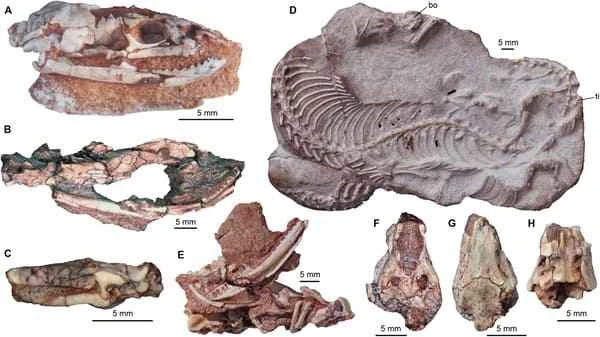
Why is the evolution of snakes an enduring mystery? A significant part of the problem is that the vast majority of snakes are small, relatively fragile creatures, and even their smaller, more vulnerable ancestors are represented in the fossil record by incomplete remains, mostly composed of scattered vertebrae. Paleontologists have discovered putative snake fossils dating back 150 million years, to the Late Jurassic period, but these traces are so brief as to be almost useless. (To complicate matters further, snake-like amphibians known as "astopods" appear in the fossil record more than 300 million years ago, the most famous genus being *Ophiderpeton*; they are completely unrelated to modern snakes.) However, recently, however, solid fossil evidence has emerged: *Eophis*, a 3-meter-long Middle Jurassic snake native to Britain.
II. Snakes in the Early Cretaceous
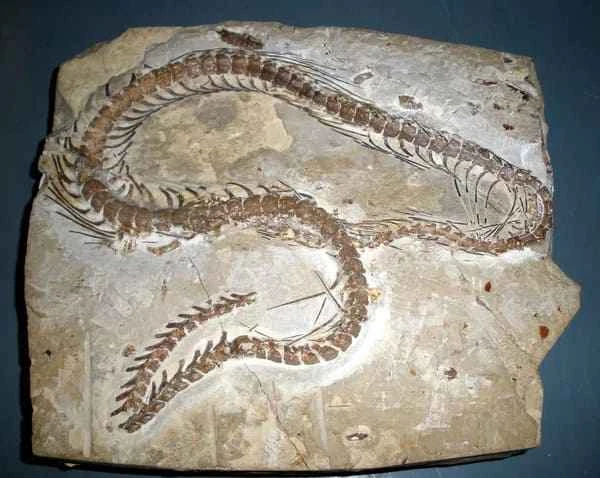
Needless to say, a key event in snake evolution was the gradual atrophy of these reptiles' forelimbs and hindlimbs. Creationists like to claim that such "transitional forms" don't exist in the fossil record, but in the case of prehistoric snakes, they are completely wrong: paleontologists have identified no fewer than four distinct genera dating back to the Cretaceous period, equipped with short, stout, and degenerate hind legs. Oddly enough, three of these snakes—Eupodophis, Haasiophis, and Pachyrhachis—were found in the Middle East, not a hotbed of fossil activity, while a fourth, Najash, lived on the other side of the world, in South America.
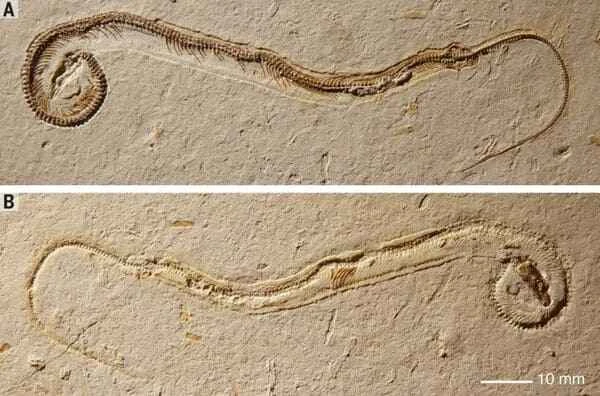
What secrets of snake evolution do these two-legged ancestors reveal? Well, the answer is complex, because the Middle Eastern genus was first discovered—and, since they were found in geological strata submerged in water a hundred million years ago, paleontologists cited aquatic reptiles, most likely the sleek, ferocious mosasaurus of the Late Cretaceous, as evidence of snakes evolving as a whole. Unfortunately, the Najash people of South America challenged this theory: this two-legged snake was clearly a terrestrial snake and appeared in the fossil record almost simultaneously with its Middle Eastern cousins.
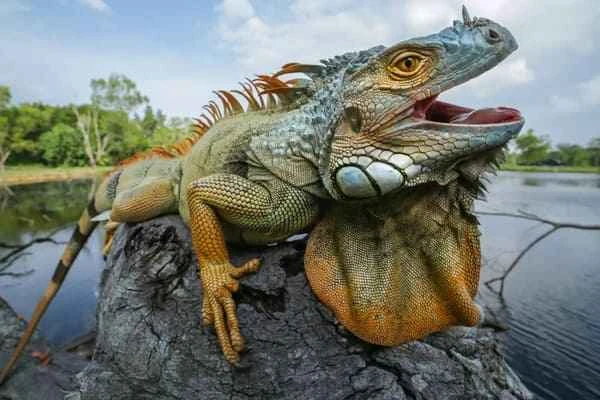
The prevailing view today is that snakes evolved from an unidentified terrestrial lizard (possibly a burrowing lizard) from the Early Cretaceous period, most likely a species known as "varanid." Today, the monitor lizard family is represented by the giant monitor lizard (Varanus), the largest living lizard on Earth. Intriguingly, prehistoric snakes may be cousins of the giant monitor lizard, which measured approximately 7.5 meters from head to tail and weighed over two tons!
III. Prehistoric Giant Snakes of the New Generation
Speaking of giant monitor lizards, some prehistoric snakes also reached enormous sizes, although fossil evidence is again frustratingly lacking in conclusions. Until recently, the largest prehistoric snake in the fossil record was aptly named Gigantophis, a Late Eocene monster that measured about 10 meters from head to tail and weighed up to half a ton. Technically, Gigantophis is classified as a "madtsoiid" snake, meaning it is closely related to the widely distributed genus Madtsoia.
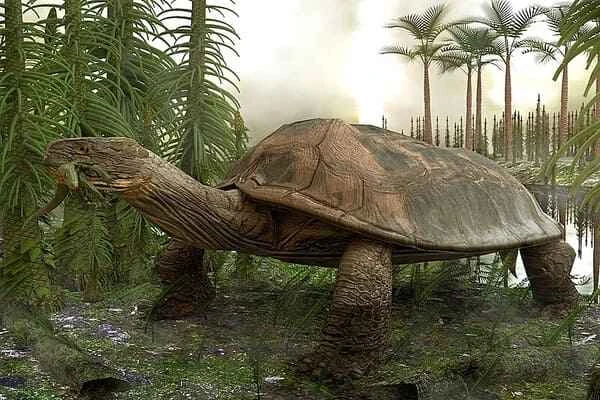
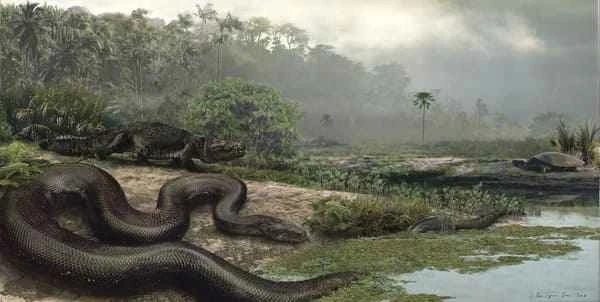
Unfortunately, for fans of giant snakes, this prehistoric serpent's place in the record has been overshadowed by a larger genus and a cooler name: the Titanoboa, which grew to over 15 meters long and may have weighed up to a ton. Oddly enough, Titanoboa dates back to the Middle Paleocene, about five million years after the extinction of the dinosaurs, but millions of years before mammals evolved into their gigantic forms. The only logical conclusion is that this prehistoric snake preyed on equally enormous prehistoric crocodiles—a scenario you might see computer-generated in future television specials—and it may have occasionally encountered the equally enormous prehistoric tortoise, the Carbonemys.