Squamata is the most diverse group of reptiles, with approximately 7,400 extant species. Squamata include lizards, snakes, and worm-like lizards.
Scaly animals have two distinctive characteristics. First, they shed their skin regularly. Some scaly animals, such as snakes, shed their skin entirely. Other scaly animals, such as many lizards, shed their skin in patches. In contrast, non-scaly reptiles regenerate their scales in other ways; for example, crocodiles shed one layer of scale at a time, while sea turtles do not shed the scales covering their shells but instead add new scales from underneath.
A second common characteristic of scaly animals is their unique skull and jaw joints, which are both strong and flexible. The remarkable jaw mobility of scaly animals allows them to open their mouths wide enough to devour large prey. Furthermore, the strength of their skulls and jaws provides scaly animals with a powerful bite.
Evolution of scaly animals
Squamous animals first appeared in the fossil record during the Middle Jurassic period, and may have existed even before that. The fossil record of squamous animals is quite rare. Modern squamous animals appeared approximately 160 million years ago during the Late Jurassic period. The earliest lizard fossils date back 1.85 to 165 million years.
The closest living relatives of scaly animals are lizards, followed by crocodiles and birds. Among all living reptiles, turtles are the most distant relatives of scaly animals. Like crocodiles, scaly animals are diapsids, a group of reptiles with two openings (or temporal fenestrae) on each side of their skull.
Main features
The main characteristics of squamous cells include:
The most diverse group of reptiles
Excellent cranial mobility
Classification
Squamata are classified into the following taxonomic levels:
Animals > Chordata > Vertebrates > Tetrapods > Reptiles > Squamates
Squamous animals are divided into the following taxa:
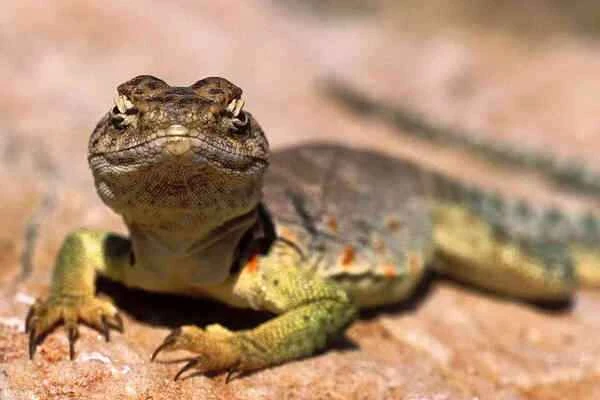
Lizards (Lacertilia): With over 4,500 species living today, this is the most diverse group of all scaled animals. Members of this group include iguanas, chameleons, geckos, night lizards, blind lizards, skinks, lizards, beaded lizards, and more.
Snakes: There are approximately 2,900 species of snakes in the world today. This group includes pythons, kraits, venomous snakes, blind snakes, mole snakes, and sun snakes. Snakes have no limbs, but this legless nature does not prevent them from being among the most fearsome reptile predators in the world.
Amphisbaenia: There are approximately 130 species of Amphisbaenia currently alive. Members of this group are burrowing reptiles who spend most of their lives underground. Amphisbaenia have strong skulls, perfectly suited for digging tunnels.