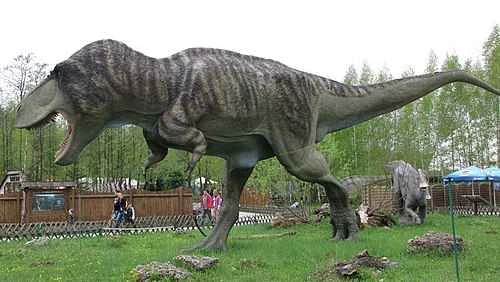
Tyrannosaurus rex, scientifically known as Tyrannosaurus rex, was a dinosaur that lived during the Late Cretaceous period, approximately 67 million years ago. It is one of the most well-known and iconic dinosaurs, and also one of the largest carnivorous dinosaurs. Below is detailed information about Tyrannosaurus rex and its habits:
Feature description:
Size: Tyrannosaurus Rex is usually described as a huge carnivorous dinosaur, about 12 to 13 meters long, 4.6 to 6 meters tall at the shoulder, and weighing about 5 to 7 tons, but some fossil discoveries suggest that some individuals may have been even larger.
Skull: Tyrannosaurus Rex had an enormous skull, about 1.5 to 1.8 meters long, and its skull structure was strong, making it suitable for hunting and tearing.
Teeth and jaws: They have large, sharp teeth that can effectively tear meat apart.
Limbs: The forelimbs are relatively short compared to the hindlimbs, while the hindlimbs are strong and adapted for running and hunting.
Distribution and Habitat:
Geographical distribution: Tyrannosaurus Rex lived in what is now North America.
Habitat: They mainly inhabit the Midwestern United States and Canada today, where there are lush forests and wetlands, which are very conducive to cover and ambush hunting.
Lifestyle habits:
Diet: Tyrannosaurus Rex was a carnivore, mainly feeding on other dinosaurs or small reptiles.
Behavioral characteristics: Based on fossil discoveries, scientists believe that Tyrannosaurus Rex may have been a solitary predator or a social animal, but this remains a subject of debate.
Speed and range of activity: Although they were huge, Tyrannosaurus Rex was believed to have a very high running speed, which allowed them to quickly catch prey over short distances.
Reproduction: Little is known about the reproductive habits of Tyrannosaurus Rex, but it is speculated that they may have been oviparous, like other dinosaurs. Scientists generally believe that they would engage in some caregiving behavior after hatching.
Species and Evolution:
Tyrannosaurus Rex species: Tyrannosaurus Rex is a type of dinosaur belonging to the Tyrannosauridae family, and they are representative members of the Tyrannosaurinae subfamily.
Life cycle: Tyrannosaurus Rex may have gone extinct at the end of the Cretaceous period, about 66 million years ago. Although they only lived for a short time geologically, they have become one of the most talked-about prehistoric creatures.
Research and protection:
Fossil research: A large number of Tyrannosaurus rex fossils have been discovered, providing scientists with a wealth of research data and helping people gain a deeper understanding of the ecological habits of Tyrannosaurus rex.
Conservation status: Since Tyrannosaurus Rex went extinct about 66 million years ago, there are no conservation activities, but its fossils should still be properly protected and preserved.
Tyrannosaurus Rex is one of the most iconic species in the dinosaur world. Its enormous size and fierce hunting methods have made it an important subject of prehistoric animal research. Studying and understanding Tyrannosaurus Rex helps to reveal the face of Earth's ecosystems and biodiversity during the Late Cretaceous period.