Triceratops was a large, herbivorous dinosaur that lived during the Late Cretaceous period, approximately 68 to 66 million years ago. It belonged to the ceratopsian group. The following is detailed information about Triceratops and its habits:
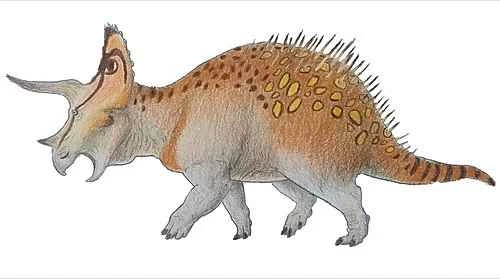
Feature description:
Size: Triceratops was a large dinosaur. Adult Triceratops could reach 8 to 9 meters in length, 2 to 3 meters in height, and weigh between 6 and 12 tons.
Skull features: Their skulls are relatively large relative to their bodies, and they have three horns on their heads, one in front and two behind. The most famous features are the large nasal horn and the smaller eye horns on both sides.
Defensive features: Triceratops also had some ridges or bony plates on its head and neck, which may have helped protect the neck and head.
Distribution and Habitat:
Geographical distribution: Triceratops was a dinosaur from the Late Cretaceous period in North America, and its fossils are mainly distributed in what is now the United States and Canada.
Habitat: They lived in the abundant grasslands, near rivers, and in forests at that time.
Lifestyle habits:
Diet: Triceratops was a herbivorous dinosaur, mainly feeding on ground vegetation, which may have been low-lying plants, shrubs, or some herbaceous plants.
Behavioral characteristics: Due to its heavy head and the presence of horns and bony plates, Triceratops may have possessed some defensive capabilities, which could also have been used as display features in combat and courtship behaviors. Furthermore, the skull structure suggests that they may have engaged in head-to-head collisions, possibly for competition for food or territory.
Reproduction: Relatively little is known about the reproductive habits of Triceratops. Scientists generally believe that they were oviparous and may have engaged in some degree of caregiving.
Lifestyle: Triceratops are believed to be social animals that may have formed a social structure and engaged in group activities.
Species and Evolution:
Type: Triceratops is a type of dinosaur belonging to the Ceratopsianidae family, specifically the Ceratopsinae subfamily.
Life cycle: Triceratops is now extinct, and fossil discoveries have mainly helped scientists understand their way of life and the ecosystem of the Late Cretaceous.
Research and protection:
Fossil research: The discovery of numerous Triceratops fossils has helped scientists study their habits and ecological role.
Conservation status: Since Triceratops went extinct about 66 million years ago, there are no conservation activities, but its fossils should still be properly protected and preserved.
Triceratops is a quintessential example of prehistoric animals, holding a significant place in North America during the Late Cretaceous period. It is not only important in paleontological research but also one of the most widely followed dinosaurs. Studying Triceratops fossils allows us to understand not only their habits but also the ecosystems and biodiversity of the dinosaur era on Earth.