The term "green katydid" likely refers to a green katydid, a type of insect typically known for the rustling sound of its wings. Based on your description, here is detailed information about a typical katydid and its habits.
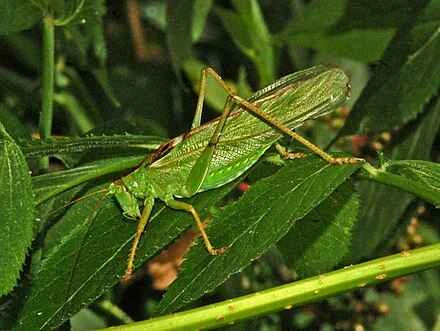
Physical characteristics:
Body structure: Katydids typically have long antennae, flat wings, and strong hind legs, which are adapted for jumping.
Color: They usually have a green or brown appearance, which helps them camouflage themselves in vegetation and blend into the environment.
Distribution and Habitat:
Geographical distribution: Grasshoppers are widely distributed around the world.
Habitat: They can be found in a wide variety of habitats, including grasslands, woodlands, shrublands, deserts, and even cities and suburbs. They are usually found in areas with relatively lush vegetation.
Lifestyle habits:
Diet: Grasshoppers are herbivorous insects, feeding mainly on the leaves, stems, and flowers of various plants.
Sound: Grasshoppers are known for the rubbing sound of their wings. This distinctive call is mainly used for courtship and territorial marking, and the sound has a unique tone among different species and individuals.
Reproduction: Katydids reproduce by laying eggs. Female katydids usually choose a suitable environment to lay their eggs, and some species also exhibit certain behaviors related to burying and protecting their eggs.
Overwintering: Some katydid species overwinter, possibly by spending the cold season underground or in other hidden places.
Escape from predators: Since katydids are herbivorous insects, they can usually avoid predators by camouflage and running away.
Diversity of species:
Katydids are a diverse group of insects, with over 6,000 species worldwide, all classified within the superfamily Katydidoidea. Each species may possess unique habits and characteristics.
Protection status:
Grasshoppers are not listed as endangered species due to their wide distribution and large numbers. However, like many other insects, their habitats are threatened by destruction and environmental pollution, requiring proper environmental protection and management.
Grasshoppers are an important part of the ecosystem, forming complex food chains and ecological balances with various other organisms. Research on grasshoppers helps advance our understanding of biodiversity and ecosystem function, and provides important data support for ecological conservation.