A research team led by Zhu Min at the Institute of Vertebrate Paleontology and Paleoanthropology, Chinese Academy of Sciences, has made new progress in the field of early vertebrate research. On March 8th, the journal *PLOS ONE* reported the latest research findings of Dr. Chu Bulan and others. They described a 420-million-year-old ancient fish covered in unusual scales—*Ding's Scaled Fish*—providing new fossil evidence for exploring the early differentiation of jawed vertebrates and the origin of bony fishes. As a new member of the Xiaoxiang Vertebrate Assemblage of the Silurian period, *Ding's Scaled Fish* further supports the view that Qujing, Yunnan, was an early center of jawed vertebrate differentiation, indicating that Earth had already entered the "Age of Fishes" as early as the Silurian period (444-419 million years ago). Following *Ghost Fish*, *Ding's Scaled Fish* becomes the second relatively well-preserved Silurian bony fish.
The unique feature of *Sparalepis tingi* is its body covered with thick, tightly knit scales, resembling a warrior in armor. The genus name refers to its scales, which resemble the rectangular shields woven from willow branches carried by ancient Persian infantry, while the species name is dedicated to Mr. Ding Wenjiang (1887-1936), one of the founders of Chinese geology and the author of the Silurian section in Qujing, Yunnan.
Bony fishes form the backbone of jawed vertebrates, divided into two main lineages: lobe-finned fishes and ray-finned fishes. Lobe-finned fishes evolved into later tetrapods (amphibians, reptiles, birds, and mammals), while only a few lungfish and coelacanths remain in the water. Ray-finned fishes continue to live in water, and the vast majority of common fish (grass carp, silver carp, bighead carp, etc.) belong to this group, numbering over 30,000 species. Therefore, the early differentiation of jawed vertebrates and the origin and early differentiation of bony fishes occupy a very important position in the evolutionary history of vertebrates.
However, until the end of the last century, fossils of early bony fishes remained extremely scarce and were mostly scattered. Due to the lack of transitional fossils, a significant morphological gap existed between lobe-finned and ray-finned fishes, as well as between bony fishes and other jawed fishes. Over the past two decades, the discovery of numerous exquisite fossils (such as *Platycodon*, *Apoda*, and *Mimania*) from the Early Devonian Xitun Vertebrate Fauna in Yunnan has gradually narrowed these gaps. The Xiaoxiang Vertebrate Fauna uniquely preserves a large number of Silurian jawed fish fossils, such as the recently discovered *Halostoma* and *Qilinus*, opening a new window into the evolution of jawed fish.
Like placoderms and other similar fishes, placoderms possessed a membranous pelvic and pectoral girdle supported by spines, a feature once thought unique to placoderms. These girdle ligaments connect the limb bones to the axial skeleton; together they form the appendage skeleton and are important organs of locomotion. In extant vertebrates, the anterior pectoral girdle contains both membranous and endoskeletonic components, while the posterior pelvic girdle contains only endoskeleton, making the distinction clear. However, fossil evidence shows that the pelvic and pectoral girdles of placoderms and some early bony fishes have very similar structures, also composed of membranous and endoskeletonic bones, suggesting that the pelvic and pectoral girdles may have shared similar developmental modules. The discovery of placoderms provides new fossil evidence for this hypothesis.
The armored fish is covered with very distinctive rhomboid scales, which are similar to those of early bony fishes such as the ghost fish and the spotted fish, but with significant differences. Overall, the height of the scales on the sides gradually decreases from front to back, but not as dramatically as in the ghost fish. The area in front of the first dorsal fin is covered with approximately 30 rows of scales, twice that of the ghost fish (approximately 15 rows). The scales are relatively thick, and a prominent neck divides the scales into a crown and a base, similar to the spotted fish but different from the ghost fish. The crown of the scales features nearly parallel ridge-like ornamentation without pores between the ornamentation, a feature similar to the ghost fish. On the anterior scales, the concave dorsal side and the convex ventral side, as well as the articular processes and fossae of the scales, form articular structures. The overlapping area of the scale crown is not prominent, unlike the distinct imbricate arrangement of the ghost fish and the spotted fish.
Phylogenetic analysis shows that *Gnaphalosaurus*, along with *Gnaphalosaurus*, *Gnaphalosaurus*, and *Gnaphalosaurus*, belongs to the lobe-finned fish group. They possess characteristics of early bony fish, but also exhibit placoderm-like pectoral girdle, pelvic girdle, and dorsal fin spines, as well as membranous skull bones similar to those of placoderms. This combination of features fills the morphological gap between early bony fish and other jawed fish, and between lobe-finned and ray-finned fish, indicating that a branch of placoderms may have evolved into later bony fish. The unique scale structure of *Gnaphalosaurus* suggests that the morphological diversity of early bony fish was far greater than previously thought. With the continuous discovery of new materials from the Xiaoxiang vertebrate fauna, this evolutionary process will become increasingly clear.
Original link: http://journals.plos.org/plosone/article?id=10.1371/journal.pone.0170929
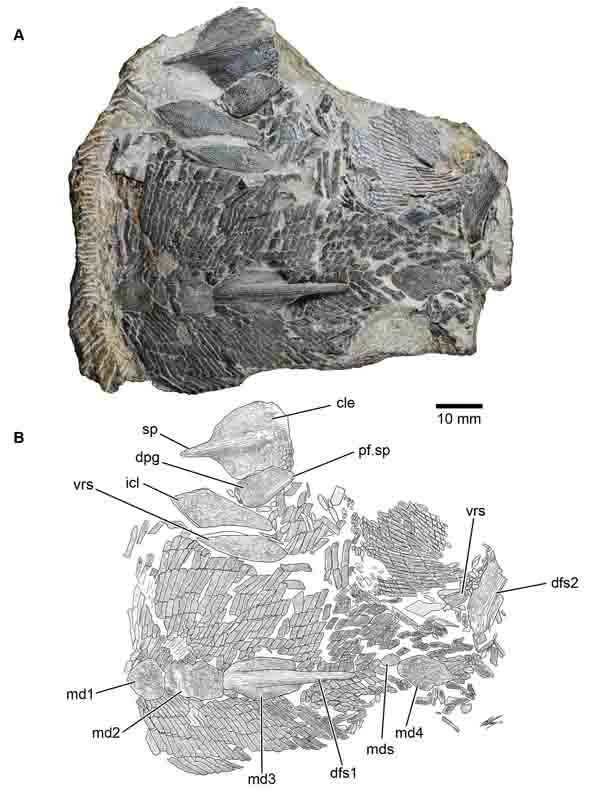
Figure 1. Holotype fossil of *Ding's Scaled Fish* (Image provided by Zhu Min)
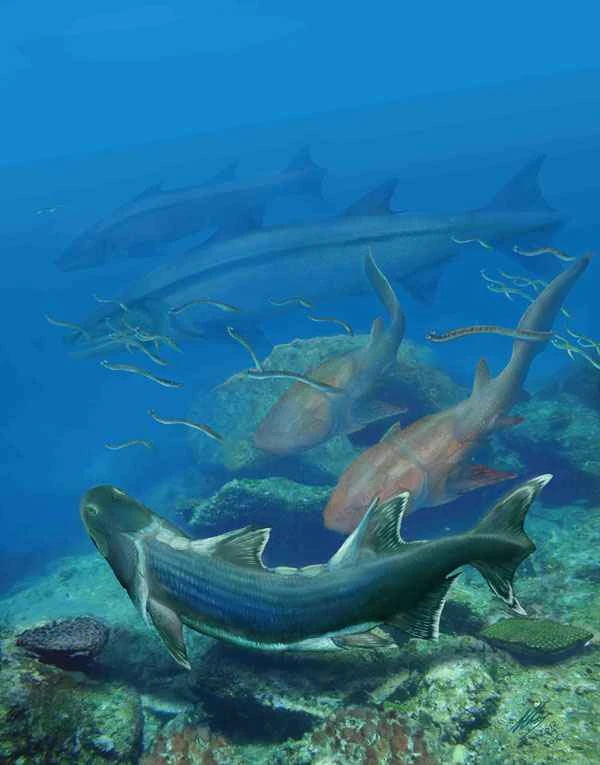
Figure 2. Ecological restoration diagram of *Ding's scale fish* (Image provided by Zhu Min)