The ugliest animals in the world: their appearance does not affect their ability to survive.
2026-03-23 19:47:44··#1
When we talk about nature, many people first think of stunningly beautiful animals—peacocks displaying their plumage, dolphins leaping out of the water, and lions displaying their majestic posture. However, there are also many animals in nature whose appearance is not pleasing to the eye. Although they have unusual appearances and are even considered "ugly," they possess incredibly strong survival abilities. These animals may not conform to our standards of beauty, but they play vital roles in their respective ecosystems.
Why are some animals considered "ugly"?
Animal appearance is primarily determined by evolution. Each animal's appearance is closely related to its living environment, hunting methods, and courtship behaviors. The notion of "ugliness" is merely a subjective human aesthetic standard. In reality, these animals have acquired highly adaptive characteristics through evolution, which, while perhaps not conforming to human aesthetic standards, help them survive in harsh environments.
The World's Ugliest Animals Ranking
Let's take a look at these animals that are surprisingly "ugly".
1. Atlantic Ocean Sunfish (Mola Mola)
The ocean sunfish, also known as the moray sunfish, is one of the heaviest bony fish in the world. Its body shape is quite peculiar, resembling a giant oval rock, with wide lateral fins that make it appear disoriented. The sunfish has a very rough appearance and a small, somewhat disproportionate mouth. However, this fish plays a vital role in the marine ecosystem, especially in helping to control jellyfish populations by feeding on large numbers of them.
2. Mouse Flying Fox (Aye-Aye)
The mouse flying fox is a primate native to Madagascar, often called "the ugliest primate in the world" due to its unusual appearance. It has long, thin fingers and large ears, especially its long, flexible third finger, which it uses to find insects in trees. This seemingly bizarre appearance is actually very useful, helping it to hunt at night.
3. Naked Mole Rat
Naked mole-rats are hairless, subterranean rodents that primarily live in underground burrows in East Africa. Their smooth, wrinkled skin, devoid of hair, makes them appear somewhat strange and even unsettling. However, these animals possess remarkable cancer-fighting abilities and are virtually insensitive to pain. Naked mole-rats are an important subject for research into longevity and disease resistance.
4. Blobfish
The blobfish is perhaps considered one of the world's "ugliest" animals. Living in the deep sea under high pressure, its body is almost entirely composed of soft tissue. When it surfaces, it loses its support and looks like a soft blob of "jelly." Despite its unusual appearance, the blobfish's structure is highly adapted to the high pressure of the deep sea, allowing it to float easily with minimal effort.
5. Madagascar Hissing Cockroach
This cockroach is perhaps one of the most unsettling of all insects. The Madagascar giant cockroach is not only enormous (growing to 5-7 cm), but it also hisses when threatened. Often mistaken for a pest, this giant insect actually plays a vital role in decomposing organic matter, benefiting the ecosystem.
Why are "ugly" animals so important?
Although they may not conform to human aesthetic standards, these "ugly" animals play an indispensable role in their respective ecosystems. They help maintain ecological balance, control pest populations, decompose organic matter, and even have important value in scientific research. For example, the naked mole-rat's anti-cancer ability and the blobfish's deep-sea adaptability have provided scientists with valuable research material.
How can we protect these "ugly" but important animals?
Many "ugly" animals face extinction due to habitat destruction, climate change, and human activities. We need to change our prejudices against these animals, recognize their importance, and take action to protect them. Protecting these "ugly" animals is not only about preserving biodiversity, but also because their existence is crucial for the long-term development of human society.
Beauty and ugliness are subjective feelings, and in nature, every animal has its unique way of survival and value. Those animals labeled "ugly" often possess survival skills and adaptability that are hard for us to imagine. By understanding and respecting these creatures, we can gain a more comprehensive understanding of the wonders and diversity of nature, while simultaneously providing a better living environment for every species on Earth.
These "ugly" animals may not win the "beauty contest of nature," but their role in the ecosystem is irreplaceable.
Animals with unusual appearance
Besides the animals mentioned above, there are many other animals in the world with bizarre appearances, each with its own unique characteristics and occupying a special place in nature. Below are some even more unusual animals, whose appearance and behavior are equally astonishing:
1. Star-Nosed Mole
The star-nosed mole is a small, subterranean mammal native to North America, named for its distinctive star-shaped nose. Its nose is covered with 22 barbels, which possess extremely high tactile sensitivity, helping it to forage for food in the dark underground. Despite its bizarre appearance, the star-nosed mole's nose is one of the fastest-reacting sensory organs on Earth, capable of identifying food in a very short time.
2. Proboscis Monkey
Proboscis monkeys are known for their distinctive long noses, especially the males, whose large, prominent noses seem out of place on their faces. This long nose is actually a means of attracting mates; males use their unique nasal calls to display themselves to females. Proboscis monkeys live in the tropical rainforests of Southeast Asia and are excellent swimmers.
3. Angora Rabbit
Angora rabbits resemble fluffy cotton balls with extremely long and thick fur. While their appearance may seem unusual, their fur is actually used to produce high-quality textiles, making them popular as farm animals and family pets. However, their fluffy appearance often makes them seem less like real animals and more like plush toys.
4. Leafy Sea Dragon
Leafy seadragons are marine fish that live in Australian waters and appear as if they are covered in leaves. This unique shape is not only their adornment but also an excellent form of camouflage, making them almost impossible to spot among seaweed. The leafy seadragon's colors and leaf-like protrusions make them masters of camouflage in nature.
5. Vampire Bat
Vampire bats are known for their blood-sucking habits, and their appearance often inspires fear. These small mammals have flattened faces, sharp teeth, and unique heat-sensing abilities that allow them to accurately locate the blood vessels of their prey. While their appearance and behavior may be chilling, vampire bats play a positive role in controlling farm pests.
6. Humphead Wrasse
The humpback fish is a colorful reef fish known for its prominent forehead and thick mouth. Adult male humpback fish often have a large hump on their forehead, giving them a rather bizarre appearance. Despite their unusual appearance, they play an important role in the coral reef ecosystem, helping to maintain the health of the corals.
7. Anglerfish
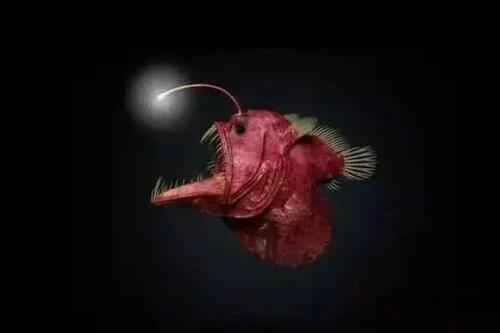
The anglerfish is perhaps one of the most "terrifying" marine creatures, especially the female, which has a glowing tentacle on its head resembling a fishing rod, used to lure prey. Living in the deep sea, they rely on this glowing tentacle to hunt in the dark. The anglerfish's large mouth and sharp teeth make it look extremely ferocious, like a monster from a horror movie.
8. Giant Anteater
Anteaters are known for their long, slender heads and retractable tongues. Their tongues can extend up to 60 centimeters, used to catch ants and termites from anthills. The proportions of their noses and mouths may seem odd, but this unique structure is adapted to their specific dietary needs.
9. Arapaima
The arapaima is one of the world's largest freshwater fish, inhabiting the Amazon River basin. With its thick scales, enormous body, and resemblance to ancient fish, it is a remarkable creature. Not only is it enormous, but the arapaima is also capable of breathing air at the surface, allowing it to survive in oxygen-depleted waters.
10. Viperfish
Viperfish are mysterious inhabitants of the deep sea, possessing enormous mouths filled with sharp teeth. These fish swim in the dark depths of the ocean, their teeth so large they cannot even fully close their mouths. Viperfish use their bioluminescent organs to attract prey, and their appearance is extremely frightening, as if they come from another world.
These uniquely shaped animals showcase the diversity and uniqueness of nature. Although their appearance may differ from human aesthetic standards, and may even be considered "ugly" or "weird," they play a vital role in their respective ecological environments. Every animal, regardless of its physical form, has evolved unique survival skills in the process of adapting to its environment, demonstrating the creativity of nature and the resilience of life.
These unusual animals remind us that the world is not just a stage for beautiful creatures; those "strange" or "imperfect" creatures also deserve our respect and protection.