The Common Crowned Crane, also known as the East African Crowned Crane, is a bird hailed as the "King of Dance." It is beloved not only for its elegant dance but also for its unique appearance and long history, making it a focus of attention. Whether in its survival strategies in the wild or its symbolic significance in culture, the Common Crowned Crane is inextricably linked to humankind. This article will comprehensively explore the characteristics, distribution, habits, and place of the Common Crowned Crane in human culture from multiple perspectives.
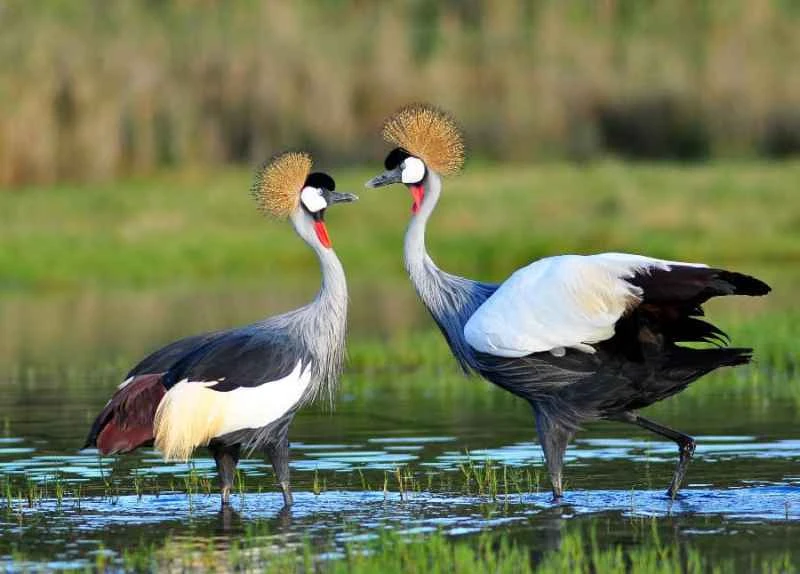
The scientific classification of the grey crowned crane is as follows:
Kingdom : Animalia
Phylum : Chordata
Class : Aves
Order : Gruiformes
Family : Gruidae
Genus : Balearica
Species : Grey Crowned Crane (Balearica regulorum)
The grey crowned crane belongs to the crane family and is a large wading bird. Its distinctive features are the grey crest and yellow wattles on its head.
Basic introduction to grey crowned cranes
The grey crowned crane, scientifically known as *Balearica regulorum *, is a large wading bird belonging to the Gruidae family. It has a slender body and magnificent plumage, with its grey crest on its head being particularly striking, hence its name "grey crowned crane." Grey crowned cranes are elegant in appearance and agile in movement; their dance performances, in particular, are often a sight to behold.
The grey crowned crane is divided into two subspecies: the East African grey crowned crane ( Barlearica regulorum gibbericeps ) and the South African grey crowned crane ( Barlearica regulorum regulorum ). These two species of grey crowned cranes differ somewhat in appearance and habits, but in general they both have a pair of tall crest feathers and conspicuous yellow wattles.
Habitat of Grey Crowned Cranes
The grey crowned crane primarily inhabits open areas such as grasslands, wetlands, and watersides. In Africa, it is commonly found near wetlands, swamps, and ponds. They prefer areas with abundant water and lush vegetation, as this provides them with plentiful food sources and habitats.
Habitat of the East African Grey Crowned Crane
The East African grey crowned crane is mainly distributed in Kenya, Tanzania, Uganda, and other regions. The wetlands and grasslands of these areas provide ideal habitats for them. East African grey crowned cranes typically inhabit high-altitude wetlands, where abundant water resources are suitable for foraging and breeding.
South African Grey Crowned Crane Habitat
The South African grey crowned crane is widely distributed in South Africa, Botswana, and Namibia. Compared to the grey crowned crane in East Africa, the habitat of the South African grey crowned crane is drier, and they often choose lush marshes or small lakes as their habitat.
Physical characteristics of the grey crowned crane
The grey crowned crane is highly recognizable, especially its grey crest, which adds to its elegant appearance. Grey crowned cranes stand approximately 1.0 to 1.2 meters tall and weigh about 3 to 4 kilograms. Their plumage is grey or pale yellowish-brown, with a tuft of grey feathers on their heads that displays a unique beauty during their courtship dance.
In addition, the grey crowned crane has a long, yellow beak, which adds to its majestic appearance. Its eyes are large and bright, golden or orange. Most striking are the pair of bright yellow wattles on its neck and chest, often considered its signature feature.
Grey Crowned Crane's Living Habits
The grey crowned crane is a gregarious bird, typically living in small family groups. However, in areas with abundant food, they sometimes gather in larger flocks. They spend most of their time on the ground, foraging and dancing, while at night they roost in trees or other high places.
Foraging
Grey crowned cranes are omnivorous, primarily feeding on grasses, seeds, insects, and small animals. They often forage in wetlands and grasslands, using their long beaks to search for food in the mud. Grey crowned cranes also have a strong dependence on plants near water, especially aquatic and herbaceous plants.
Dance and courtship
One of the most famous characteristics of the grey crowned crane is its courtship dance. During the breeding season, male grey crowned cranes attract females by dancing, calling, and displaying their crests. This dance is very graceful, with the males performing spins, leaps, and head-raising movements, showcasing their strength and agility.
During the dance, the male will occasionally raise its crest high, seemingly to display its superiority. Females usually choose the males who dance the most spectacularly and energetically as their mates.
Breeding and raising chicks of grey crowned cranes
Grey crowned cranes typically breed during the rainy season. They breed in nests, usually built in grass, bushes, or tree branches. The nests are relatively simple in design, mainly composed of grass and plant materials. Females usually lay 2 to 3 eggs per breeding cycle, with an incubation period of approximately 28 days.
The growth of young birds
After hatching, grey crowned crane chicks grow rapidly under the care of their parents. Their feathers are very soft at birth, but within a few weeks they begin to grow stronger feathers. The chicks forage for food under the guidance of their parents, learning how to survive in the wild.
life
Grey crowned cranes typically live for around 20 years in the wild. However, with careful care in captivity, their lifespan can be extended to 25 years or longer.
The lifespan of the grey crowned crane is estimated based on its natural growth and breeding cycle. Lifespan is influenced by multiple factors, including habitat quality, food abundance, predator threats, climate conditions, and human factors (such as habitat destruction).
Factors affecting lifespan
Natural environment : In the wild, grey crowned cranes face predators and habitat degradation, which may shorten their lifespan.
Food source : An adequate food supply helps them maintain a healthy lifestyle, thereby extending their lifespan.
Human disturbance : Habitat destruction, illegal hunting and other human factors may affect the lifespan of the grey crowned crane.
As long-lived birds, grey crowned cranes have a long growth cycle, and once they reach adulthood, their quality of life is usually stable. In suitable protected environments, grey crowned cranes can live for a long time and have a high reproductive rate.
Conservation status of grey crowned crane
Despite their wide distribution, the grey crowned crane faces increasing threats, including habitat loss and environmental pollution, as their habitat is gradually shrinking. According to the International Union for Conservation of Nature (IUCN), the grey crowned crane is currently listed as a "vulnerable" species, with the East African grey crowned crane population declining year by year. Overexploitation, agricultural expansion, and illegal hunting are among the human activities that have exacerbated the survival pressure on this species.
To protect the grey crowned crane, many countries and regions have adopted different conservation measures, including protecting habitats, establishing nature reserves, and strengthening environmental education.
Symbolic meaning of the grey crowned crane in culture
The grey crowned crane is not only an elegant dancer in nature, but it also carries profound symbolic meaning in various cultures. In African cultures, the grey crowned crane is often seen as a symbol of longevity, prosperity, and wisdom. Their dance is considered a way to communicate with the spirits, and many tribes imitate the grey crowned crane's dance in important ceremonies.
In China, the grey-crowned crane is often used as a lucky charm, symbolizing peace and happiness. They frequently appear in ancient artworks, especially porcelain and silk paintings, becoming a symbol for conveying blessings and wishes.
The Future of Grey Crowned Cranes
Despite the many challenges facing the grey crowned crane's habitat, we remain hopeful for its future as conservation efforts continue to intensify. International cooperation, increased local awareness of conservation, and advancements in scientific research have all provided strong support for the protection of the grey crowned crane.
In the future, with the gradual improvement of global environmental protection, the grey crowned crane is expected to restore its habitat and continue to bring more beauty and inspiration to humans and nature.
Ten interesting facts about grey crowned cranes:
1. The crest on its head is very unique.
One of the most distinctive features of the grey crowned crane is its crest of feathers. Both males and females have this grey crest, but the male's crest is usually larger and more conspicuous. The crest is not only their identifying mark but also a highlight during courtship, often raised to attract mates.
2. Elegant dance
The grey crowned crane is known as the "king of dances." During the mating season, males display their vitality and attractiveness through dances. These dances include spins, leaps, and high-flying legs, with graceful and rhythmic movements that are often captivating.
3. Their courtship dances can be very complex.
The grey crowned crane's dance is more than just simple leaps and turns. Males display a range of postures, such as raising their legs, swaying their heads, and spreading their crests, all accompanied by loud calls. These dances showcase their strength, agility, and endurance, and are important social behaviors during the breeding season.
4. The call of the grey crowned crane is very loud.
Although grey crowned cranes are elegant in appearance, their calls are extremely loud. Their calls, resembling a "high-pitched chirping," are particularly noticeable during migration or courtship. These calls can convey territorial information or attract mates.
5. Very intelligent birds
Grey crowned cranes are renowned for their high intelligence and agility. They can not only adapt quickly to changes in their environment, but also express emotions and intentions through complex behaviors. Their foraging methods are highly ingenious, utilizing various tools to obtain food.
6. Habitat is threatened
Although the grey crowned crane is a widely distributed species, its habitat is facing serious threats. Due to wetland pollution, habitat destruction, and agricultural expansion, the grey crowned crane's habitat is decreasing, particularly in East Africa, where its survival is under pressure.
7. Adaptable to various environments
Grey crowned cranes are highly adaptable, finding habitats not only in wetlands and grasslands, but also in open agricultural areas or low mountain regions. They can adapt to diverse climatic conditions, ranging from tropical wetlands to drier areas.
8. Lifespan can exceed 20 years.
In the wild, grey crowned cranes typically live for around 20 years, but in captivity, their lifespan can extend to 25 years or even longer. Healthy grey crowned cranes require ample food and a good habitat.
9. It is a long-lived bird.
Grey crowned cranes are among the relatively long-lived birds. Their life cycle includes a long juvenile period and a slow maturation process, typically reaching sexual maturity between the ages of 3 and 5, and they breed only once a year.
10. Symbolic meaning in culture
The grey crowned crane not only holds a unique place in the natural world, but it also carries significant symbolic meaning in many cultures. In Africa, it is seen as a symbol of longevity, wisdom, and nobility; in China, it is often used as an auspicious symbol, representing happiness and peace.
These fascinating facts demonstrate that the grey crowned crane is not only a beautiful bird, but also plays an important role in the ecosystem and is a symbol of culture and nature.