Kingdom : Animalia
Phylum : Chordata
Class : Aves
Order : Accipitriformes
Family : Accipitridae
Genus : Aegypius
Species : Vulture (Aegypius monachus)
Distribution area
Vultures are widely distributed in northwestern Africa, southern Europe, and southern Siberia. They typically inhabit low hills, high-altitude deserts, and grasslands. Vultures particularly prefer open, relatively desolate terrain, as these areas facilitate gliding and foraging.
Habitat
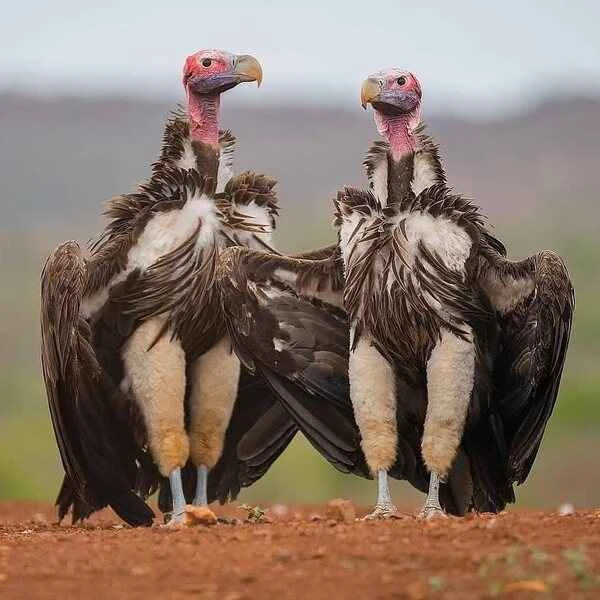
Vultures typically inhabit relatively open mountainous, grassland, or wilderness areas. In these places, they can easily find food using their wide field of vision and glide at high altitudes to observe their surroundings. They usually perch on higher ground to ensure sufficient thermal updrafts for flight.
Habits
Vultures are typically solitary birds of prey, soaring or gliding through the air, using thermals to conserve energy. They are highly territorial, and although they often gather together when foraging, they generally avoid direct contact with other vultures. Their diet consists mainly of carcasses and scavenging flesh; they locate prey visually and use their powerful flight capabilities to quickly reach their prey.
feature
The vulture is a large bird of prey, with a dark brown body, broad wings and tail, and a tall stature. Its head is featherless, giving it a bald appearance, hence its name. Vultures are highly efficient fliers, capable of gliding for extended periods without frequent wing flapping. Their powerful vision allows them to accurately locate carrion and corpses from a distance, giving them unique hunting techniques.
Table of contents
History of Zoology
Morphological characteristics
Habitat
Ecology and Behavior
Migration patterns
Flight behavior and strategy
Daily activities and social behavior
Diet and foraging strategies
Global distribution
Reproduction methods
Preserve the status quo
Protection level
Population status
Main threats
Nonsteroidal anti-inflammatory drug poisoning
Illegal capture and trade
Food resources are decreasing
Protective measures
Ecological value
History of Zoology
The vulture (Aegypius monachus), commonly known as the "dog-headed vulture," "eagle," or "mountain eagle," is a large bird of prey belonging to the family Accipitridae and the genus Aegypius. It was first described and named by the Swedish naturalist Carl Linnaeus in 1766; its Latin name is *Aegypius monachus*. Throughout zoological history, the classification of vultures has been a focus of attention. Compared to other birds of prey, its bald head makes it stand out, making it an important subject for human observation and study of raptor behavior.
The classification of the vulture has changed; it was once classified as belonging to the gull family or eagle family, but ultimately it belongs to the genus *Vulture* within the family Accipitridae. As the representative species of the genus *Vulture*, the vulture is the most typical large scavenging bird of prey, and its unique morphological and behavioral characteristics provide biologists with a wealth of research material.
Morphological characteristics
Vultures are large birds of prey, typically measuring 80-105 centimeters in length with a wingspan of up to 2.5 meters. They weigh between 7 and 13 kilograms, with males usually slightly smaller than females. Vultures are mostly dark black or blackish-brown in plumage, with broad, flat wings and a long, broad, curved tail, well-suited for gliding.
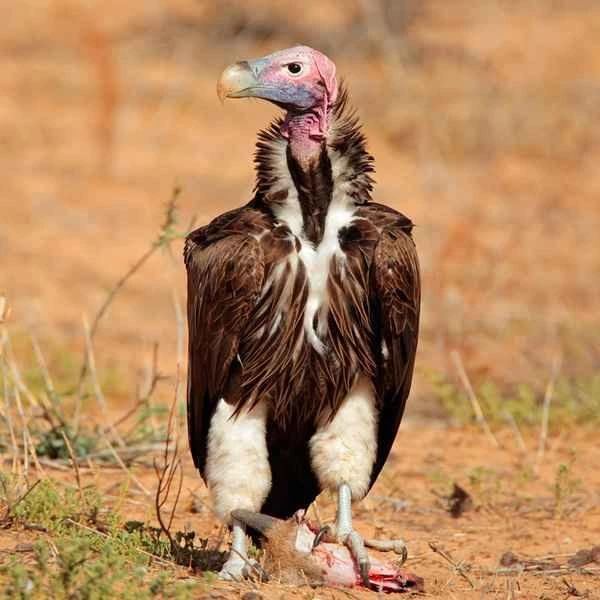
The most distinctive feature of the vulture is its bald head and neck, a characteristic that is one of its defining features among birds. The vulture's head lacks feathers, covered in reddish or light pink skin, and its neck also has a bare area. This bare head not only enhances its distinctive appearance but also helps it reduce feather contamination when scavenging. Vultures have large eyes with very sharp vision, ideal for observing and searching for food at long distances.
Its beak is curved and powerful, with a hooked shape that can easily tear through carrion, making it a vital tool for foraging and survival. The vulture's claws are relatively small, but strong enough to grasp carcasses and rip them apart.
Habitat
Vultures are widely distributed in open areas of southern Europe, southern Siberia, and northwestern Africa. They mainly inhabit low hills, high mountain wilderness, and grasslands, where the environment is vast and open, suitable for vultures to soar and forage for food.
Vultures typically inhabit high-altitude areas, such as cliffs, mountaintops, or plateaus, where they can benefit from thermals and conserve energy during flight. They rarely inhabit areas with high human activity, and their habitats are generally far from cities and bustling rural areas.
They prefer to live in vast natural environments, especially in relatively desolate places. These places provide vultures with ample carrion food sources and few natural predators and excessive ecological competition.
Ecology and Behavior
Vultures are scavenging birds of prey, primarily feeding on carcasses and decaying flesh, especially large mammals such as deer, sheep, and cattle. They search for food by soaring through the air, and when they spot a carcass in the distance, they quickly fly towards it.
Vultures forage differently from other birds of prey. They rely on an extremely powerful visual system, gliding and looking down for extended periods to locate food in the distance. This gliding is a unique flight method of vultures; they ascend by taking advantage of air currents and require almost no forceful wing flapping, allowing them to remain airborne for long periods.
Vultures are typically solitary, and their social behavior is relatively simple. They may gather together when foraging, but otherwise mostly act alone. Although vultures congregate in areas with abundant food, they do not form complex social structures like other birds.
Migration patterns
Vultures typically migrate south during the winter, especially those from Siberia and Europe, which migrate to warmer areas like North Africa. During migration, vultures glide using updrafts and strong winds, requiring very little energy. They also demonstrate remarkable navigational abilities during migration, enabling them to locate distant roosts.
Flight behavior and strategy
Vultures have a unique flight behavior, utilizing their broad wings and strong air currents to glide, a survival skill they employ. They can hover for extended periods, using updrafts to reach high altitudes. Their large wingspans are well-suited for prolonged gliding flight, allowing them to cover a wide area when searching for food.
Daily activities and social behavior
Vultures are solitary animals and do not typically forage or roost in flocks. Their daily activities include gliding for extended periods in the air, using flight to search for food such as carrion. In areas with abundant food, vultures may congregate to some extent, but this is not common and usually only occurs occasionally.
Diet and foraging strategies
Vultures primarily feed on the carcasses of other animals, especially large mammals. They possess exceptionally strong senses of smell and sight, enabling them to spot dead animals from tens of kilometers away. They utilize these abilities to locate food and arrive at the scene as quickly as possible. When multiple vultures gather around food, they often compete for it.
Global distribution
Vultures have a wide distribution, but their habitats are affected by changes in the ecological environment. They mainly inhabit the mountains and deserts of southern Europe, northwestern Africa, and West Asia. Vultures play an important role in the ecosystems of these regions, especially at the top of the food chain, where they are responsible for cleaning up animal carcasses and maintaining ecological balance.
Reproduction methods
Vultures typically begin their breeding season in the spring, and adult vultures choose a stable mate each year. Vultures usually build their nests on cliffs or in trees, and the nests are generally simple, consisting mainly of materials such as dry grass, twigs, and feathers.
During the breeding season each year, female vultures lay one to two eggs, with an incubation period of about 50 days. Both parents share the responsibility of incubating the eggs and caring for the chicks until they are grown and able to fly independently.
1. Lifespan in the wild :
Wild vultures typically live for 20 to 30 years . However, they face numerous threats to survival in the wild, such as food shortages, habitat loss, and hunting, all of which can affect their lifespan.
Some vultures can live even longer, especially healthy adults, who can often approach or exceed 30 years of life if they can avoid predation by natural enemies and disease.
2. Lifespan in artificially bred animals :
In captivity, such as in zoos or protected areas, vultures can live for over 40 years . This is because captive environments provide them with ample food, freedom from predators, and healthcare support.
Some well-bred vultures can even live up to 50 years in animal sanctuaries because they do not experience the stress of survival in the wild or environmental changes.
3. Influencing factors :
Food sources : In their natural environment, vultures primarily rely on carrion for food. When food resources are abundant, vultures have a higher survival rate and longer lifespan. Conversely, if food is scarce, they may face hunger and health problems, thus shortening their lifespan.
Habitat : Vultures prefer to inhabit open grasslands, wastelands, and high mountain areas. If their habitat is destroyed or threatened (such as by habitat loss or human disturbance), their survival will become more difficult, and their lifespan may be affected.
Diseases and Injuries : Vultures are robust birds of prey, but they are still susceptible to various diseases (such as poisoning and parasites). Furthermore, their lifespan can be significantly shortened by hunting or human intervention.
In general, vultures typically live for 20 to 30 years in the wild, but in captivity, with better care, they can live for 40 to 50 years or even longer.
Preserve the status quo
Cinereous vultures are currently listed as Near Threatened (NT) globally. Although they maintain stable populations in some areas, their habitat is facing numerous threats. China has also listed the cinereous vulture as a Class I protected wild animal, further strengthening the protection of its habitat.
Protection level
The vulture is listed as "Near Threatened" (NT) by the International Union for Conservation of Nature (IUCN), meaning its population is declining and it faces significant threats to its survival. Global vulture populations are decreasing, and in some areas, they face threats such as habitat loss and illegal hunting.
Population status
In China and other countries, the population of vultures is gradually recovering, but their total number remains low. The decline is particularly pronounced in parts of Europe and Siberia.
Main threats
The main threats to vultures come from habitat destruction, food resource depletion, and human disturbance.
Nonsteroidal anti-inflammatory drug poisoning
Vultures primarily feed on carrion, some of which may contain nonsteroidal anti-inflammatory drugs (NSAIDs), which are extremely harmful to vultures. Consuming these drugs can lead to poisoning and death.
Illegal capture and trade
Illegal capture and trade is another major threat to vultures. Due to their powerful flight capabilities and scavenging behavior, vultures are often illegally hunted or captured for the pet trade or other illegal purposes.
Food resources are decreasing
With changes in the ecological environment and increased human activities, food sources for vultures are becoming increasingly scarce. Large-scale farmland reclamation and urban expansion have led to the loss of vulture habitats, putting enormous pressure on their survival.
Protective measures
Globally, some progress has been made in the conservation of vultures. The International Union for Conservation of Nature (IUCN) and national governments have taken a series of measures, including strengthening habitat protection, enacting legislation to protect vultures from hunting and illegal trade, and restoring their habitats.
In China, the vulture has been listed as a Class I protected wild animal, and strict legal protection measures are implemented to ensure its survival and reproduction.
Ecological value
Vultures play a vital role in the ecosystem; as apex predators, they are responsible for cleaning up carrion. Their presence helps reduce the spread of pathogens and maintain a clean and balanced natural environment.
Species of the genus *Aegypius* are presented in tabular form:
| type | scientific name | Distribution area | describe |
|---|---|---|---|
| vulture | Aegypius monachus | Eurasia, southern Siberia, southern Europe, northwestern Africa, etc. | They are relatively large, with dark plumage, and mainly feed on carrion, inhabiting high mountains, hills and other areas. |
| White-headed vulture | Aegypius alba | East Africa | They are relatively small in size, with fewer head feathers, and often inhabit open grasslands and wastelands. |
illustrate:
Aegypius monachus (the vulture) is the most well-known and representative species in the genus Aegypius. They are widely distributed, spanning from Siberia to southern Europe and northwestern Africa. Vultures are primarily scavengers, large birds of prey, typically with dark brown plumage, and often soar at high altitudes.
Aegypius alba (white-headed vulture) is a species of vulture distributed in East Africa. It is relatively small in size, has fewer feathers on its head, and usually inhabits open grasslands and wilderness environments.
These two species represent the main species of the genus *Cinereous*, while other related species are not taxonomically common or are relatively rare.
Related Culture
Vultures hold special symbolic meanings in some cultures. For example, in ancient Egyptian culture, vultures symbolized death and rebirth, representing spiritual purification and respect for the dead. Furthermore, vultures are also symbols of strength and courage in many cultures, representing power and freedom.
10 Interesting Facts About Vultures
Vultures ( Aegypius monachus ) are very unique and mysterious birds of prey, and their behavior, ecological characteristics, and habits are full of fascinating details. Here are ten interesting facts about vultures:
1. A large raptor with an astonishing wingspan.
The vulture is one of the largest species of vultures in the world, possessing an extremely large body. Their wingspan can reach 2.6 meters , making them very conspicuous aerial predators. Their broad wings allow them to glide through the air for extended periods.
2. Superior flight capability
Vultures are adept gliders, using updrafts to maintain flight for extended periods with minimal wing flapping. This mode of flight is not only energy-efficient but also allows them to cover vast areas when searching for food. They can reach speeds of up to 80 kilometers per hour .
3. Live by feeding on carrion
Vultures primarily feed on carrion , making them important scavengers that help clean up carcasses in the ecosystem. Their stomach acid is extremely acidic, capable of digesting most pathogens in carrion and reducing the risk of disease transmission.
4. The vulture's "bald head"
Vultures get their name from their bald heads, a feature that serves not only a convenient name but also a physiological reason. The baldness helps keep them clean , preventing them from getting blood and meat scraps on their heads when feeding on carrion. The skin on a vulture's head is reddish to pink, becoming more vibrant in color with age.
5. The Long-Lived "Flying Angels"
Vultures typically live 20 to 30 years in the wild, but can live 40 to 50 years in captivity. Their longevity is partly due to their lifestyle, as they do not face the same frequent predation threats as other birds of prey.
6. Powerful visual capabilities
Vultures possess extremely keen eyesight, capable of clearly seeing small objects on the ground from thousands of meters in the air . Their vision far surpasses that of humans, allowing them to easily detect sources of carrion in the distance.
7. Flexible social behavior
Although vultures are often considered solitary animals, they are actually very social , especially when foraging. They sometimes gather in flocks to share food. In the search for carrion, vultures improve their efficiency through cooperation and collective flight.
8. "The scavenger of the food chain"
Vultures act as scavengers in the ecosystem, feeding on carrion to help control pathogens. This diet reduces the time it takes for carcasses to decompose, preventing the spread of disease.
9. Highly protected species
Cinereous vultures were once an endangered species in several regions. The International Union for Conservation of Nature (IUCN) has listed them as "Near Threatened." In China, they are listed as a Class I protected animal , indicating that their survival faces certain threats and requires special protection measures.
10. A giant nest
Vultures build enormous nests, typically located high on cliffs or in trees. A mature nest can weigh several hundred kilograms and is constructed from twigs, grass, and other plant materials. Vultures usually breed only one pair of chicks per year, making each nest a very significant "investment."
These fascinating facts highlight the unique role of vultures as important members of the natural world. They are not only powerful fliers but also scavengers in the ecosystem, possessing remarkable physiological characteristics and astonishing survival wisdom.