Dinosaurs ruled three geological eras, a total of 165 million years.
During the Triassic and Early Jurassic periods, dinosaurs were not yet a dominant species, almost completely controlling the evolutionary process of animals. By the Late Jurassic, the enormous sauropods became the largest creatures to ever exist on Earth. The Late Jurassic was their peak of dominance, their "golden age," far surpassing other creatures of the time in terms of diversity, intelligence, and size. How exactly did these most legendary species in Earth's history emerge and rise to prominence?
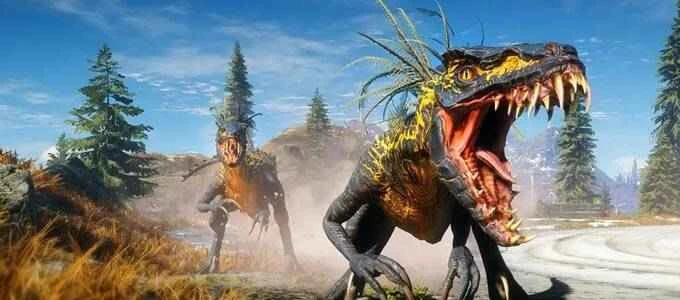
Before the dinosaurs appeared, lizard-like species already existed on Earth. Although they were not as large as dinosaurs, they had certain advantages compared to other animals at the time. Paleontologists believe they were the prototypes of the later dinosaurs. Lizards appeared in the Carboniferous period (363 million to 290 million years ago), several geological epochs before the Triassic. During that era, the world's earliest reptile, the Silothian lizard, appeared. By the Permian period, a geological epoch before the dinosaurs, reptiles had diversified, and their shapes began to resemble the earliest dinosaurs. The Permian was a relatively arid era, with deserts being very common. During the same period, lizards like the basalts and the heterodonts thrived in desert oases. In the late Permian, two distinct trends emerged in biological evolution, both of which had a profound impact on Earth's history. One trend was the emergence of dinosaurs, and the other was the emergence of mammals.
Just as Earth's evolution was in full swing, an asteroid even larger than the meteorite that ended the age of dinosaurs 65 million years ago struck the planet at the end of the Permian period. The impact caused the extinction of most species, but it also catalyzed the emergence of dinosaurs. During the Permian, true dinosaurs officially appeared. The black dinosaur was one of the earliest to appear; its small size and agile movements quickly made it a winner in the survival game. By the end of the Permian, the coelacanth appeared, serving as the prototype for many carnivorous dinosaurs and birds. Soon, the Jurassic period arrived, and early Jurassic herbivorous dinosaurs began to evolve towards larger sizes, an advantage that helped them escape the pursuit of carnivorous dinosaurs. This led to the emergence of sauropod dinosaurs; the massive sauropods pushed dinosaur evolution to its peak. Another reason for the emergence of large sauropod dinosaurs was climate; according to geological records, the late Jurassic was warm and humid, allowing dinosaurs to grow to over thirty meters long. Furthermore, carnivorous dinosaurs also became larger and more aggressive and threatening; for example, the Allosaurus in North America. In addition, some very special dinosaurs, such as the feathered Sinosauropteryx, began to follow the path of avian evolution. Influenced by climate and living conditions, the Late Jurassic period was the golden age of dinosaurs.