Mounting evidence suggests that octopuses and other similar creatures are sentient. Heather Browning, a postdoctoral researcher in animal perception and welfare at the London School of Economics, writes in an article, “Octopus thinking may be very different from human thinking, but only by trying to see the world from their perspective can we figure out what is good for them and thus safeguard their welfare.” Browning is working on a project at the LSE on the foundations of animal perception, and her team has produced an influential report attempting to answer the question of whether octopuses are conscious.
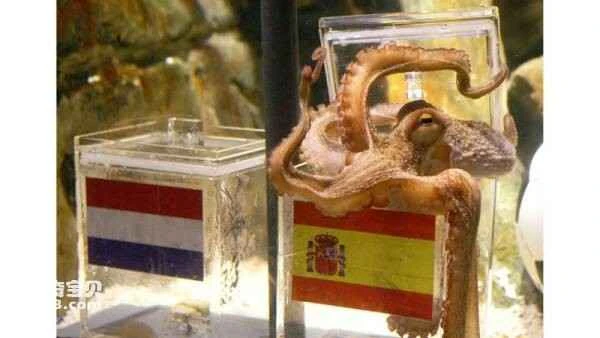
Octopuses are brilliant escape artists; they can open the lids of containers from the inside.
One approach is to begin by studying things we know that are sentient. Browning says, “If we study this problem seriously, we will assume that we are sentient, and that other people are just as sentient, which is perfectly reasonable. Then you can study whether other animals share any characteristics with us.”
For example, the ability to feel pain—this is a key focus of a research report by a London School of Economics team on cephalopod mollusks (including octopuses, squid, and cuttlefish) and decapod crustaceans (including crabs, crayfish, lobsters, prawns, and shrimp). Browning and her colleagues reviewed more than 300 scientific papers and summarized eight criteria for an animal's ability to feel pain:
1. Possesses pain receptors (receptors that perceive harmful stimuli, such as heat causing burns or cuts).
2. The part of the brain that integrates sensory information
3. It possesses connections between pain receptors and brain integration areas.
4. Reactions to local anesthetics or analgesics.
5. The motivational trade-off mechanism of using threats to balance actions in order to obtain rewards.
6. Flexible self-protective behaviors to cope with harm and threats.
7. Ability to transcend habitual and sensitized associative learning
8. Demonstrates that animals value local anesthesia or analgesia when injured.
Animals can meet the criteria with high, moderate, or low confidence levels, depending on whether the study is conclusive or non-conclusive. Browning and her colleagues argued that if an animal meets seven or more criteria, there is “very strong” evidence that the animal is conscious. If it meets five or more high-level confidence levels, there is “strong evidence” that it is conscious, and so on.
Through this measurement, Browning and her colleagues concluded that octopuses can undoubtedly feel pain and are therefore sentient. Octopuses met all the criteria except for a high or very high level of confidence, and a moderate level of confidence. They scored the highest of all the organisms studied, even higher than their cousin, the cuttlefish. Cuttlefish are considered more intelligent. (However, Browning notes that far fewer studies have been conducted on squid and other cephalopods besides octopuses, which affected their scores.)
The report was used as evidence for an amendment to the UK's Animal Welfare (Sentience) Bill, which recognizes the sensory abilities of cephalopod mollusks and decapod crustaceans.
Godfrey-Smith said, "I think this is a good thing because octopuses and crustaceans are getting a new kind of animal rights recognition in the UK."
The capacity to feel pain is just one of many aspects of consciousness—there is also the capacity to feel pleasure, boredom or interest, companionship, and much more. As research progresses, scientists may be able to design similar scales to measure many more different facets of animal consciousness.