Among the many families of fish, jawless fish (Agnatha) have become a focus of scientific attention due to their unique physiological structure and ancient lineage. Although the vast majority of jawless fish are extinct, a very small number of survivors remain on Earth, such as lampreys and hagfish, who together bear witness to the evolutionary history of vertebrates. This article will systematically introduce you to the definition, main characteristics, representative species, and paleontological value of jawless fish, helping you to gain a deeper understanding of this amazing and ancient group of life.
What are jawless fish (jawless fish)?
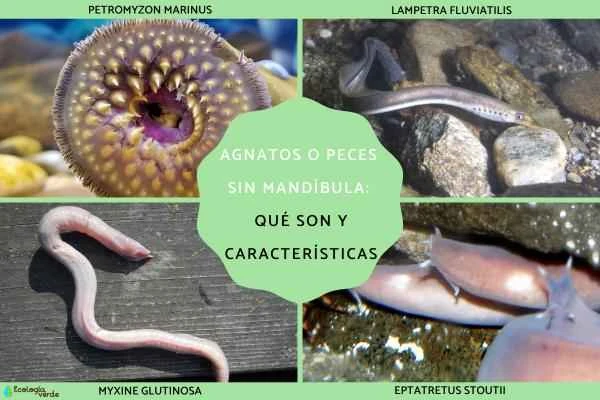
Jawless fish, also known as jawless eels, are a group of primitive vertebrates lacking upper and lower jaws . There are approximately 100 extant species, mainly divided into two groups: hagfish (Mixines) and lampreys (Hyperoartia). Other jawless fish are only found in the fossil record. Jawless fish, along with cartilaginous fish (such as sharks and rays) and bony fish (such as carp and goldfish), constitute the three major evolutionary lineages of fish.
Main characteristics of jawless fish
Eel-like body shape : slender, cylindrical, and resembling an eel in appearance.
Absence of the mandible : Lacking true jawbone structure, consisting only of a simple oral ring or suction cup.
Cartilaginous skeleton : There is no skeleton in the body, only cartilage for support.
Gill openings : The breathing pores are multiple circular gill openings, rather than the gill cover structure commonly found in fish.
Unpaired fins : It has only one continuous asymmetrical dorsal fin and lacks pectoral and pelvic fins.
Slippery skin : The skin has no scales and secretes a lot of mucus, making it extremely slippery.
Photosensitive organs : It has a pineal gland (photosensitive), but the hagfish's eyes are degenerate and can only sense light.
Notochord structure : The notochord is preserved for life.
The digestive system is simple : there is no true stomach, and the intestines are directly connected.
Well-developed nervous system : It has a brain and spinal cord, and some species have a small cerebellum.
Lampreys: Vampire Hunters and River-Sea Migrants
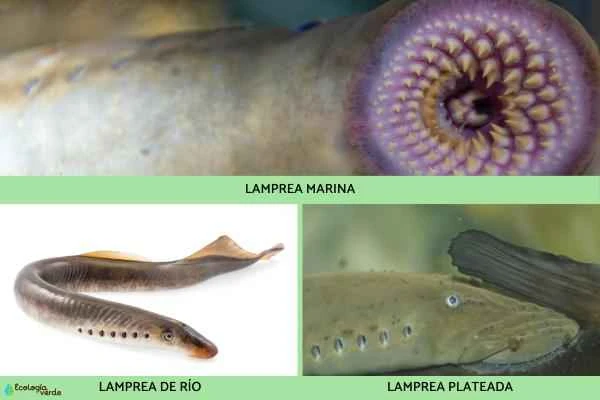
Lampreys are one of the representatives of jawless animals, scientifically known as Hyperoartia (also called Petromyzontiformes), and there are three major extant families.
Main features:
Its mouth is sucker-shaped, covered with horny teeth and a powerful tongue, allowing it to attach itself to animals such as fish.
Some species are parasitic, feeding on fish fluids and blood, and secreting anticoagulant substances.
Non-parasitic adults do not eat and die after completing reproduction.
Their life cycle is divided into marine and freshwater amphibious (migratory). During the breeding season, they swim upstream to build nests, and both males and females die after laying eggs.
The larval stage (Ammocoete) lasts for 3-7 years in freshwater before metamorphosing into an adult.
Common examples of lampreys:
Marine lamprey (Petromyzon marinus) : Distributed in temperate regions of the Northern Hemisphere, it can reach a length of 1 meter.
River lamprey (Lampetra fluviatilis) : Found throughout freshwater areas of Europe, with a dark gray back.
Nordic lamprey (Ichthyomyzon fossor) : Distributed in the United States and Canada, non-parasitic, filter feeder.
Silver lamprey (Ichthyomyzon unicuspis) : Common in North America, highly parasitic.
Argentine lamprey (Geotria macrostoma) : A parasitic bony fish that migrates to the ocean from the Patagonian basin in South America.
Hagfish (Mixines): Deep-sea "slime monsters"
Hagfish are the only remaining jawless group, belonging to the Mixins, and live only in the ocean.
Main features:
It feeds exclusively on dead fish and rotting flesh, making it a typical deep-sea scavenger.
It possesses a powerful sense of smell and touch, but its eyesight is highly degenerate.
The suckers at its mouth lack keratinous teeth; instead, they are "knotted" to enhance tearing force, allowing it to directly swallow its prey.
Its body surface is covered with mucus glands, which can quickly secrete a large amount of mucus when encountering enemies, causing predators to suffocate.
Unilateral gonadal development; reproductive behavior remains unclear.
The eggs are few but large, develop directly, and have no typical larval stage.
Common examples of hagfish:
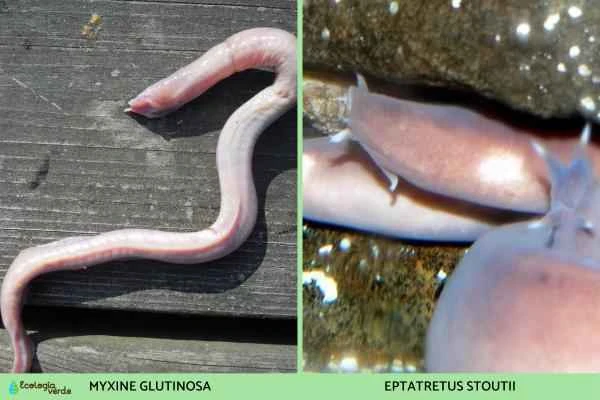
Common hagfish (Myxine glutinosa) : Distributed along the Atlantic coast, reaching depths of up to 600 meters, a nocturnal carnivore.
Purple blind eel (Eptatretus stoutii) : from the deep Pacific Ocean, it is known as a "living fossil".
Myxine affinis : South Atlantic Ocean and Strait of Magellan in South America.
Notomyxine tridentiger : Distributed in the muddy bottoms of the South American coast.
Extinct jawless fish
Most jawless dinosaurs are extinct, and their existence is mainly known through fossil studies.
Ostracoderms : The most famous jawless fish of the Devonian period, with a bony shell and paired fins, widely distributed in ancient saltwater and freshwater environments.
Today, only two major groups of jawless eels (lamellae and hagfish) remain, while the other nine groups have all become extinct.
Conclusion
Jawless fish are "living fossils" in the evolutionary history of fish, witnessing key evolutionary stages in vertebrates from simple to complex and from aquatic to terrestrial. Extant lampreys and hagfish provide valuable clues for biological and paleontological research. If you are interested in fish evolution and paleontological fossils, please continue to follow this column!