Lionfish (Pterois genus), known for their distinctive appearance and high toxicity, are among the world's most notorious invasive fish. In recent years, lionfish have spread rapidly in non-native waters such as the Atlantic Ocean and the Caribbean Sea, seriously threatening the local ecological balance. This article will provide a comprehensive analysis of lionfish species, physical characteristics, habits, toxicity, and ecological hazards, helping you scientifically understand this "underwater killer"!

Basic characteristics of lionfish
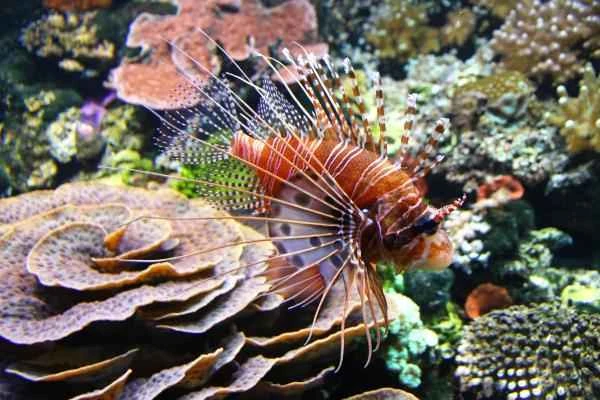
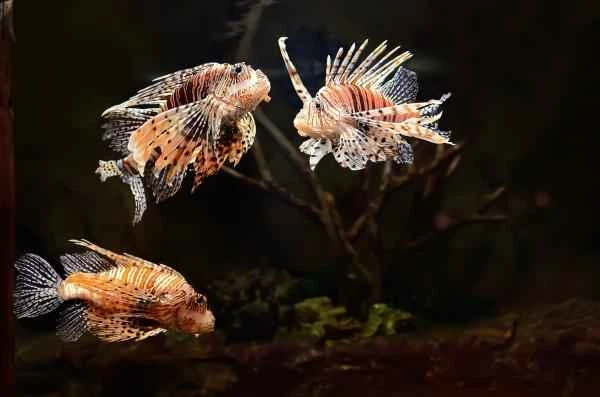
Lionfish belong to the family Scorpaenidae, genus Pterois, and have a highly distinctive appearance. Their pectoral and dorsal fin rays are unusually long, with no connecting tissue at the ends, resembling a lion's mane, hence the name "lionfish." They also have a pair of horn-like "tentacles" above their eyes.
Vibrant Coloration : Lionfish are covered in alternating brown and white stripes, a striking and highly warning coloration that effectively deters predators. This warning coloration is not only a "beautiful trap" but also alerts other creatures to its highly venomous nature.
Common Lionfish Species
Red lionfish (Pterois volitans) : It can reach a length of 35 cm, with feathery pectoral fins, and is a major invasive species in the Atlantic Ocean.
White-finned lionfish (Pterois radiata) : Approximately 25 cm in length, with a darker body color and distinctive white barbels and fin rays, giving it a more translucent appearance.
Soldier Lionfish (Pterois miles) : With a rounder head and a whitish body color, it is one of the invasive species in the Indian Ocean.
Additional information: Twelve species of lionfish have been discovered worldwide, with differences in size, color, and distribution among the different species.
Lionfish distribution and habitat
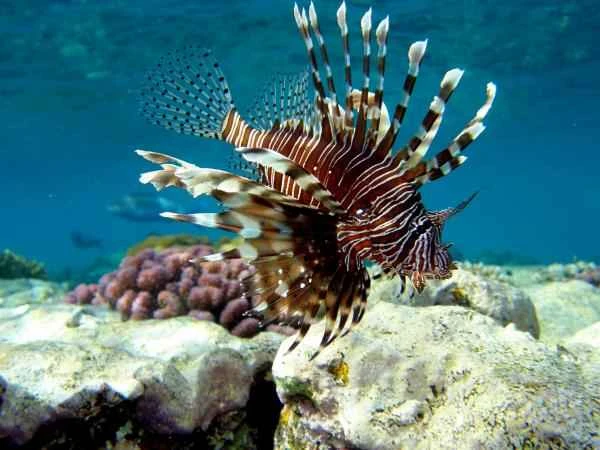
Lionfish are bottom-dwelling fish that mainly live in areas with complex seabed structures such as coral reefs, rocks, and seagrass beds .
Origin : Tropical waters such as the western Pacific and Indian Oceans; a common ornamental fish in Southeast Asia, Australia, and other regions.
Invasion sites : The Atlantic Ocean (especially Florida in the United States, the Caribbean Sea, the Mediterranean Sea, etc.), becoming "exotic killers" of local ecosystems. Invasions are mostly caused by the aquarium trade or human release, and have spread rapidly to many parts of the world.
Lionfish can easily blend into their surroundings with their brown and white stripes, thus avoiding the attention of predators and prey.
Lionfish diet and hunting methods
Lionfish are typical nocturnal carnivorous predators , feeding on small fish, shrimp, crabs, and other small prey. They are accustomed to:
Lurk and wait, using ocean currents to approach your prey.
Spread your pectoral fins to surround the small fish and launch a sudden attack.
In some cases, they even cooperate to hunt prey.
Occasionally, cannibalism may occur (a rare occurrence).
In invaded areas, lionfish often prey on native fish, leading to a sharp decline in native fish populations.
Are lionfish poisonous? What should I do if I get stung?
Lionfish are among the most venomous fish in the world . Their dorsal, anal, and pelvic fins all have hard spines connected by venom glands, which can secrete neurotoxins.
Defense mechanism : When threatened, it raises its venomous barbs high. It rarely attacks proactively and mostly acts defensively.
Symptoms of poisoning include severe pain, local swelling, fever, and respiratory or circulatory problems after being stabbed. Severe cases require emergency medical treatment.
Emergency treatment : Immediately soak the wound in hot water (40-45℃) to relieve pain and reduce toxicity, then seek medical attention promptly.
Lethality : Generally not fatal to adults, but children, the frail, and those at higher risk of accidental stings underwater are at greater risk.
The harm lionfish cause to the ecosystem
Lionfish are known as the "King of Marine Invasions" due to their strong survival ability, rapid reproduction rate, and lack of natural predators.
An adult lionfish can consume 4.7 kilograms of small fish per year, leading to a sharp decline in native species.
In invasive habitats such as San Andrés Island in Colombia, lionfish populations have reached millions, posing a significant threat to the ecosystem.
Native predatory fish species are unable to effectively control lionfish populations, disrupting the original food chain and affecting the ecological balance of coral reefs.
This has led to losses in commercial fisheries and impacted the local fishermen's economy.
Are lionfish edible? What are the control measures?
Lionfish are edible fish with delicious, non-toxic flesh that is high in protein and low in fat. Encouraging the consumption of lionfish and the catching of juveniles in invasive areas are effective ecological management methods that help control their population and protect local ecosystems.
Note: Fishing and consumption must be carried out outside the native habitat, and care must be taken to prevent damage to native lionfish populations.
Conclusion
Lionfish, with their vibrant appearance and remarkable adaptability, are not only a favorite among aquarium enthusiasts but also one of the most threatening invasive fish species worldwide. Scientific prevention and control, rational utilization, and strengthened ecological monitoring are essential lessons for humans to "coexist" with lionfish.
literature:
Sandford, G. (1994) *The Complete Book of Aquarium Fishes: A Comprehensive Guide to Identifying, Selecting and Keeping Freshwater and Marine Species* . Madrid: Tursen/Hermann Blume Ediciones.
Campos, N. and Acero, A. (2019) Marine Science. San Andrés: National University of Columbia.
Sánchez, J. (2021) Why do we depend on biodiversity? Bogotá: University of Los Andes.