There are many kinds of seagulls, such as: Mexican gull (Larus heermanni), fringed gull (Creagrus furcatus), Tasmanian gull (Larus pacificus), herring gull (Larus argentatus), Bordet's gull (Chroicocrphalus philadelphia), rose gull (Rhodostethia rosea), three-toed gull (Rissa tridactyla), Sabine gull (Xema sabini), white-eyed gull (Larus leuchophthalmus), Patagonian gull (Leucophaeus scoresbii), and great black-backed gull (Larus marinus).
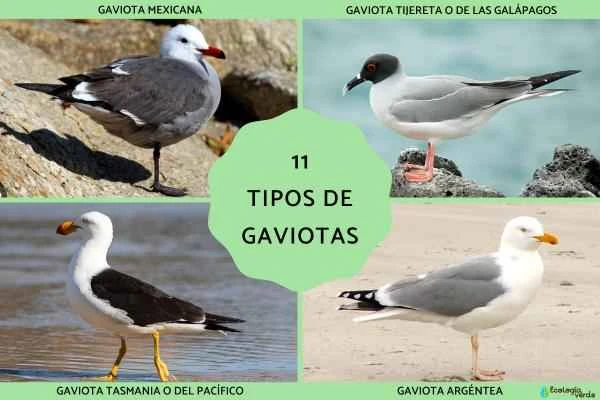
Seagulls are seabirds belonging to the order Carradiformes. They are adapted to spending long periods of time on the seashore, with some even migrating for days at a time. Their diet consists of opportunistic predators, using their beaks to catch the remains of marine animals, small fish, crustaceans, and other invertebrates. In this article, we introduce different types of seagulls, some unique characteristics of each type, and some interesting facts about these birds.
Table of contents
Mexican Gull (Larus heermanni)
Swallow-tailed gull (Creagrus furcatus)
Tasmanian Gull (Larus pacificus)
Herring gull or herring gull (Larus argentatus)
Bonaparte Gull (Chroicocephalus philadelphia)
Rose Gull (Rhodostethia rosea)
Three-toed Gull (Rissa tridactyla)
Sabine gull (Xema sabini)
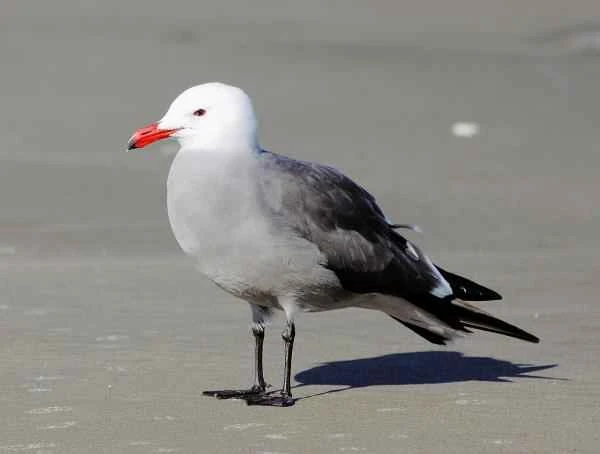
Mexican Gull (Larus heermanni)
Its body is grey, its head white, and its beak red with distinct black markings. They inhabit the Pacific coast of North America, from Guatemala in the south to the United States in the north. In search of food, they congregate with other birds (such as pelicans) and steal any food they find. They nest on Lazar Island, a volcanic island in the Sea of Cortez, Baja California.
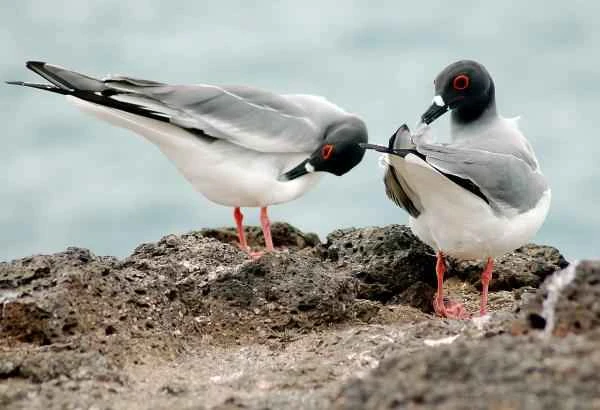
Swallow-tailed gull (Creagrus furcatus)
It is the only nocturnal gull, thus occupying a niche with little competition but abundant opportunities. It feeds on fish and squid that surface at night. Young gulls are born in the Galapagos Islands, hence the name "Galapagos Gull." It is also known as the Forked-tail Gull because of its distinctive V-shaped forked tail. Adult gulls hibernate near the coast when migrating to South America.
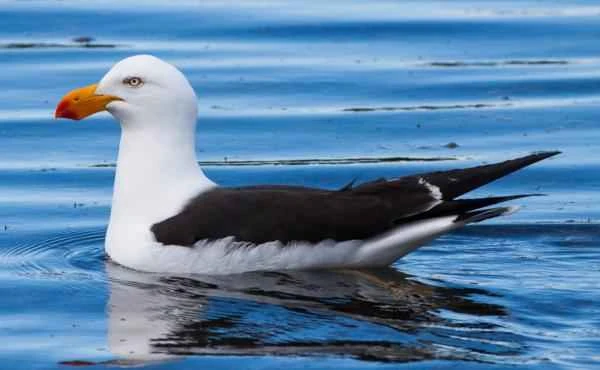
Tasmanian Gull (Larus pacificus)
These are endemic to Australia and found in the Pacific Ocean. They have large yellow beaks with orange or red tips. They are also quite large, being the largest gulls in their range, with a wingspan of 1.3 to 1.5 meters. They are entirely white with black wings and tails. They are solitary but occasionally gather in pairs.
It feeds on bivalves and sea urchins, lifting them high into the air before dropping them onto rocks to open and eat them. It also feeds on fish, squid, and marine invertebrates found on the beach.
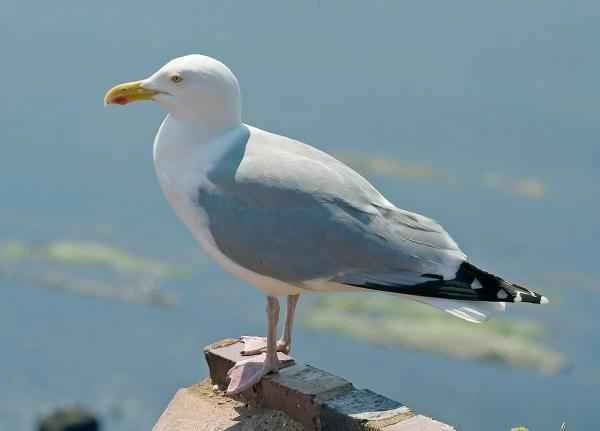
Herring gull or herring gull (Larus argentatus)
It is a type of seagull found in Spain, but is also common throughout the Northern Hemisphere. They have a yellow beak with a red spot at the bottom, a soft body, gray (silver) wings and back, and black wingtips.
They forage randomly, feeding on animal carcasses, plants in farmland, fishing boat debris, eggs of other birds, and even garbage. They dive into shallow waters to catch fish. They are also known as European herring gulls because they feed on fish, although they don't seem to prefer fish more than other food sources. They have a peculiar behavior: they repeatedly stomp on the ground, kicking rapidly to stimulate worms to the surface, which they then feed on. This, along with their calls or songs, is part of their communication.
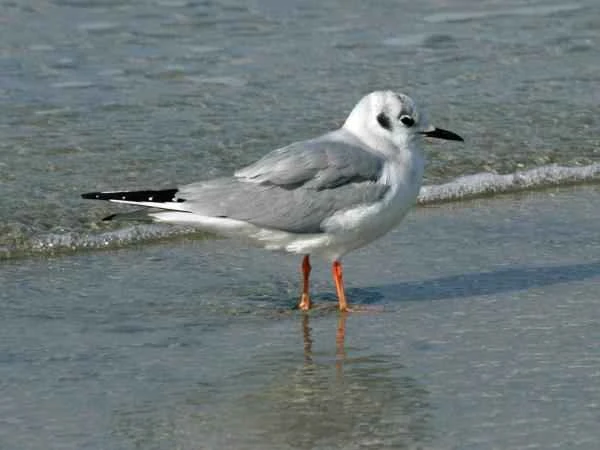
Bonaparte Gull (Chroicocephalus philadelphia)
Measuring 28 to 30 centimeters in length, this is a small gull. They have white bodies, orange legs, grey wings, and black heads and beaks. Individuals not yet reproductively mature due to age have white heads and black spots behind their eyes. These gulls breed in Canada and Alaska and migrate to the Caribbean coast for winter. They are the only gull species that nests on sticks. They feed on small fish, marine invertebrates, and insects.
Rose Gull (Rhodostethia rosea)
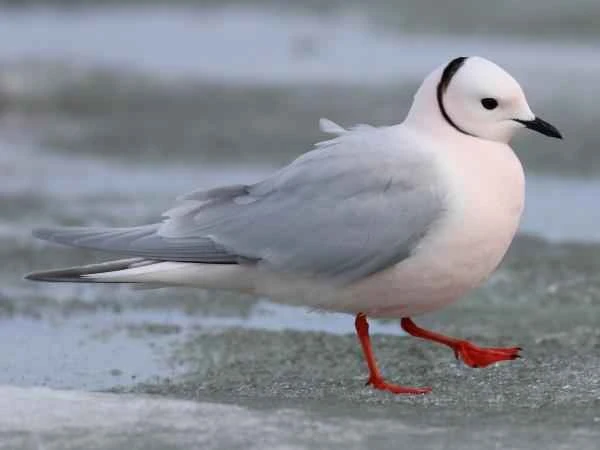
It is entirely white with grey wings and a distinctive black collar around its neck that extends from its throat to the nape of its neck. Another unique feature is that its abdomen turns pink during the summer when it breeds in the Arctic tundra of northwestern Siberia and North America. In winter, it migrates to the coast and ocean, where it hibernates.
Three-toed Gull (Rissa tridactyla)
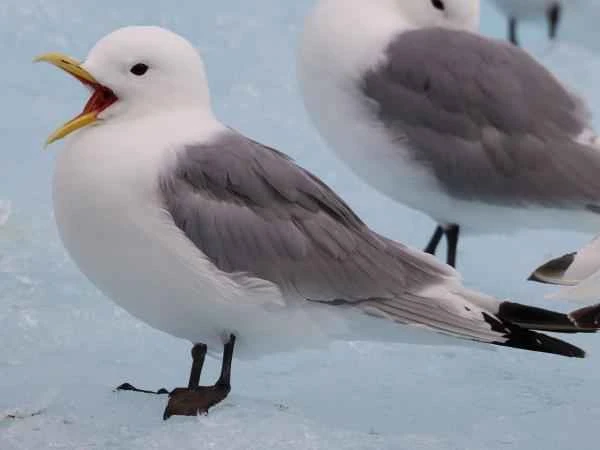
It nests on the cliffs of the Pacific and Atlantic Oceans, with several individuals gathering together to build nests simultaneously, forming a colony structure. Due to its wide distribution for nesting and breeding, it is the most numerous seagull in the world. However, after the breeding season, they become difficult to spot because they mostly fly over the high seas.
Sabine gull (Xema sabini)
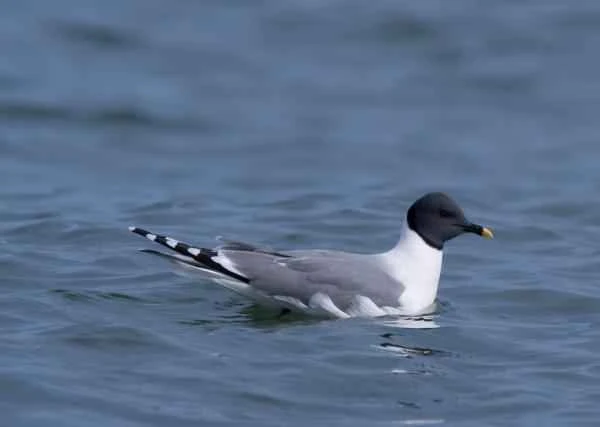
It nests and breeds in the upper Arctic, but with the arrival of winter, it migrates to distant places, reaching Africa and South America. Outside the breeding season, it flies across the high seas. Its back is grey, its primary flight feathers are black, and its secondary flight feathers are white. During the breeding season, its head color changes from grey to black.
White-eyed Gull (Larus leucophthalmus)
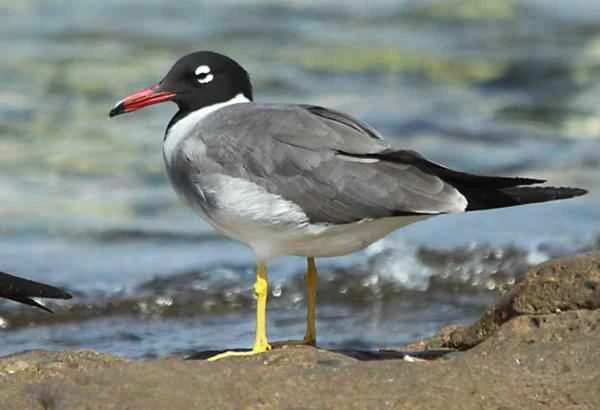
Its color ranges from brown to gray, with white eye sockets. Its beak is distinctive, long and slender, red with a black tip. It is endemic to the Gulf of Aden and the Red Sea. It is extremely rare due to the severe threat to its survival posed by oil spills in its habitat.
Patagonian Gull (Leucophaeus scoresbii)
The Southern Gull, also known as the Grey Gull, is a relatively large bird, averaging about 38 centimeters in length. Its legs and beak are orange, its body is white, and its wings and back are grey. They are highly aggressive towards other birds. They inhabit limited areas in Patagonia and the Falkland Islands of South America. They build their nests using various materials such as grass, seaweed, feathers, and bones.

Great Black-backed Gull (Larus marinus)
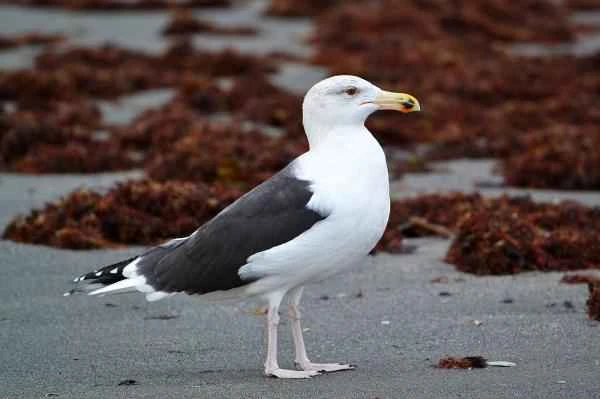
This is the largest of all seagulls, measuring 64 to 78 centimeters in length. It is entirely white with black wings and a large head. It is native to the North Atlantic coast. Due to its large size, it is extremely aggressive towards other seabirds, not only competing for space but also preying on them, including their chicks.
If you would like to read articles similar to those about seagull species, we recommend that you visit our Wildlife category.