Octopuses are among the most intelligent invertebrates in the ocean, belonging to the class Cephalopoda. They possess a unique spherical head, eight sucker tentacles, and a highly developed nervous system. Besides their exceptional camouflage and escape abilities, many octopuses also possess venom glands, using venomous saliva to paralyze prey. In some species, they even pose a deadly threat to humans. This article will systematically outline the names, appearance characteristics, distribution, toxic mechanisms, and ecological value of the world's ten most notorious venomous octopuses, giving you a comprehensive understanding of these "invisible killers" of the ocean!
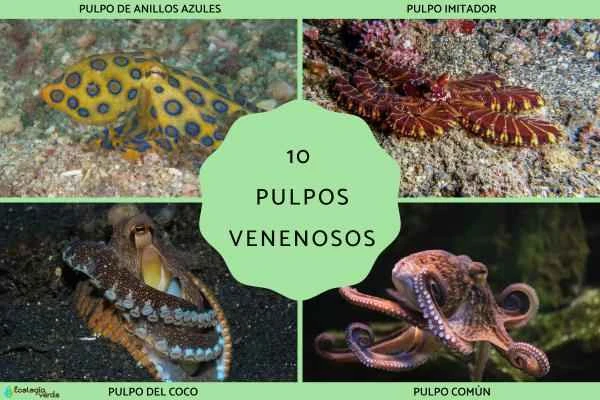
Table of contents
Blue-ringed octopus (Hapalochlaena)
Mimic octopus (Thaumoctopus mimicus)
Giant Pacific octopus (Enteroctopus dofleini)
Coconut octopus (Amphioctopus marginatus)
Common octopus (Octopus vulgaris)
Sail octopus (Tremoctopus violaceus)
California bimaculoid octopus
Dumbo octopus (Grimpoteuthis genus)
Seven-armed octopus (Haliphron atlanticus)
Pacific dwarf octopus (Paroctopus digueti)
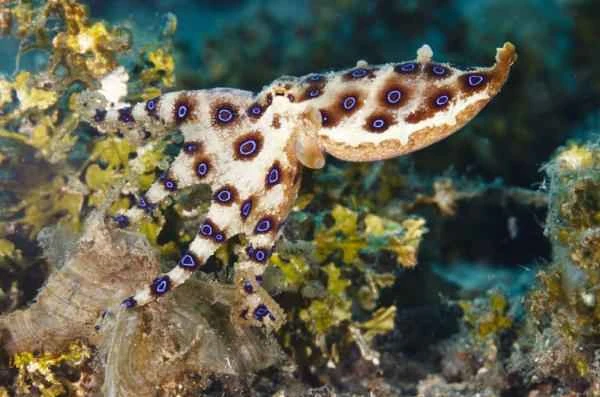
1. Blue-ringed octopus (Hapalochlaena)
The blue-ringed octopus is small, reaching a maximum length of about 20 centimeters, yet it is known as the "most venomous animal in the ocean." Its yellow or brown body is covered with blue rings, a strong warning coloration. Its salivary glands secrete neurotoxins (primarily tetrodotoxin), which can kill a human within minutes, and there is currently no antidote.
Note : Blue-ringed octopuses are usually docile, but they can bite if stepped on or handled, posing a serious danger.
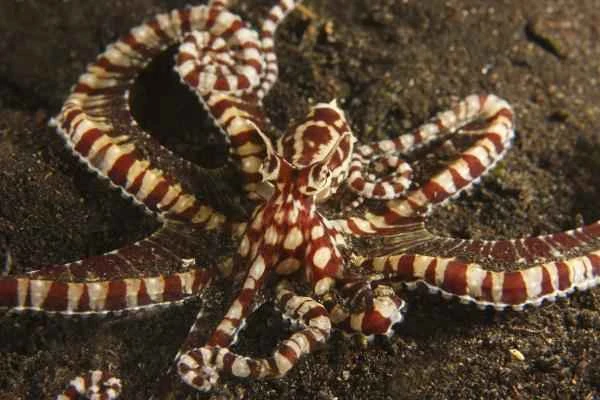
2. Mimic Octopus (Thaumoctopus mimicus)
Mimic octopuses possess an astonishing ability to mimic various marine creatures, including lionfish, sea snakes, jellyfish, and flounder, to evade predators or hunt prey. They are found in sandy shallows near coral reefs in Southeast Asia. They paralyze their prey (such as small fish and crustaceans) with their highly venomous saliva before using their tentacles to deliver it to their mouths for digestion.
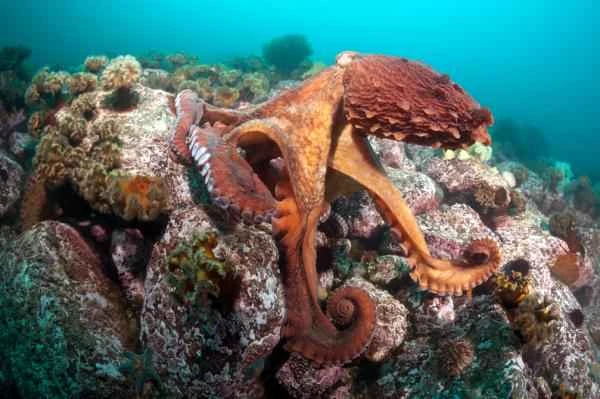
3. Giant Pacific Octopus (Enteroctopus dofleini)
Reaching a length of up to 9 meters, it is the world's largest octopus species. Reddish-brown in color, it can rapidly change color and shape to blend into its environment. It feeds on clams, lobsters, fish, and even small sharks and seabirds. Its saliva contains neurotoxins that have a strong paralyzing effect on its prey.
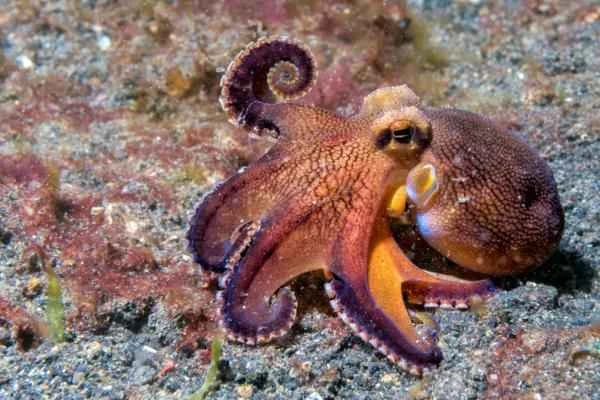
4. Coconut octopus (Amphioctopus marginatus)
The famous "tool octopus" carries coconut shells, seashells, and other materials to serve as shelter or hunting traps. It softens its prey with its highly venomous saliva and digestive enzymes before consuming it, easily catching crabs, small fish, and other prey.
5. Common octopus (Octopus vulgaris)
Widely distributed globally, commonly found in shallow sea crevices and caves, it has a relatively short lifespan. Its saliva contains a neurotoxin called cephalopod toxin, which can quickly paralyze small crustacean and molluskine prey. While rarely fatal, a human bite can cause swelling and severe pain.
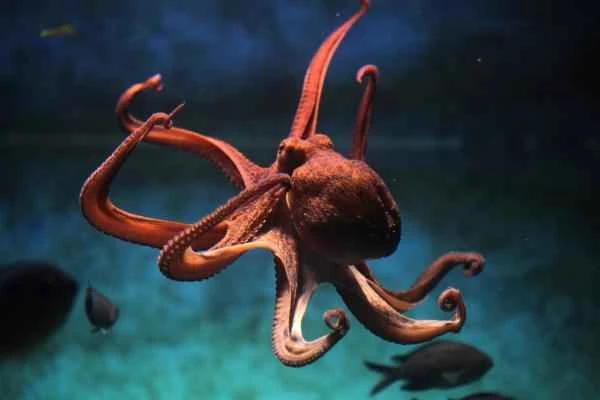
6. Sail Octopus (Tremoctopus violaceus)
The sail octopus, living in the open ocean, possesses enormous, membranous tentacles resembling canvas, which serve as defense against predators, for swimming, and for camouflage. Females can reach up to 2 meters in length, while males are only a few centimeters long. They confuse predators by releasing toxins and tearing their sail-like membranes.
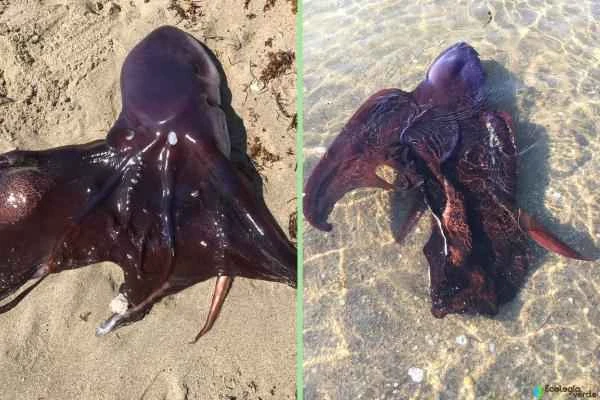
7. California bimaculoid octopus (Octopus bimaculoides)
Distributed along the coasts of California and the Mexican Peninsula, it has distinctive blue spots on both sides of its head, resembling "second eyes." It feeds on crustaceans and mollusks, and if it cannot penetrate the shell of its prey, it uses its salivary toxins to paralyze and digest them.

8. Dumbo Octopus (Grimpoteuthis genus)
Commonly known as the "Dumbo octopus," it has ear-like fins on the sides of its head. It primarily inhabits the deep sea at depths of 4000-7000 meters. Its tentacles are covered by a thin membrane, allowing it to move like a jellyfish, flapping its wings and using its tentacles and highly venomous saliva to prey on deep-sea crustaceans.
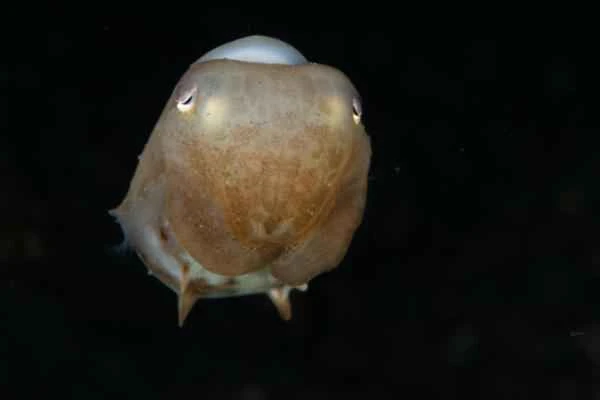
9. Seven-armed octopus (Haliphron atlanticus)
This is a super-sized octopus, reaching up to 4 meters in length. The male reproductive arm (Hectocotylus) is usually hidden in a pouch near its eye, often mistakenly believed to have only seven arms. It feeds on jellyfish, shrimp, and small crustaceans, and is an important food source for large marine creatures such as blue sharks and sperm whales.
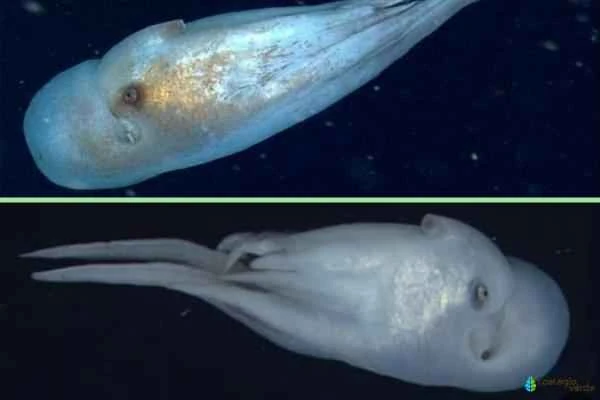
10. Pacific dwarf octopus (Paroctopus digueti)
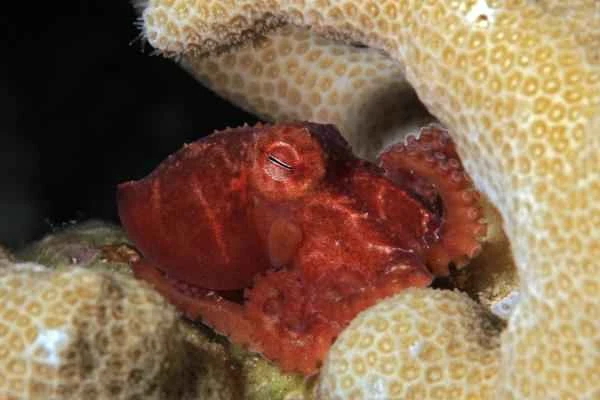
Small in size, they are found in the shallow waters and mudflats along the Mexican coast. They prefer to lay their eggs inside shells and hollow rocks. They feed on small shrimp, mollusks, and fish, using their highly venomous saliva and tentacles to hunt.
Conclusion
Many species of octopuses possess potent venom, which serves not only as a hunting weapon but also as a crucial means of self-defense. Understanding the types, distribution, and dangers of these venomous octopuses is vital for public education and safety awareness. If you'd like to learn more about octopus, marine life, or animal toxicity, please follow our special feature!
References
Coker DJ. 2012. Record of Thaumoctopus mimicus, a mimic octopus from the Great Barrier Reef, Australia. Accessible at: https://sci-hub.st/https://doi.org/10.1017/S175526721200125X
Field-Cortazares J, Calderón-Campos R. 2010. Venom of the Blue-ringed Octopus. Accessible at: https://www.medigraphic.com/pdfs/bolclinhosinfson/bis-2010/bis102j.pdf
García Flores M. 2017. Early ontogeny and reproductive capacity of the Pacific dwarf octopus, *Paroctopus digueti* (Perrier and Rochebrune, 1984). Link: file:///C:/Users/user/Downloads/garciaflo1.pdf
Guerra A. 1978. Diet and feeding behavior of the common octopus (Octopus vulgaris). Link: https://digital.csic.es/bitstream/10261/87157/1/Guerra_1978.pdf
Hoving HJT, Haddock SHD. 2017. Giant deep-sea octopus (Haliphron atlanticus) feeds on gelatinous animals. Link: https://www.nature.com/articles/srep44952
Ibarra García LE. 2012. Age and growth analysis of the giant octopus (Octopus hubbsorum) (Berry, 1953) and the bimaculoides (Octopus bimaculoides) (Pickford and McConnaughey, 1949) using mouthpiece growth ring readings. Link: http://dspace.cibnor.mx:8080/bitstream/handle/123456789/294/ibarra_l.pdf?sequence=1&isAllowed=y
Murcia Requena FJ. The Veiled Octopus, a peculiar cephalopod. Link: https://digitum.um.es/digitum/bitstream/10201/29167/1/El%20Pulpo%20de%2