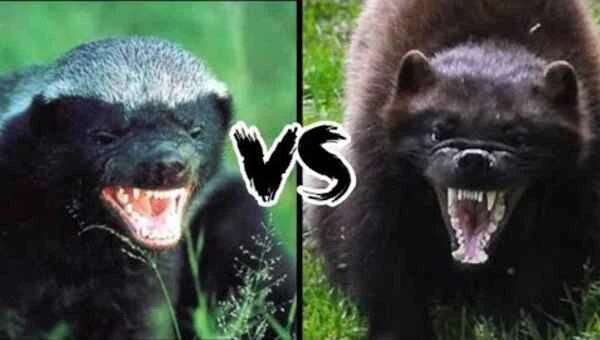
In the animal kingdom, two creatures can be described as "fearless warriors": the wolverine ( Gulo gulo ) living in the icy world of the north, and the honey badger ( Mellivora capensis ) of the scorching African savanna. While not the largest in size, these two animals are renowned for their astonishing courage and formidable survival skills. What kind of contest would unfold if they met? Let's take a closer look at their differences.
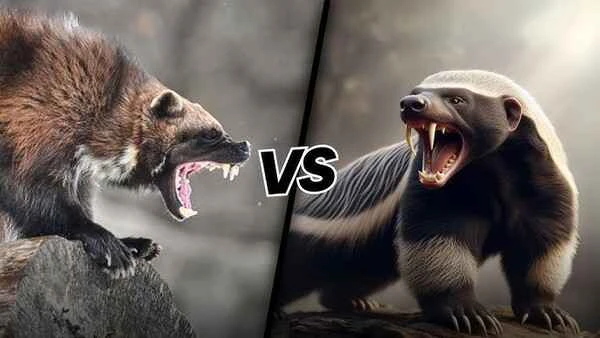
Table of contents
Introduction: The Legend of Two Ferocious Beasts
A comprehensive analysis of wolverines
Habitat and Distribution
Body structure and characteristics
Dietary habits
Survival skills
A comprehensive understanding of honey badgers
Habitat and Distribution
Body structure and characteristics
Dietary habits
Survival skills
Head-to-head comparison: Wolverine vs. Honey Badger
Body size and strength comparison
Defense Mechanism Comparison
Battle Strategy Analysis
A battle of intelligence and adaptability
Who will win in the end?
Ecological significance: Guardians of the wild
Fun Facts and Cultural Influence
Summary and Implications
1. Introduction: The Legend of Two Ferocious Beasts
Wolverines and honey badgers may not be household names, but they are formidable predators in the wild. Wolverines are known as the "Ghosts of the North" because they are extremely difficult for humans to spot and possess powerful hunting skills; honey badgers, on the other hand, have earned the title of "tough guy of the animal kingdom" thanks to their fearless nature. Today, we'll take you into their world to see who truly deserves the title of king of the wild.
2. A Comprehensive Analysis of the Wolverine
Habitat and Distribution
Wolverines primarily inhabit high-latitude regions of North America, Northern Europe, and Asia, and are typical Arctic creatures. They prefer cold climates and typically live in tundra, coniferous forests, and high-altitude environments, far from human activity.
Body structure and characteristics
**Size:** Adult wolverines are about 65-110 cm long and weigh 10-25 kg. They have short and stocky bodies.
**Appearance:** Dense brown or black fur with light-colored stripes, providing good camouflage.
**Teeth and Claws:** Sharp teeth can easily crush bones, and strong claws are suitable for digging and fighting.
Dietary habits
Wolverines are thorough "omnivorous hunters." Besides carrion, they hunt elk, rabbits, and even store food for winter. Wolverines will use the prey of other predators, such as driving away wolves or bears, to directly seize the spoils.
Survival skills
**Exceptional endurance:** It can travel dozens of kilometers in a single day in search of food.
**Combat capability:** It can face wolves or even bears without fear and can quickly escape.
**Cold resistance:** Their thick fur and fat help them survive in extreme environments.
3. A Comprehensive Understanding of the Honey Badger
Habitat and Distribution
Honey badgers are widely distributed in sub-Saharan Africa, the Middle East, and the Indian subcontinent. They can be found in almost any environment, from arid deserts to tropical rainforests.
Body structure and characteristics
**Size:** The body length is approximately 55-77 cm, and the weight is 7-16 kg, which is slightly smaller than that of a wolverine.
**Appearance:** Black body with white stripes, thick and loose skin, especially suitable for defense and counterattack.
**Claws:** Long and sharp claws, capable of both digging burrows and tearing prey apart.
Dietary habits
Honey badgers are the "all-rounders" of the animal kingdom. They eat almost anything, including small mammals, insects, birds, venomous snakes, and even honey. Known for their fearlessness in the face of venomous snakes and swarms of bees, honey badgers are highly intelligent omnivores.
Survival skills
**Skin Defense:** The honey badger's loose skin allows it to fight back nimbly even when captured.
**Venom Immunity:** Even if bitten by a venomous snake, it can recover quickly and continue hunting.
**Fearless Spirit:** Daring to challenge large predators such as lions and hyenas, and being able to escape unscathed.
4. Direct comparison: Wolverine vs. Honey Badger
Body size and strength comparison
**Wolverine:** Larger, heavier, and stronger, with a bite force capable of easily crushing bones.
**Honey Badger:** Although small in size, it has amazing explosive power and very sharp claws.
Defense Mechanism Comparison
**Wolverine:** Dense fur and thick fat provide protection, but make them slightly less agile.
**Honey Badger:** Its skin is extremely thick and loose, allowing it to twist its body to counterattack enemies, and it also has a very high tolerance to venom.
Battle Strategy Analysis
**Wolverine:** Relies on strength and frontal attacks, usually directly confronting enemies head-on.
Honey Badger: More agile, prefers quick counterattacks or targets the opponent's weaknesses.
A battle of intelligence and adaptability
**Wolverine:** Skilled at using the environment to hide and store food.
Honey badgers possess extremely high intelligence; for example, they can use tools to escape and even break out of cages.
Wolverine vs Honey Badger: A Comprehensive Comparison
Habitat comparison
| Features | wolverine | Honey Badger |
|---|---|---|
| Habitat | cold tundra, coniferous forest | grasslands, deserts, and tropical rainforests |
| Distribution area | North America, Northern Europe, and cold regions of Asia | Sub-Saharan Africa, the Middle East, and India |
| Adaptation to extreme climates | Excellent cold resistance | Excellent heat resistance |
Comparison of physical characteristics
| Features | wolverine | Honey Badger |
|---|---|---|
| body shape | Larger (10-25 kg) | Slightly smaller (7-16 kg) |
| hair | Thick, warm fur | Loose, thick skin, resistant to bites |
| paw | Great strength, suitable for digging and fighting | Sharp and extremely capable of digging holes. |
| Defense | Hair and fat protection | Skin resistant to bites, flexible counterattack |
Comparison of eating habits
| Features | wolverine | Honey Badger |
|---|---|---|
| Main food | Small mammals, carrion | Insects, bird eggs, venomous snakes, honey |
| food sources | Hunting alone or stealing prey from other predators | Hunting for themselves and occasionally destroying beehives. |
| Courage to eat | Daring to challenge wolves and bears | Daring to fight against lions and hyenas |
Combat strength comparison
| Features | wolverine | Honey Badger |
|---|---|---|
| bite force | Powerful, capable of crushing bones | Its bite force is slightly weak, but its attack speed is fast. |
| flexibility | Not as agile as the honey badger | Extremely flexible and adept at counterattacks |
| Battle strategy | Suppress by force | Winning with flexibility and speed |
| Fearless spirit | Fearless of bears and wolves | Fearless of lions and venomous snakes |
5. Who will win in the end?
If a wolverine and a honey badger were to face off, the outcome might not be definitive. While the wolverine has an advantage in size and strength, the honey badger's defensive mechanisms and agility should not be underestimated. The final result could depend on the terrain and the fighting conditions of both animals.
6. Ecological significance: Guardians of the wild
**Wolverine:** Helps maintain ecological balance by preying on smaller animals or cleaning up carrion.
**Honey Badger:** Controls the number of venomous snakes and pests, while indirectly promoting plant pollination by destroying beehives.
7. Interesting trivia and its cultural impact
**Wolverine:** Its powerful appearance inspired the superhero "Wolverine".
**Honey Badger:** Its fearless nature has made it a social media "celebrity," especially its videos of battling venomous snakes, which have made it a household name.
8. Summary and Implications
Wolverines and honey badgers represent two extreme forms of adaptation in nature: one possesses immense strength in icy wilderness, the other an indomitable spirit in scorching heat. They teach us that no matter how harsh the environment, we must maintain courage and wisdom to face challenges head-on!
Which warrior do you prefer? Let us know in the comments!