Moose are among the most fascinating and impressive animals in North America, parts of Europe, and Asia. Known for their enormous size, distinctive antlers, and remarkable adaptations, these gentle giants have captured the imaginations of many. In this article, we'll explore everything about moose, including their habitat, diet, behavior, and conservation status.
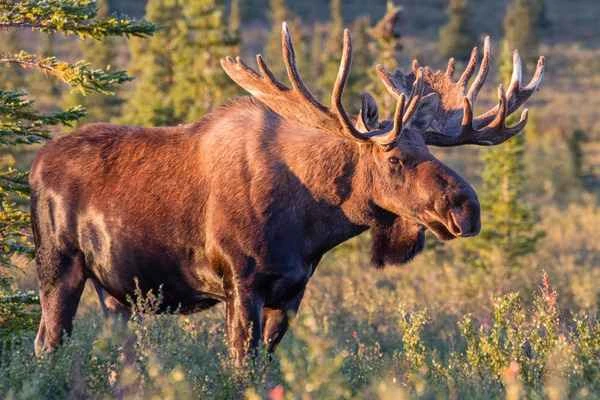
What is a moose?
Moose (Alces alces) are the largest members of the Cervidae family. Adult moose can weigh between 800 and 1600 pounds (360 to 725 kilograms) and stand over 6 feet (1.8 meters) tall at the shoulder. They have long legs, a hump on their backs, and a large, broad nose. One of their most distinctive features is the spectacular antlers that males grow annually.
Habitat and Distribution
Moose are primarily found in northern North America, including Canada and Alaska, as well as parts of northern Europe and Asia. They prefer habitats near water sources, such as lakes, rivers, and wetlands, where food is abundant. These areas provide ample vegetation, which is crucial for their diet.
Preferred habitat
Forests: Moose thrive in coniferous and mixed forests, where there is shelter and food.
Wetlands: Swamps, wetlands, and ponds are the main foraging grounds for moose because they prefer aquatic plants.
Rural areas: Moose are often found in rural communities, especially near forests and water sources.
Dietary and foraging habits
Moose are herbivores, primarily feeding on plants. Their diet varies depending on the season and availability, but they prefer a variety of vegetation, including:
Leaves and twigs: In spring and summer, moose feed on tender leaves and branches of trees and shrubs.
Aquatic plants: During the warmer months, they dive into the water to feed on aquatic plants such as water lilies and pond grasses.
Bark and leaves: In winter, when food is scarce, they rely on the bark of trees, especially birch and poplar.
Moose have a unique digestive system that allows them to break down tough plant materials, making the most of their foraging.
The typical lifespan of a moose is approximately 12 to 20 years, depending on a variety of factors such as environmental conditions, predation, and food availability. Below is detailed information on moose lifespan and the factors that influence it:
Wild lifespan
Average lifespan: In their natural habitat, moose typically live between 12 and 15 years. Under optimal conditions, some individuals may live up to 20 years.
Predation: Moose face threats from predators such as wolves, bears, and humans. Young moose are particularly vulnerable to predation, which has a significant impact on population dynamics.
Diseases and injuries: Like all wild animals, moose can be affected by diseases, injuries, and parasites, which can shorten their lifespan.
Lifespan in captivity
In captivity, moose are protected from predators, have a continuous supply of food and veterinary care, and typically live longer. Some moose in well-managed wildlife parks or zoos can even live to around 25 years old.
Factors affecting lifespan
Habitat quality: Moose living in areas with abundant food sources and suitable shelter typically have longer lifespans. Habitat loss due to urbanization, logging, and climate change can negatively impact their health and lifespan.
Nutrition and Health: A balanced diet is crucial for the health of moose. Sufficient high-quality feed throughout the year helps them maintain strength and disease resistance.
Environmental stress: Extreme weather conditions, such as harsh winters and heavy snow, make it difficult for moose to find food, which may lead to malnutrition and a shortened lifespan.
Human impact: Hunting regulations and conservation measures play a significant role in moose populations. Sustainable management practices help ensure healthy populations, potentially increasing their average lifespan.
Overall, while moose have a relatively long lifespan among wild mammals, a variety of environmental and biological factors can affect their lifespan. Understanding these factors is crucial for the conservation and management of moose, ensuring that these magnificent animals continue to thrive in their natural habitats.
Behavior and social structure
Moose are typically solitary animals, although small groups can be seen during the breeding season or in areas with abundant food. Here are some key aspects of their behavior:
Breeding season: The breeding season typically occurs in autumn. Males become more aggressive when competing for females, often displaying their strength by clashing their antlers.
Territoriality: Males may exhibit territoriality, especially during the breeding season, but will generally avoid confrontation unless provoked.
Adaptability: Moose are highly adapted to their environment. Their long legs allow them to move through deep snow, and their keen sense of smell helps them find food.
Protection status
While moose populations have remained generally stable in many regions, they face threats such as habitat loss, climate change, and hunting. Here are some key points regarding their conservation:
Habitat loss: Urban development and deforestation reduce moose habitat and affect their food sources.
Climate change: Climate change may affect moose’s food and suitable habitats, as well as their migration patterns.
Hunting regulations: In many areas, moose hunting is regulated to maintain healthy populations, but overhunting in some areas can pose risks.
Protective measures
Conservation organizations and wildlife management agencies are working to monitor moose populations and protect their habitat. Conservation measures include:
Research and monitoring: Conduct research to understand moose behavior, health, and population dynamics.
Habitat protection: Implement policies to protect wetlands and forests that are vital to the survival of moose.
Public awareness: Raise public awareness of moose and their importance in the ecosystem.
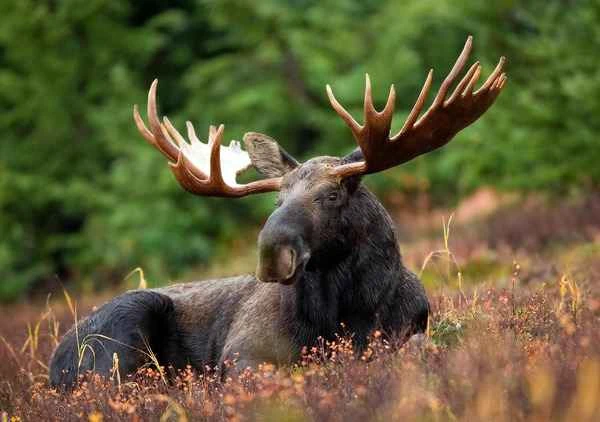
Are moose dangerous?
Moose are generally considered harmless to humans, but in certain situations they can exhibit unpredictable aggression, potentially posing a danger. Understanding moose behavior and the circumstances that could lead to aggressive contact is crucial for ensuring safety. Here is detailed information on when and why moose may pose a risk:
moose behavior
Generally mild-mannered: Moose are herbivores and are typically shy and solitary creatures. They tend to avoid contact with humans and prefer to stay in woodlands or near water sources.
Breeding season: During the breeding season (which usually occurs in the fall), male moose may become aggressive. They may fight with other males and may perceive humans as a threat, leading to aggressive behavior.
Borning season: Female moose are extremely protective of their calves after giving birth, and may become aggressive if they feel threatened. Mother moose will fiercely protect their young, and people may inadvertently get too close.
Potentially dangerous situations
Startled encounters: Moose are large animals, weighing up to 1,600 pounds (725 kilograms), and may exhibit defensive reactions if startled or cornered.
Road Hazards: Moose are involved in many collisions with vehicles every year, especially where they cross roads. Due to their height, particularly at night, they are difficult to see. A collision with a moose can be extremely dangerous because of their large size.
Foraging behavior: Moose are attracted to gardens and landscapes, which may lead to contact with humans. If they get too close, they may defend their food sources.
Safety tips when encountering moose
Maintain distance: If you see a moose, keep a safe distance. Observing from a distance helps avoid startling the animal.
Avoid approaching calves: If you see a calf, do not approach it. The mother moose is likely nearby and may attack to protect her calf.
Drive with caution: Be vigilant when driving in moose habitats, especially at dusk or dawn, and slow down where there are signs indicating moose crossings.
Note: If the moose shows signs of agitation, such as hissing, stomping its feet, or folding its ears back, slowly back away to give the animal space.
While moose are not inherently aggressive, they can exhibit aggression under certain circumstances. Understanding their behavior and respecting their space is crucial for safe coexistence with these magnificent animals. By being aware of potential dangers and following safety tips, you can minimize the risk of encountering moose while observing them.
Moose are truly remarkable creatures, playing a vital role in their ecosystems. With their magnificent size, unique adaptability, and gentle nature, they have become symbols of the beauty of the wild. Understanding moose and their habitat is crucial to their conservation and the health of the environment. Whether you are a wildlife enthusiast or simply curious about these magnificent animals, learning about moose helps us appreciate the diversity of life on Earth.
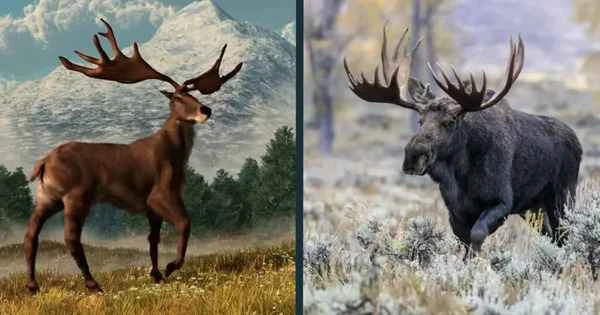
Moose and Père David's Deer: A Comprehensive Comparison
Moose and elk are among the largest members of the Cervidae family and are often confused due to their similar appearance. However, they are distinct species with different characteristics, habitats, and behaviors. This article will explore the differences and similarities between moose and elk, and provide a detailed comparison table.
Overview of moose and elk
moose
Scientific name: Alces alces
Common name: moose
Habitat: Prefers cold climates and is usually found in forests near water sources.
Size: The largest deer species; males can weigh up to 1,600 pounds (725 kilograms) and stand over 6 feet (1.8 meters) tall at the shoulder.
Diet: Herbivorous; mainly feeds on leaves, tender branches and aquatic plants.
Elk
Scientific name: Cervus canadensis
Common name: Père David's deer (also known as Père David's deer)
Habitat: It is highly adaptable to a variety of environments, including forests, grasslands and mountains.
Size: Smaller than moose; males weigh between 600 and 1,100 pounds (270 to 500 kilograms) and stand about 4 to 5 feet (1.2 to 1.5 meters) tall at the shoulder.
Diet: Herbivorous; feeds on grass, leaves and bark.
Comparison Table
| feature | moose | Elk |
|---|---|---|
| scientific name | Alces alces | Cervus canadensis |
| Common Names | moose | Elk (Chinese Père David's Deer) |
| body shape | Largest deer; males can weigh up to 1600 pounds (725 kg). | Males weigh 600-1100 pounds (270-500 kg). |
| high | Shoulder height exceeding 6 feet (1.8 meters) | Shoulder height is approximately 4-5 feet (1.2-1.5 meters). |
| Habitat | Cold climate, close to water source | Forests, grasslands, and mountains |
| diet | Leaves, twigs, aquatic plants | Grass, leaves, bark |
| antlers | Male deer antlers are broad and flat. | Deer antlers are long and slender and usually branched. |
| Behavior | Usually solitary; aggressive during breeding and calving season. | Highly social; often appearing in groups during the breeding season. |
| Distribution range | North America, parts of Europe | North America, Asia and parts of Europe |
| life | 12-20 years in the wild | 10-20 years in the wild |
| Protection status | Overall stable, but facing the threat of habitat loss. | It is relatively stable, but affected by hunting and habitat change. |
Main differences
Size and appearance: Moose are much larger than elk, with a prominent hump on their backs and broad, flat antlers, while elk antlers are slender and elegant in shape.
Habitat preferences: Moose prefer cold and damp environments, while elk can adapt to a variety of habitats, including open grasslands and forests.
Social structure: Moose are usually solitary, while elk are more social, often appearing in herds, especially during the breeding season.
Behavioral characteristics: During the breeding season, moose may exhibit aggression, especially males; while elk are known for their calls and social interactions within their groups.
Moose and elk are both impressive creatures with unique adaptations that allow them to survive in their respective environments. While they share some similarities as members of the deer family, differences in size, habitat, behavior, and social structure make them distinct. Understanding these differences is crucial for wildlife enthusiasts, conservationists, and anyone interested in the natural world.
Human-wildlife conflict (HWC) refers to interactions between humans and wildlife that result in negative consequences for both sides. The likelihood of conflict is increasing with human population growth and habitat encroachment. This issue impacts biodiversity, wildlife conservation, and human livelihoods. Below is a detailed overview of the causes, impacts, and potential solutions to human-wildlife conflict.
Causes of human-wildlife conflict
Habitat loss and fragmentation:
Urbanization, agriculture, and infrastructure development have led to the destruction and fragmentation of natural habitats, forcing wildlife to enter human settlements in search of food and habitat.
Resource competition:
As humans exploit natural resources such as water, crops, and livestock, wild animals may compete for these limited resources, with conflicts being particularly pronounced in rural areas.
Land use change:
Agricultural expansion and land development have altered the landscape, reduced the natural habitats of wildlife, and increased contact with humans.
Population growth:
Population growth leads to increased demand for land and resources, intensifying competition between humans and wildlife.
Climate change:
Climate change could alter wildlife behavior, migration patterns, and food availability, forcing animals into human-inhabited areas.
The impact of human-wildlife conflict
Economic losses:
Farmers may suffer significant losses due to predation of crops and livestock by wild animals, impacting their livelihoods and food security.
Wildlife threats:
In retaliation for attacks on crops or livestock, humans may kill or relocate wild animals, leading to population declines or even the extinction of some species.
Human safety:
Contact with large wild animals (such as bears, elephants, and big cats) can result in injury or death, directly threatening human safety.
Ecological imbalance:
Conflicts can lead to a decline in certain wildlife populations, potentially damaging local ecosystems and impacting the health of other species and the environment.
Cultural clashes:
In some cultures, wildlife holds significant cultural or spiritual value. Conflict can lead to tensions between communities that protect wildlife and those affected by the conflict.
Solutions to human-wildlife conflict
Community participation:
Involving local communities in wildlife management and conservation efforts can promote coexistence between humans and wildlife. Educating the public about wildlife behavior and ecology helps reduce fear and increase understanding.
Conflict mitigation strategies:
Implement physical barriers (fences), deterrent devices (alarms, lights), and compensation mechanisms to reduce conflict.
Sustainable land use planning:
Integrating wildlife conservation into land-use planning can balance the needs of human development and wildlife habitat. Establishing wildlife corridors can facilitate safe animal movement.
Ecotourism:
Promoting ecotourism can provide economic incentives for local communities to protect wildlife and turn potential conflicts into income-generating opportunities.
Research and monitoring:
Continuous research into wildlife behavior, population dynamics, and conflict patterns helps in developing effective management strategies and identifying potential conflict areas.
Human-wildlife conflict is a complex issue requiring collaborative efforts from governments, conservation organizations, and local communities to find sustainable solutions. Balancing the needs of humans and wildlife is crucial for ensuring biodiversity and promoting harmonious coexistence. Through education, innovative management practices, and community engagement, it is possible to mitigate conflict and protect both wildlife and human livelihoods.
Moose migration patterns and reasons
Migration patterns:
Moose migrations are typically seasonal , occurring mainly in spring and autumn .
In spring, moose migrate to highland forests, wetlands, or riverbanks where food is plentiful and temperatures are suitable.
In autumn, as the weather gets colder and food becomes scarce, moose migrate back to their lowland or forest habitats to obtain a warmer environment and more food.
Reasons for migration:
Food Supply: Moose are herbivores, particularly fond of tree buds, shrubs, and aquatic plants. Seasonal changes alter the food supply in different regions, so migration is undertaken to find abundant food.
To avoid the cold: Moose winter habitats often have less snow, making it easier for them to forage and move around.
Avoiding predators: Migration helps keep predators (such as wolves and bears) away from them in different seasons.
Reproduction needs: Migration is also related to reproduction. In spring and summer, moose migrate to areas with abundant water and vegetation to raise their calves.
How do moose survive the winter?
Moose have a set of strategies to adapt to the harsh winter:
Food storage and eating habits:
In winter, their diet mainly consists of fiber-rich foods such as tree bark, pine branches, and tender branches of poplar and willow trees .
Moose have a very powerful digestive system that can effectively digest fiber.
Moose reduce their activity levels to conserve energy.
Accumulated fat:
Moose store large amounts of fat during the summer and autumn to provide energy reserves for the winter.
Their thick layer of fat helps keep them warm, especially in the legs and torso.
Sheltered habitat:
Moose will choose sheltered areas in the forest to reduce the effects of wind chill.
Areas with shallow snow cover are advantageous for moose to walk and forage.
Physical adaptability:
Moose have long, strong legs that allow them to move freely in deep snow.
Their large nasal cavities can preheat the cold air they inhale, reducing heat loss from their bodies.
Reduce activities:
Moose typically reduce unnecessary movement during the winter, staying in fixed habitats to conserve energy.
Methods of Observing and Studying Moose
Scientists and wildlife enthusiasts observe and study moose using various methods:
Satellite tracking and GPS collar:
Researchers fitted moose with GPS collars to track their migration routes, activity ranges, and behavioral habits in real time.
This data helps analyze their seasonal migration patterns and habitat selection.
Infrared cameras and drones:
Installing infrared cameras in wild habitats or using drones for long-distance observation is particularly suitable for recording moose behavior without disturbing them.
Footprint and fecal analysis:
By observing moose tracks, one can infer their movement routes and habitats.
Fecal samples help analyze their diet, health status, and genetic information.
On-site observation:
Scientists directly observe moose through field surveys, recording their foraging, mating, raising offspring, and social behaviors.
Observations can be made at a safe distance using a telescope or telephoto camera.
Acoustic monitoring:
During the moose breeding season, researchers use recording equipment to capture their calls and analyze their communication methods and courtship behaviors.
Habitat assessment:
Researchers will assess environmental factors such as vegetation, water sources, and climate in moose habitats to understand their adaptability and the threats they face.
Through these observational and research methods, scientists can gain a deeper understanding of moose habits, helping to develop measures to protect moose and their habitats, ensuring their continued survival in an ever-changing environment.