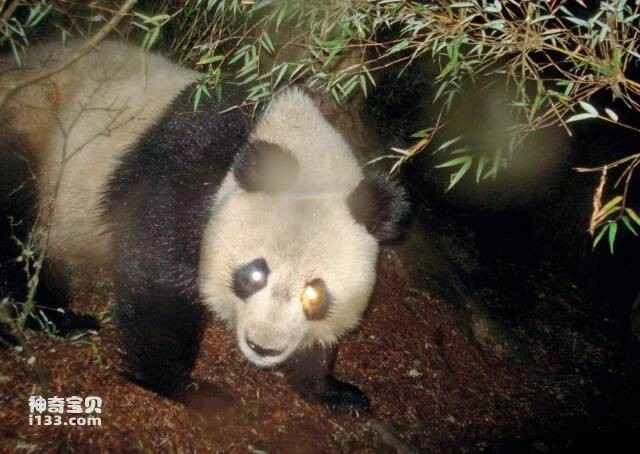
According to historical records, the scientific discovery of the panda took place in 1869, and its discoverer and disseminator of information was a naturalist: the French priest Pierre Armand David.
Pierre Armand David was a Basque from the French Pyrenees, born in 1826. From a young age, he loved nature and was fascinated by plants and animals. As he grew older, he became passionate about natural history, with a particular interest in the fascinating cultures of the Orient. At the age of 22, he joined the Lazarist church, and in 1851 he was ordained a priest. At 26, he petitioned the French Franciscan Order to go to China as a missionary, a dream he finally realized at the age of 36.
In January 1865, the fourth year of the Tongzhi reign of the Qing Dynasty, David went to the southern suburbs of Beijing to conduct a survey of flora and fauna. He happened to come to the royal hunting park and saw a deer with a peculiar appearance. People called it the "four unlike deer", that is, its antlers resembled those of a deer but were not a deer, its hooves resembled those of a cow but were not a cow, its face resembled that of a horse but was not a horse, and its tail resembled that of a donkey but was not a donkey.
In April 1866, Father David bribed soldiers in Nanyuan to obtain the pelts of three "Père David's deer" and sent them to Paris. Alphonse Milne-Edwards, director of the Paris Museum of Natural History, identified the deer as not only a new species but also a new genus. It was named David's deer, "Pere David, s deer" in English and *Elaphurus davidianus* in Latin. Both names signify the same purpose: to commemorate its discoverer, David.
Father David's scientific discovery of the Père David's deer was merely the first of his many discoveries during his explorations of Chinese flora and fauna. During his subsequent extraordinary expeditions, what amazed David most was the panda. His diary entry from that time reads as follows:
On March 11, 1869, on our way back from a hike, we were invited to rest at the home of a farmer surnamed Li in Muping, Xikang (now Baoxing County, Sichuan Province), where we were served tea and snacks. While drinking tea, I noticed a long-preserved animal skin on Li's cabinet. The fur was black and white, and the soles of its paws were hairy. It looked like a bear, a strange animal I had never seen before.
On March 22nd, the hunter I hired returned today after being away for 10 days. He gave me a young black and white bear, but unfortunately, he killed it to make it easier to carry. ... On April 1st, I received an adult panda. Except for its limbs, shoulder straps, ears, and the area around its eyes, which are dark, it is entirely white, exactly the same as the animal skin I saw at the Li family's house. It must be another new species unknown to the scientific community.
Soon after, David transported the black and white bear skins he had collected to Paris, France, causing a great sensation in the zoological community.
Subsequently, explorers and merchants from the United States, Britain, and Germany flocked to the mountainous regions of western China to investigate and hunt pandas. In 1935, the United States organized a large team to venture deep into the Wolong panda habitat in Sichuan, capturing and purchasing six pandas, which were then transported back to the United States. In 1939, the London Zoo in England purchased three pandas from the Smith Capture Team, naming them after three dynasties in Chinese history: Tang Tang, Song Song, and Ming Ming.
In those days, the fact that pandas could travel across oceans and that Baoxing in Sichuan could become a panda sanctuary was thanks to Father David's dissemination of information and his love for pandas. Today, the global panda craze is undoubtedly directly related to his scientific discoveries about pandas 140 years ago.