Penguins belong to the family Spheniscidae and the order Sphenisciformes , and there are approximately 18 species of penguins currently in existence. They are typical "flyless birds" that have long lived near the ocean. Their wings have evolved into powerful "flippers," giving them exceptional swimming and diving abilities. While penguins may not appear particularly agile in terms of vision and movement on land, they maintain excellent vision and hunting skills underwater.
Different penguin species have slightly different diets, but most primarily feed on small fish, squid, and krill . In recent years, the main pressures faced by penguins have come from environmental changes, such as fluctuations in the marine environment and food resources, and disturbances to their breeding grounds.
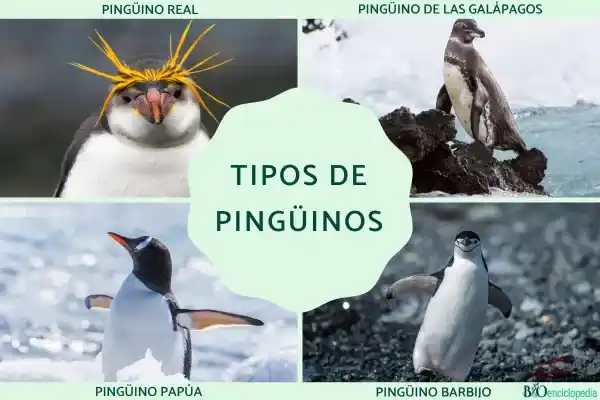
1) Royal Penguin ( Eudyptes schlegeli )
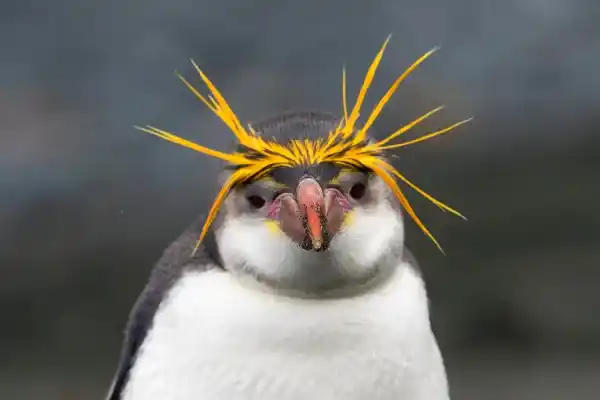
Royal penguins are easily recognizable: they have a yellow-orange crest of feathers on their heads and almost entirely white faces . They primarily breed on Macquarie Island , located in the waters between Australia and Antarctica. Outside of the breeding season, they migrate longer distances depending on sea conditions and food availability.
2) Emperor Penguin ( Aptenodytes forsteri )
Emperor penguins are among the most well-known and largest penguins, commonly described as weighing up to 40 kilograms . They live in Antarctica , their black and white plumage resembling a "tuxedo." The emperor penguin's breeding cycle is very long, typically lasting several months. After the female lays her eggs, the male incubates them while the female forages at sea. Emperor penguins are highly cooperative, huddling together to minimize heat loss and protect their eggs and chicks.

3) Galapagos penguin ( Spheniscus mendiculus )
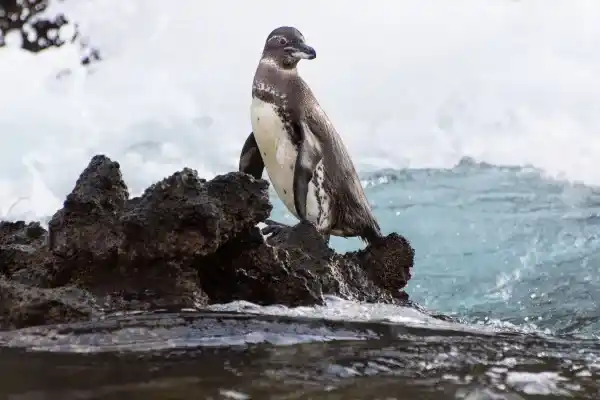
As its name suggests, it lives in the Galapagos Islands and is one of the few penguins found near the equator. It is relatively small, with a height commonly described as about 50 centimeters . Due to its small size, it is more vulnerable to predation: on land, it may be targeted by birds of prey and some reptiles; in the water, it faces threats such as sea lions and sharks . Despite this, it is considered relatively long-lived, with records frequently mentioning lifespans of up to 20 years .
4) Adelie penguin ( Pygoscelis adeliae )
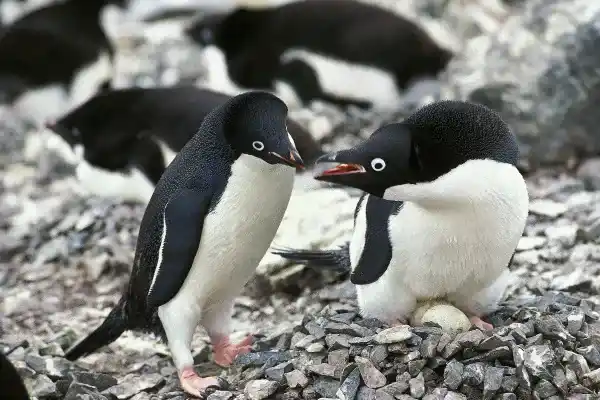
Adélie penguins primarily inhabit the Antarctic coast and are excellent swimmers and divers. They typically form large colonies at their breeding grounds and are quite "curious," sometimes showing interest in new things. Individuals within the colony can also identify each other through subtle differences in appearance and behavior.
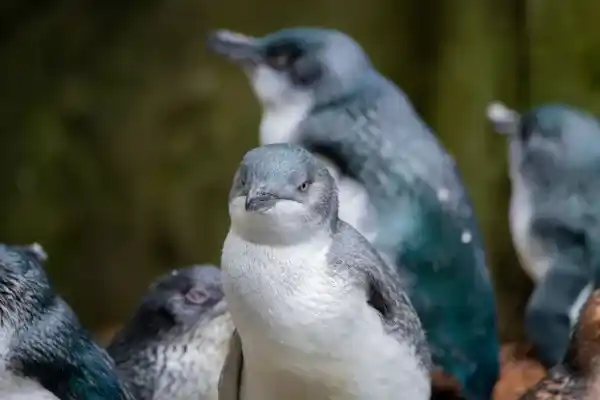
5) Little Blue Penguin ( Eudyptula minor )
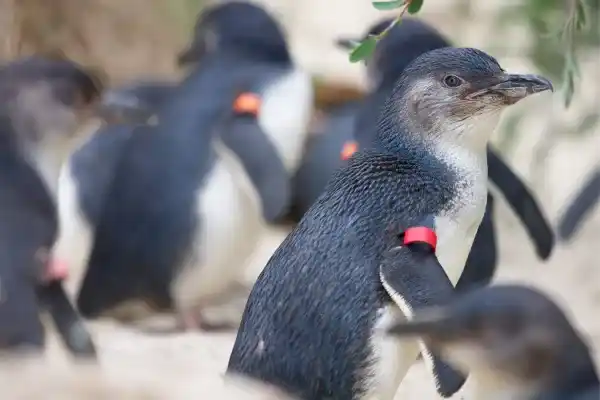
This is one of the smallest penguins, commonly described as standing about 30 centimeters tall and weighing about 1–3 kilograms . It is mainly distributed along the coasts of Australia, New Zealand, and Tasmania . Its head and back feathers have a distinctive bluish-grey hue , visually quite different from most black and white penguins.
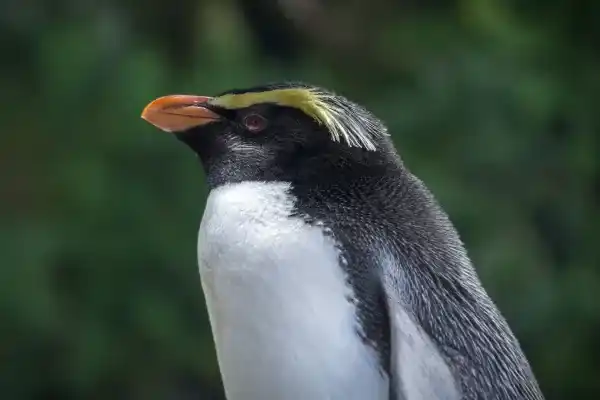
6) Fiordland Penguin ( Eudyptes pachyrhynchus )
It is found in the Fiordland region of New Zealand and nearby islands. Its distinctive features include a thick, yellow, eyebrow-like crest and a darker face. Its beak is orange and wider , and its eyes are often described as reddish-brown ; its overall appearance is very "robust."
7) White-finned Little Blue Penguin ( Eudyptula albosignata )
Like the little blue penguin, it belongs to the smallest group, commonly described as being about 30 cm tall and weighing about 1–2 kg . It is easily confused with the little blue penguin, but there are two common distinguishing features: its overall plumage is darker gray , and it often has more obvious white lines/white fin features on the edges of its flippers or on the sides of its body.
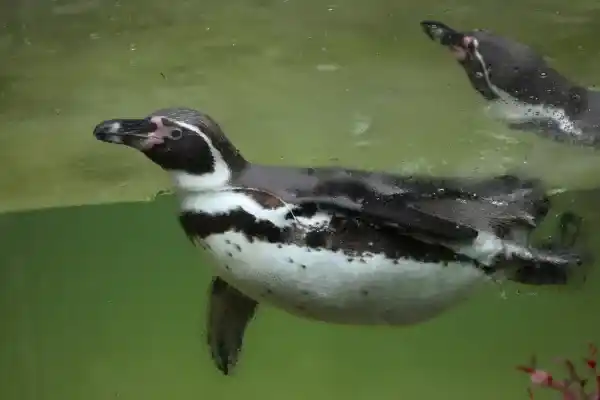
8) Humboldt Penguin ( Spheniscus humboldti )
The Humboldt penguin is named after the naturalist Alexander von Humboldt and is closely associated with the Humboldt Current along the Pacific coast of South America. It is medium-sized, commonly described as reaching 70 cm in length and weighing about 5 kg . It often has a striking dark, curved band along its upper body. Some descriptions also mention that it may lay two eggs of different sizes , and in times of scarcity, a single chick is more likely to survive.
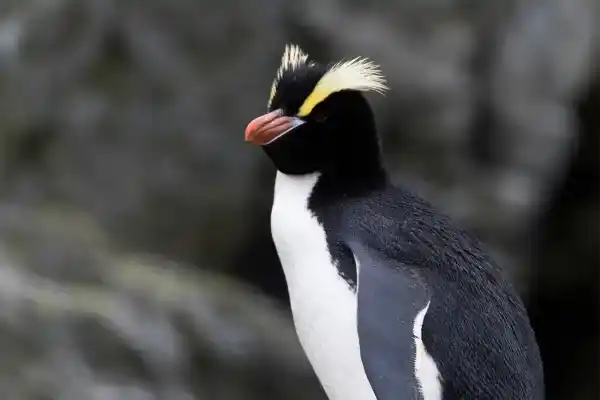
9) Scratt Penguin / Antipodes Penguin ( Eudyptes sclateri )
It primarily inhabits the Antipodes Islands of New Zealand. Historically, it has been mentioned appearing on other islands, but its breeding grounds have varied over time. Its name is in honor of the British zoologist Philip Lutley Sclater .
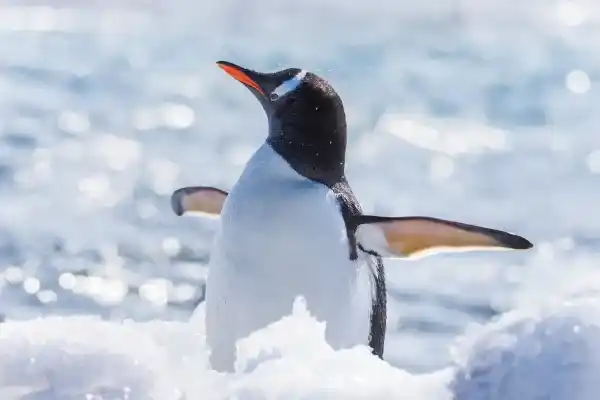
10) Gentoo penguin ( Pygoscelis papua )
Gentoo penguins are very photogenic: they have a distinctive white stripe on each side of their head, making them look like they're wearing "white headphones," and their beaks are often bright orange . They are commonly found in places like the Falkland Islands (Malvinas) . With changes in sea ice and the marine environment, some populations have been observed expanding their habitat further south.
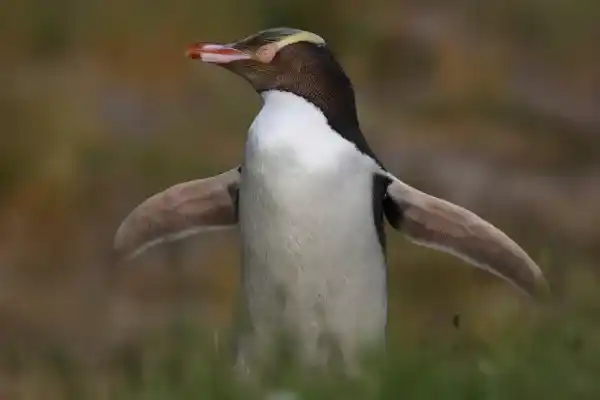
11) Yellow-eyed penguin ( Megadyptes antipodes )
Distributed across several islands in New Zealand . The most distinctive features are their golden eyes and their pale yellow head with a yellow band extending from one eye to the other. Common descriptions indicate a height of approximately 60–80 cm and a weight of approximately 3–8 kg (this varies seasonally). During the breeding season, parents take turns caring for the eggs and chicks while the other goes out to sea to forage.
Other common penguin species (7 species)
In addition to the penguins mentioned above, the following penguins also frequently appear in the "Penguin Species List":
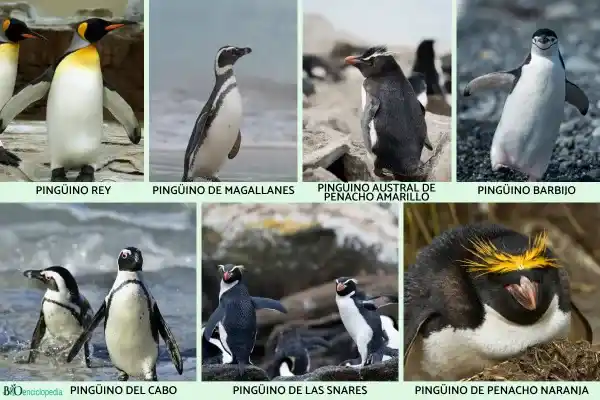
King penguin ( Aptenodytes patagonicus )
Magellanic penguin ( Spheniscus magellanicus )
Southern Rockhopper Penguin / Yellow-browed Penguin ( Eudyptes chrysocome )
Chinstrap penguin ( Pygoscelis antarcticus )
African penguin/Cape penguin ( Spheniscus demersus )
Snells penguin ( Eudyptes robustus )
Macaroni Penguin / Orange-crowned Penguin ( Eudyptes chrysolophus )