Sea snails (broadly referring to snails and marine mollusks in the marine environment) are a very important group of mollusks in the marine ecosystem. They live in various environments, from intertidal zones and rocky reefs to seagrass beds and coral reefs, and their shells come in a variety of shapes and colors. Besides being "beautiful," sea snails are also ecologically crucial: some feed on algae and organic detritus, helping to clean the seabed; others are predators, affecting the populations of invertebrates such as starfish and sponges, thereby altering the structure of the entire coastline or coral reef.
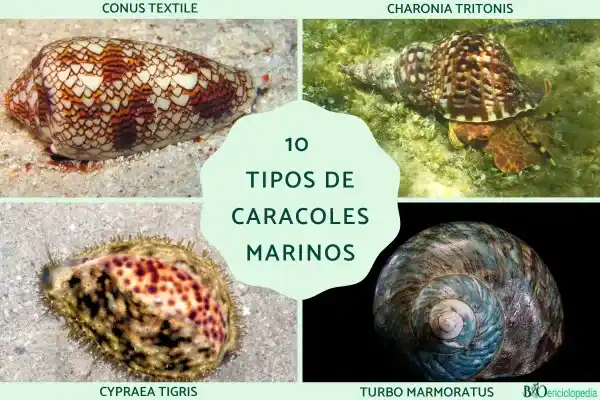
Below is a list of 10 common and representative types of conch , including their scientific names, distribution, and key identification points.
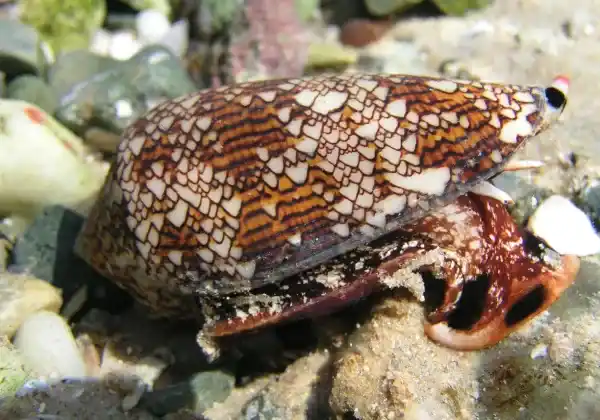
1) Conus textile
Cone snails are mainly distributed in the tropical waters of the Indian and Pacific Oceans . Their conical shells are strikingly conspicuous, featuring intricate patterns resembling woven fabric. Unlike most algae-eating snails, cone snails are highly efficient predators , launching venomous , harpoon-like stingers to paralyze their prey before swallowing them. Their venom is diverse in composition, allowing them to adapt to different types of prey.
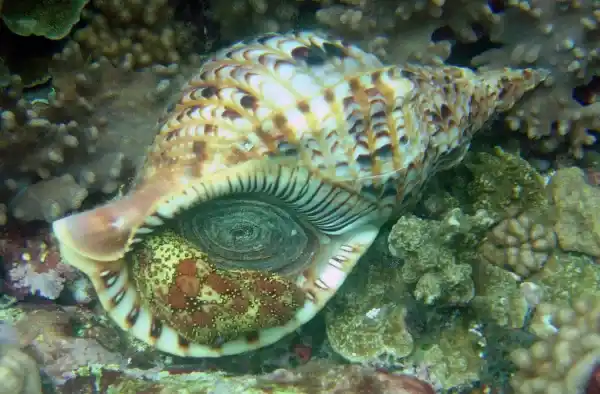
2) Charonia tritonis
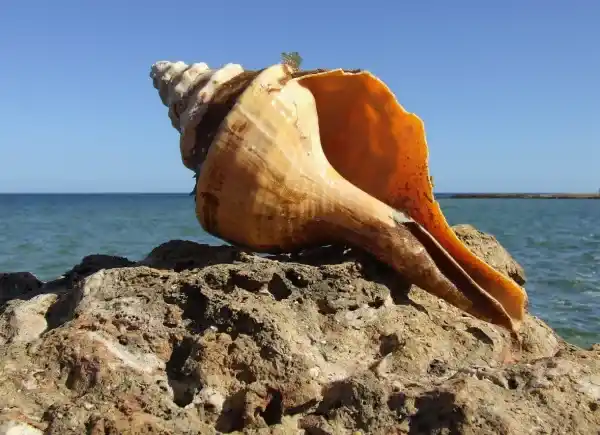
This type of conch lives in tropical and subtropical waters . Its shell is robust, with a distinct spiral, and is mostly yellow to brown in color, often with whorls or spots. Common individuals have a shell length of about 20 centimeters , though larger ones have been recorded. It is a carnivorous predator , typically feeding on echinoderms such as starfish , and can extend its extendable mouthparts to grasp and swallow its prey. Due to its large and beautiful shell, it has long been used for decoration or as a collectible.
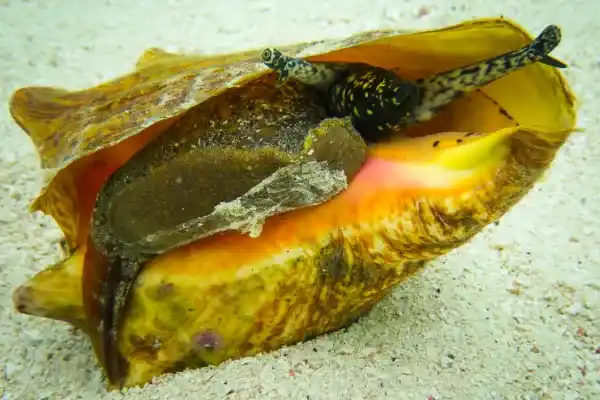
3) Pink Queen Conch ( Lobatus gigas )
This whelk, formerly known as *Strombus gigas* , is famous for its large, warm-colored shell , often a combination of pink, orange, and brown. It primarily inhabits the warm waters of the Caribbean Sea and the western Atlantic . Ecologically, it feeds on algae and seabed debris , acting as a "cleaner" in shallow marine ecosystems. Due to the popularity of its shell and meat, some areas face harvesting and resource pressures.
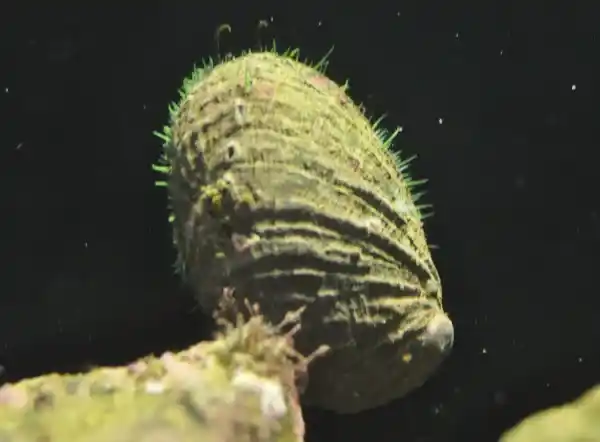
4) Abalone/European abalone ( Haliotis tuberculata )
Sea urchins, named for their ear-like shells, mostly inhabit cold to temperate waters . Their shells have a rough surface and can be green, blue, brown, or reddish-brown, with a typically glossy inner surface. Sea urchins are herbivorous snails that feed on algae by clinging to rock surfaces, making them important algae controllers in rocky reef ecosystems. In some areas, overfishing and habitat change can negatively impact their populations.
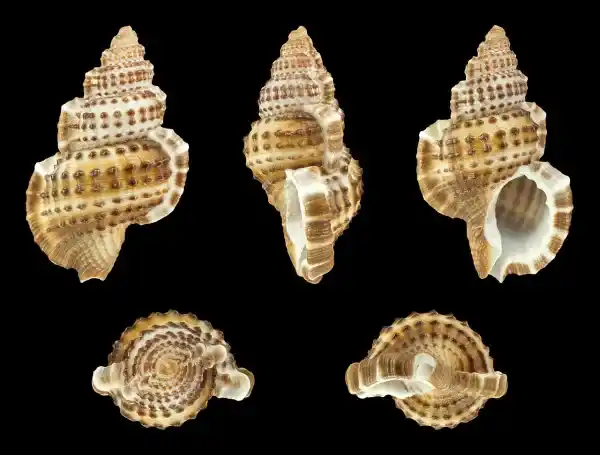
5) Granular sea snail ( Dulcerana granularis )
Dulcerana granularis is commonly found in warm coastal and reef areas . It is typically small, but its shell has a fine, intricate texture, often with grooves and granular protrusions, giving it a highly sculpted appearance. They are more active at night, moving across the seabed substrate to forage for food, including sponges and tiny organisms attached to rocks. They also contribute to the decomposition and recycling of organic matter in the reef area.
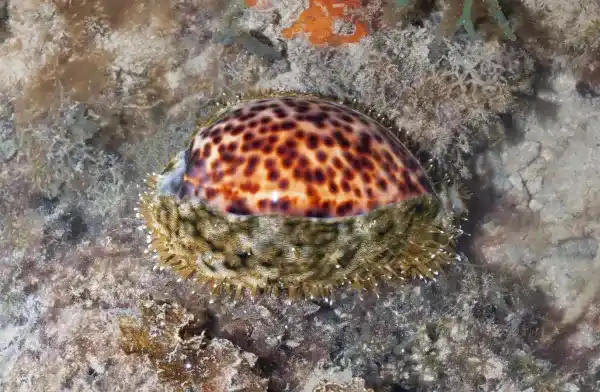
6) Tiger Cowrie ( Cypraea tigris )
The tiger cowrie is highly recognizable: its shell is oval, smooth, and has a porcelain-like sheen , often with dark spots and distinct patterns. It lives in tropical to subtropical waters , usually hiding in reef crevices or caves during the day and becoming more active at night. Ecologically, it feeds on sponges and other attached organisms , impacting the structure of reef communities. Due to its beautiful shell, over-harvesting may put pressure on its population in some areas.
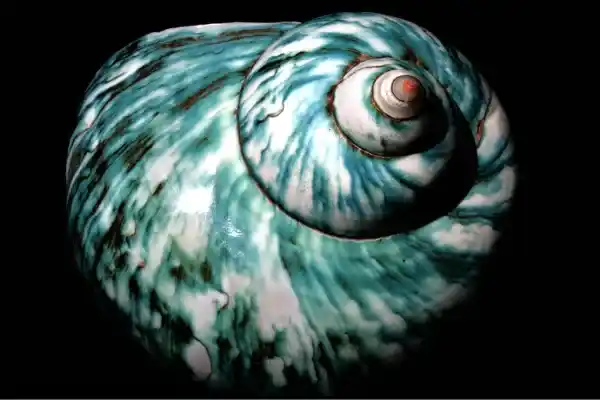
7) Turbo marmoratus / Turbo green marmoratus
This type of whelk inhabits the Indo-Pacific region . Its shell is thick and roughly rounded, often displaying patterns resembling "clouds" or "marbles." It primarily inhabits rocky or coral reef areas, feeding on algae and organic debris . The whelk has a strong foot that allows it to firmly adhere to rock surfaces, making it difficult to be washed away even in large waves or strong currents. If its habitat is destroyed or over-harvested, local populations may decline.
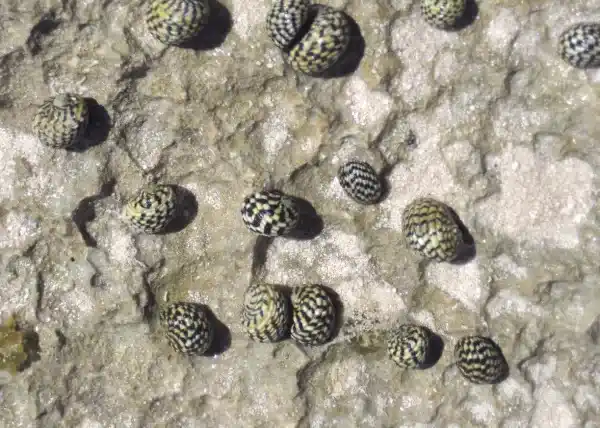
8) Tessellated snail ( Nerita tesselata )
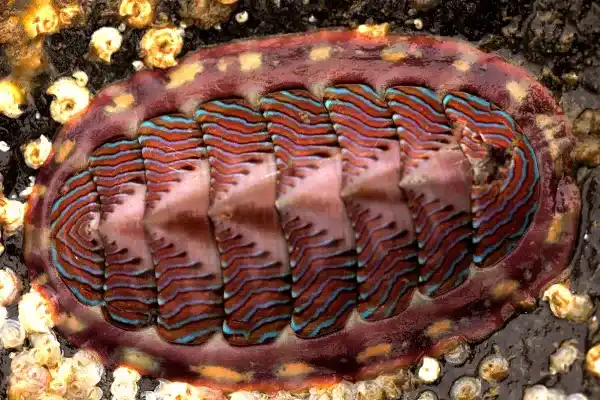
The scaly slug is commonly found on tropical and subtropical coasts around the world, especially on intertidal reefs, reef flats, or mangrove edges. Its shell is relatively round, and its color and texture often present a mosaic-like effect. It mainly scrapes algae and organic particles from the surface of rocks, making it a very typical "cleaner" snail in the intertidal environment.
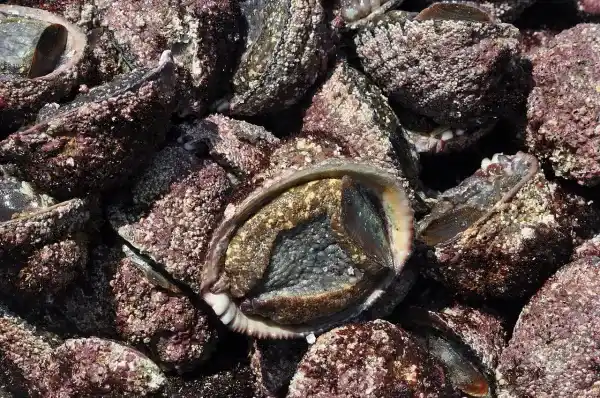
9) Chilean conch "Loco" ( Concholepas concholepas )
Often called "caracol loco," it is an important species along the Pacific coast of South America . Its shell is sturdy, conical or nearly conical in shape, and mostly gray to brown in color. Unlike algae-eating snails, it is a ferocious predator , feeding on a variety of coastal invertebrates, thus significantly impacting the species composition and population balance of reef ecosystems. It is also important to local fisheries and dietary culture, therefore requiring proper resource management and protection.
10) Australian Horn Snail/False Horn Snail ( Syrinx aruanus )
This is one of the world's largest conches, found in the tropical waters of the Indo-Pacific region . Its shell is elongated, with a distinct spiral, and is typically beige to brown with fine banding. The shell can reach an astonishing length, commonly described as approximately 91 centimeters . This conch preys on other mollusks and small marine life. Due to its enormous size and striking appearance, it has been subject to harvesting in some areas.