The title of "World's Strangest Fish" has many contenders. Fish vary greatly in shape, color, and size, and many species possess unique adaptations. Some fish can change color to adapt to their environment, some have transparent heads, and some can even fly... and there's even a fish that looks like it was made from drain cleaner. Let's learn about some of the world's strangest and most bizarre fish...
1. Pacific Barreleye Fish

Having a transparent head—nothing could be stranger! The Pacific barreleye fish (Macropinna microstoma) has a transparent skull and most of its facial skin, which allows it to see its surroundings more clearly.
The barreleye fish is the only known animal with its eyes located beneath the skin of its head. This unusual design protects vital organs upon which these fish depend for survival.
They live in the deep sea of the North Pacific Ocean, in waters about 1 kilometer deep where there is little light.
In that environment, these tiny, strange fish, only a few centimeters long, specialize in stealing prey from jellyfish. They track lurking predators by observing shadows or faint bioluminescence.
They are named barreleye fish because of their distinctive tubular eyes, which allow them to perform covert tracking. Similar to miniature binoculars, they provide a tunnel-like view and focus on minute details. The fish's green lenses also make faint lights in the dark more apparent, shimmering like fireflies.
The Pacific barreleye fish is considered one of the strangest animals in the world due to its unique and bizarre appearance.
2. Stargazing fish
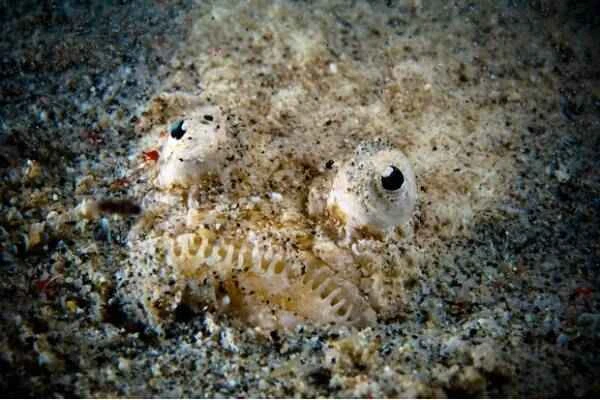
Stargazing fish, named for their almost comical, upward-looking eyes, spend most of their time buried in seabed sediment, waiting for prey to pass by. Once prey appears, they launch a swift attack. Stargazing fish also possess a variety of defensive weapons, including venomous stingers and electric shocks, which can deter their predators.
3. Flower-horned cichlid
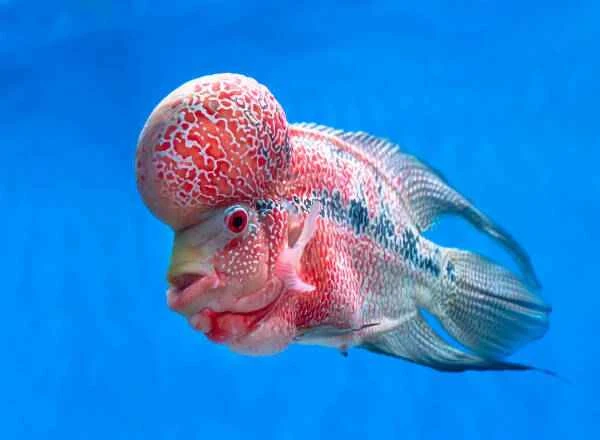
If every face could tell a story, this one might tell a sad tale of a golf ball falling into a pond. However, no tragic sporting accident has occurred here. This cichlid, belonging to the cichlid family, has a large, swollen forehead known as a hump, a feature that appears to be related to attracting mates.
Cichlids are known for their ability to rapidly form new species, attracting the attention of evolutionary biologists and fish keepers. In fact, the flower hornfish is the product of artificial selection and breeding, but it has been introduced to many regions around the world and often exhibits invasive tendencies.
4. Squid
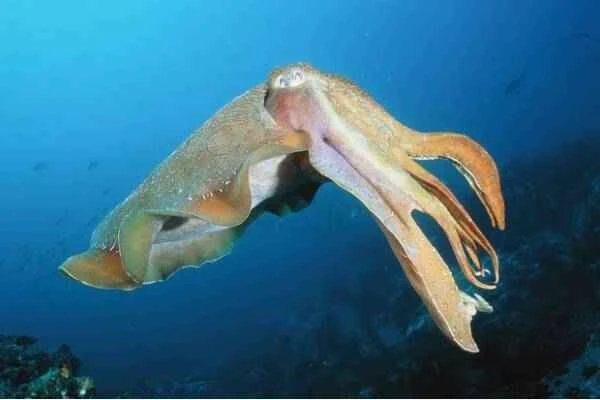
Cuttlefish are renowned in nature for their impressive courtship displays. Large males employ striking zebra-stripe patterns to compete with rivals, displaying mesmerizing mottled patterns to females on the other side—a truly remarkable feat. But what about the smaller ones who can't quite pull it off? They cleverly employ camouflage, becoming mottled in color, rounding their bodies, and behaving like females.
These "aggressive" young males stealthily approach existing mating pairs, and the dominant male readily accepts another "pretending" female to join him. Once close enough and successfully evading the other's radar, the imposter mates with the female and then quickly escapes before the disguise is exposed. This strategy is highly successful and has become another mating method for squid: intelligence triumphs over strength!
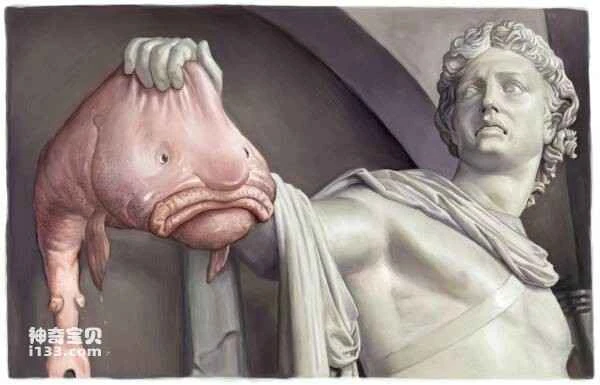
5. Blobfish
The list of strange fish wouldn't be complete without mentioning the infamous blobfish. This fish can be found in waters up to 1,200 meters deep, and it's this deep-sea lifestyle that makes it resemble an "85-year-old Mr. Blobby" (according to the fish manager of the Australian Museum, which owns the most famous fish) and has it preserved as a specimen. However, the blobfish is actually a very misunderstood and unfairly judged creature.
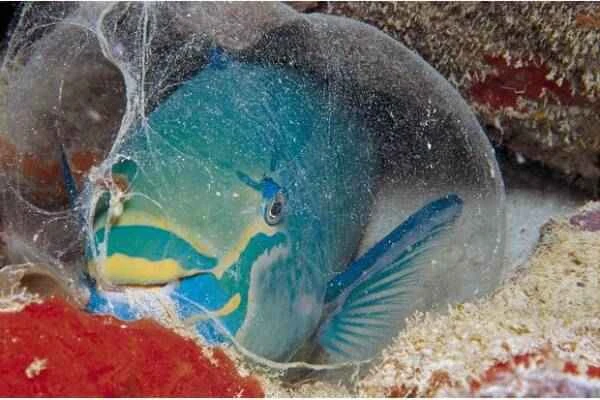
6. Queen Parrotfish
By day, the Queen Parrotfish (Scarus vetula) is a beautiful and diver-friendly coral reef fish. However, at night, it transforms into a reclusive mucus sac. At sunset, this fish slips into a crevic and uses specialized glands behind its gills to secrete mucus bubbles that inflate to its head like a diving helmet. Simultaneously, the sac expands towards its tail, and after about 30 minutes, the fish can rest in a very spacious mucus sac. This adaptation deserves its place on the list of the strangest fish.
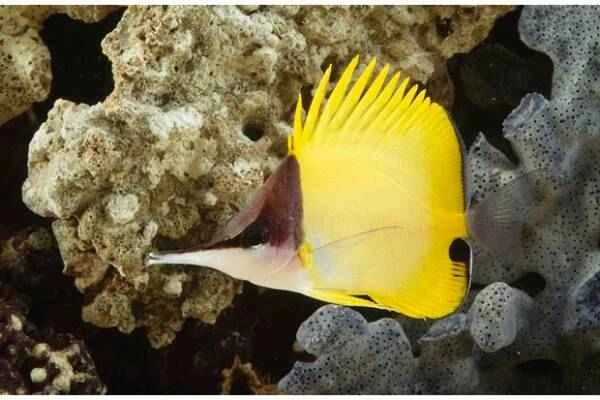
7. Yellow Long-nosed Butterflyfish
As its name suggests, the yellow long-nosed butterflyfish has an exceptionally long nose. However, this extended appendage is extremely useful, allowing the fish to easily access tiny food items hidden in coral corners and crevices, giving it an advantage in competition with its peers. The species also uses its powerful teeth to tear apart bristle worms and sea urchins for food. Viewed from the front, its nose resembles a pair of tweezers, hence its other name, the tweezers fish.
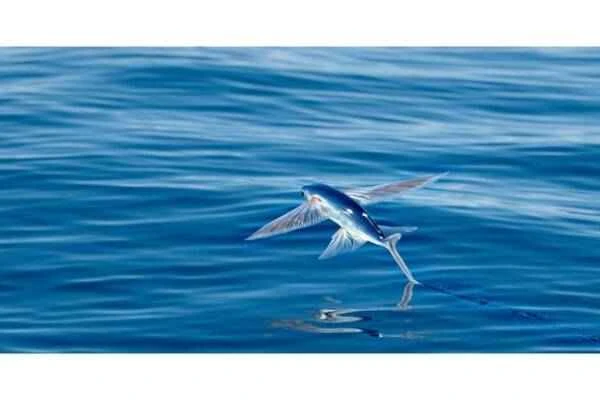
8. Flying Fish
Flying fish? It's true! Well, technically they glide rather than actually fly, but they're still impressive and a little strange. Flying fish possess special fins called "wings," one or two pairs of broad, long fins that they spread to demonstrate their gliding skills. Instead of flapping their wings like birds, they gain speed underwater by flapping their tails, then leap out of the water, glide across the surface, and, aided by their stable wings, fly like paper airplanes.
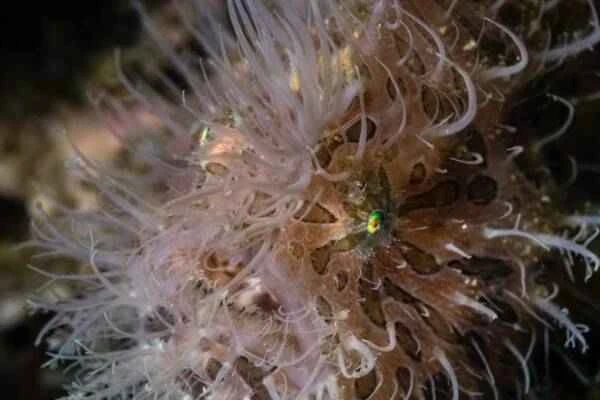
9. Hairy frogfish
Is this creature an animal, a plant, or a mineral? Even if you try to answer that question, its fur and moving legs can leave you confused. Like other anglerfish, the hairy frogfish lures prey by swinging a worm-like lure at the end of a modified spine on its dorsal fin. Curious victims are sucked away by the current created when the predator opens its gaping mouth, which can hold prey larger than the frogfish itself.
Even more surprisingly, its four pectoral and pelvic fins have been modified, allowing this strange fish to crawl on the seabed. Depending on its habitat, this peculiar fish comes in various colors, including yellow, red, black, white, spotted, and striped. Their hairstyles are also distinctive—the pointed shape is believed to mimic that of a sea urchin.
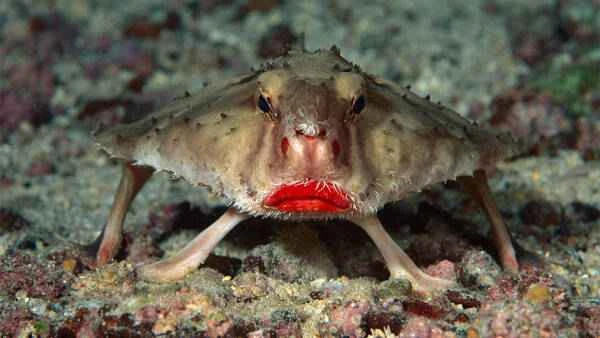
10. Red-lipped batfish
The red-lipped batfish (Ogcocephalus darwini) looks like it's smeared with lipstick after drinking too much in the toilet. Its sullen expression suggests it had a rather unpleasant night. This peculiar anglerfish is endemic to the Galapagos Islands. Although its swimming ability is rather limited, it compensates for this with modified fins, allowing it to crawl along the seabed. Its bright red lips are likely used to attract mates.
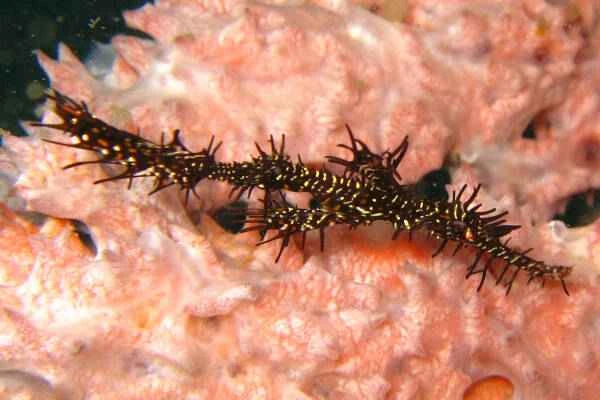
11. The Gorgeous Ghost Pointed Fish
It's hard to deny the allure of this colorful seadragon, but it seems somewhat traditional compared to its close relatives. Seadragons, harpy dragons, and seahorses are known for breaking traditional gender role rules, with male seadragons taking on the responsibility of incubating the young. The ghost harpy, however, operates in a more traditional way. However, it's not entirely straightforward—the female must place the eggs in a brood pouch formed by her pelvic fins and nourish them through her skin until they hatch.
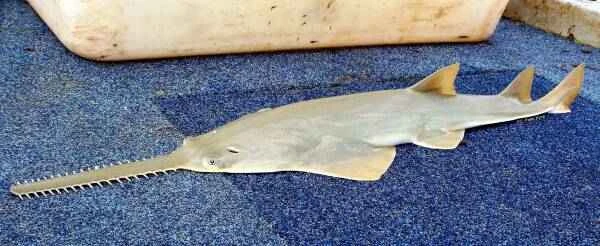
12. Saw Ray
You don't need to be a genius to guess how this peculiar fish got its name! Sawfish are rays, not sharks, and are named for the long, "saw-like" beak or proboscis on the front of their heads, lined with a series of teeth. It's easy to imagine them doing some DIY. They're also quite large; one species of sawfish can grow up to 7 meters long, larger than a great white shark.