Peru is one of the world's most biodiverse countries. It is home to over 1,730 bird species , second only to Colombia. Spanning three major zones from west to east —the Pacific coastal desert, the Andes Mountains, and the Amazon rainforest—its climate and topography are extremely diverse, fostering a vast native wildlife population. Numerous nature reserves protect these precious species, many of which are threatened or endangered.
This article selects and summarizes the common names, basic characteristics, and habitat points of 45+ native Peruvian animals to help you quickly get to know the star species of this land.
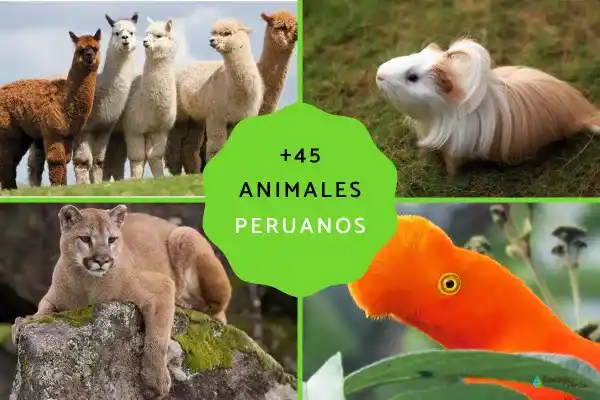
Table of contents
Llama, alpaca, llama and guana
Guinea pig ("guinea pig/cavy/pig")
Peruvian Crested Umbrella (National Bird)
Andean condor
Green anaconda (Green water anaconda)
Other Peruvian native animals
Peruvian birds
Peruvian mammals
Peruvian reptiles
Peruvian fish
Endangered native animals of Peru (by taxonomic group)
Llama, alpaca, llama, and guanacus (the four major camelid families in South America)
Although they belong to the Camelidae family and are most common in the Peruvian highlands, they differ in size, purpose, and whether they are domesticated.
Llama glama
The most famous "Andean companion," it is alert and will spit when threatened. Primarily used for pack transport and as a companion for herding livestock , it is also commonly seen by tourists in places like Machu Picchu.alpaca Vicugna pacos
Small in size and with fine fur, alpaca has been domesticated for a long time to obtain high-end fibers and alpaca wool textiles, making it a representative animal of Andean textile culture.Little alpaca Vicugna vicugna
Of the four, it is the smallest (adults are about 1 m tall at the shoulder), and it is mostly found in high-altitude meadows in the wild. Its fibers are extremely fine and of high value.Lama guanicoe
Wild-type camels, undomesticated , with ochre-brown fur, cold- and drought-resistant, and active in plateaus and mountain grasslands.
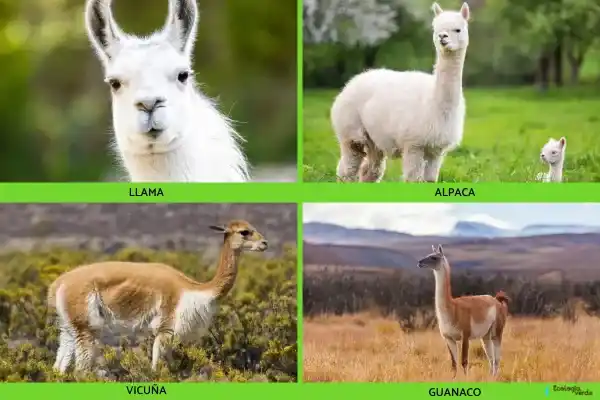
Tip: To distinguish them, you can observe their body shape and coat (alpaca hair is dense and soft, veal hair is finer; camel hair is shorter; llamas are taller) and whether they are domesticated (llamas and alpacas are the main domesticated species).
Guinea pig ("Cuy")
Scientific name : Cavia porcellus
Key points : Domesticated rodents originating from the Andes, known locally as " cuy " in Peru. Highly social and docile, they typically weigh around 1 kg and have a lifespan of 5–8 years . Today, they are found worldwide as companion animals, originating in Peru and the surrounding Andean region.

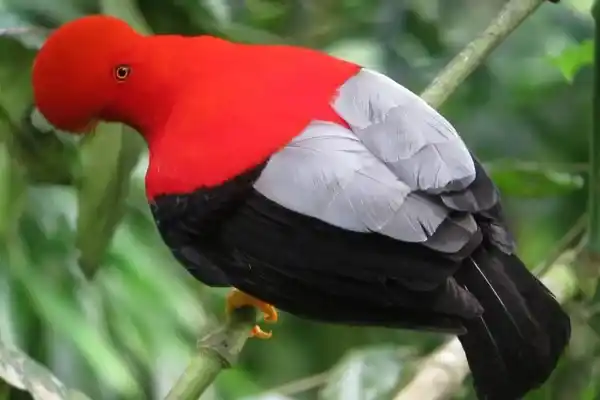
Peruvian Crested Umbrella (National Bird)
Scientific name : Rupicola peruvianus
Key points : The national bird of Peru, commonly known as "tunki" in Quechua. The male possesses an exaggerated semi-circular crest and orange-red to crimson plumage , and displays itself collectively in the forest courtship arena (lek). Primarily distributed in the cloud forests of the Andean-Amazonian transition zone , it feeds mainly on fruit and is an important seed disperser.
Andean condor
Scientific name : Vultur gryphus
Key points : The iconic large raptor and scavenger of the Andes Mountains, with a wingspan of over 3.2 m , often soars along updrafts over valleys and cliffs , playing a vital role in maintaining the scavenger function of the high-altitude ecosystem.

Green anaconda (Green water anaconda)
Scientific name : Eunectes murinus
Key points : A "heavyweight" giant snake of South America, commonly found in the lowlands and wetlands of the Peruvian Amazon rainforest . It is adept at aquatic life, using constriction to subdue prey (such as capybaras, birds, fish, caimans, etc.), and possesses an astonishing ability to swallow with its jaws wide open .

Other Peruvian native animals
1) Birds of Peru
Humboldt penguin ( Spheniscus humboldti)
Living on coastal cliffs and islands influenced by the Peru Current , it is one of the star species of the "Maldeglao (Peru Sea)".Peruvian Pelican ( Pelecanus thagus)
Large seabirds flock along the coast and are often seen diving in formation when fishing.Parrots (Psittacidae)
Widely distributed, commonly found in rainforests, some species are affected by the illegal pet trade and logging .Emerald Toucan ( Aulacorhynchus prasinus)
Its body is emerald green, its beak is large and brightly colored , it mainly eats fruit, and it often appears in mountain forests.

(ii) Peruvian mammals
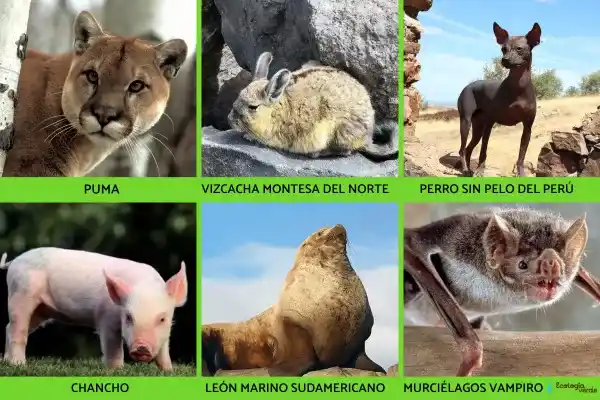
Puma concolor
Widely distributed, recorded from coastal deserts to alpine meadows, it is one of the top predators .Northern Mountain Sticky Mouse ( Ligidium peruanum )
Also known as the Andean "rock hare," it prefers rocky slopes, is good at jumping, and is diurnal .Peruvian Hairless Dog ( Canis familiaris) (Traditional breed)
This native dog breed, with a history of thousands of years, is almost hairless and has cultural significance in both coastal and highland regions.“sajino/chancho” (local name)
In common parlance, " sajino " refers to the collared wild boar Pecari tajacu ; the original text also mentions "domestic pig Sus scrofa domestica ," and the two terms may be used interchangeably in popular parlance.South American sea lion Otaria flavescens
The resident pinnipeds along the Pacific coast form large beach clusters during the breeding season.Vampire bats (subfamily) Desmodontinae
They specialize in feeding on the blood of warm-blooded animals, are mostly active at night, and are a key target for ecological research and the monitoring of zoonotic diseases.
(iii) Peruvian Reptiles
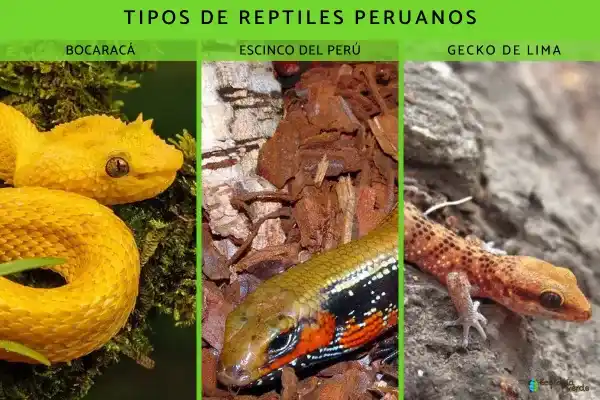
Bothriechis schlegelii
It inhabits mountain rainforests and cloud forests, has prominent "eyelash"-like scales on its head, is arboreal, and is highly poisonous .(Original text) "Peruvian skink" Riopa fernandi
Commonly known as the fire salamander , it is brightly colored.Lima leaf-toed gecko, Phyllodactylus sentosus
One of the geckos endemic to the capital region, urbanization and habitat fragmentation are the main pressures.
IV) Peruvian Fish
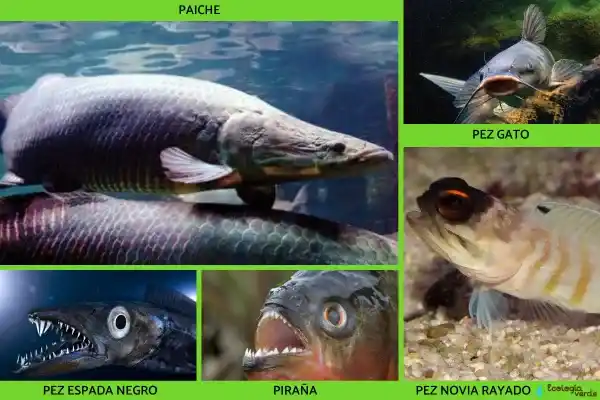
Arapaima gigas (Paiche)
These giant freshwater creatures in the Amazon basin can breathe air and are of both fisheries and cultural importance.Catfish (including sea catfish, etc.)
They are found from estuaries to nearshore areas and rivers, and are a common catch for locals.Blackband cod ( Aphhanopus carbo )
This slender, deep-sea predator has also been recorded as a catch off the coast of Peru.Piranha (Serrasalmidae family)
A representative Amazonian freshwater fish, with sharp teeth, it primarily feeds opportunistically .Striped Needlefish Opistognathus randalli
Needlefish build their nests in sandy burrows and often peek out from the entrance.
Endangered native animals of Peru (excerpt)
mammals
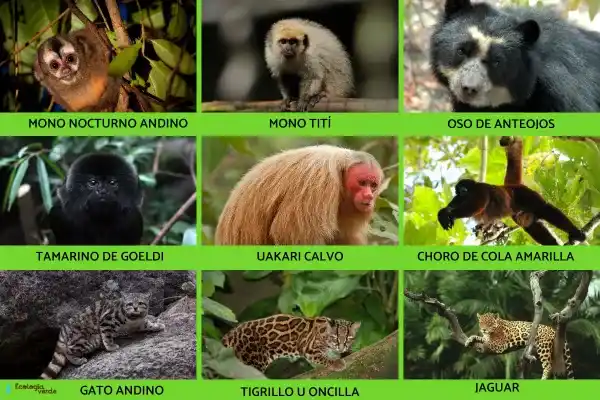
Andean night monkey (Aotus miconax)
Andean marmoset/silk monkey ( Saimiri sciureus ) (local name often used interchangeably with capuchin/squirrel monkey)
Spectacled bear (Andean bear) Tremarctos ornatus
Callimico goeldii, the Goethe's marmoset
Cacajao calvus
Yellow-tailed monkey Oreonax flavicauda
Andean mountain cat (Leopardus jacobita)
Tiger cat (Lynx/Tigercat) Leopardus tigrinus
Jaguar Panthera onca
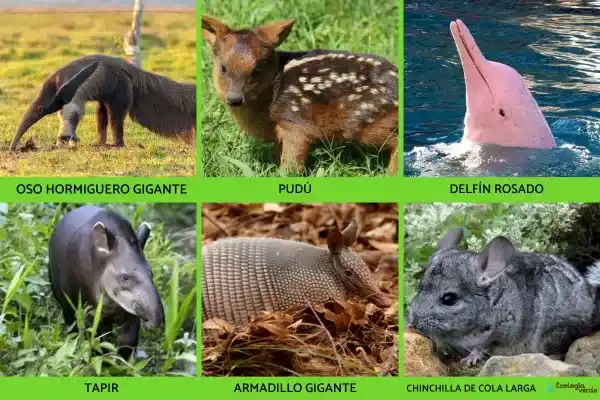
Giant anteater Myrmecophaga tridactyla
Pudu mephistophiles
Amazon River Pufferfish (Pink Pufferfish) Inia geoffrensis
Mountain tapir (Tairus pinchaque )
Giant armadillo Priodontes maximus
Chinchilla lanigera
birds
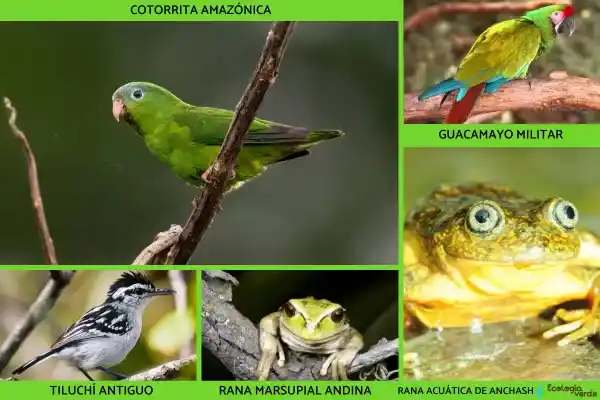
Amazon parrot (Nannopsittaca dachilleae)
Military parrot (Green-winged macaw) Ara militaris
Ancient Warbler (Tiluchí antiguo) Herpsilochmus gentryi
Amphibians
Andean baby sac frog ( Gastrotheca riobambae )
Ankash water frog Telmatobius ventriflavum
Note: The correspondence between common names and "local names" and scientific names may differ in different regions; the above are common translations and pairings for easy retrieval and further reading.
summary
From the four major camel families of South America on the highlands, to the crested umbrella bird and parrot in the rainforest canopy, and the arapaima and green anaconda in the river and lake wetlands, Peru, with its continuous gradient from coast to mountains to rainforest , contains the most representative ecological mosaic of South America. Understanding these animals and protecting the continuity of their habitats is key to protecting this "ladder of life."
bibliography
Saldanha, JS and Saldanha, VZ (2011). Hunting wildlife in Brittany, Puinava River, Loreto (Peru). Journal of Zoological Science of Colombia (RECIA), Vol. 3 (2), pp. 225–237.
Gerken, M. (2008). Studies of camels in South America. Netherlands: Wageningen Academic Society, pp. 375-386.
Montesinos, I.; Catacúra, A.; Sanchez, J. and Franco, JL (2015). Characteristics of sheep on the southern coast of Peru. Cambridge University Press, Vol. 56, pp. 55–62.
Quintana, H. and Pacheco, V. (2007). Identification and distribution of Peruvian vampire bats. Peruvian Journal of Experimental Medicine and Public Health, Vol. 24 (1).