What animals shed their jaws: Unveiling unique survival skills in the animal kingdom
In nature, many animals have evolved amazing adaptations, one of which is the phenomenon of "jaw dislocation." Some animals expand their mouths by temporarily dislocating their lower jaws to swallow larger prey or adapt to specific environments. This phenomenon is particularly common among carnivores, especially snakes. This article will explore which animals possess this jaw dislocation ability, how they use this technique for survival, and the biological principles behind jaw dislocation behavior.
What is the phenomenon of "jaw dislocation"?
"Dislocation" refers to the ability of some animals to temporarily detach or expand their lower jaw, thereby increasing the opening range of their mouths and helping them swallow prey much larger than their own mouths. This phenomenon is commonly seen in toothless animals or animals with unstable teeth, who use this technique to adapt to their hunting needs.
Which animals are capable of jaw dislocation?
1. Snakes
Snakes are the most well-known animals to exhibit jaw dislocation. They expand their mouths to swallow prey larger than their heads by separating their upper and lower jawbones. The lower jawbone of a snake is not completely fixed to the bones of its head, but is connected by ligaments and muscles, allowing it to flexibly expand its jaw.
Pythons and pythons : Pythons are among the largest snakes, capable of swallowing large animals such as deer, wild boar, and even crocodiles. A python's upper and lower jaws are connected by flexible ligaments, allowing it to easily dislocate and swallow large prey.
Rattlesnakes : Rattlesnakes are venomous snakes, and their jaw-dislodging behavior is used not only for hunting but also for releasing venom. Their jaw structure allows them to open their mouths wide, release their fangs, and bite their prey.
2. Crocodiles
Although crocodiles have much stronger jaws than snakes, they also possess a degree of flexibility. Crocodiles can extend their lower jaws to an extreme extent, helping them to hunt large prey in the water, such as fish, turtles, or other small mammals. This allows crocodiles to quickly lock onto their prey and swallow it whole.
3. Catfish
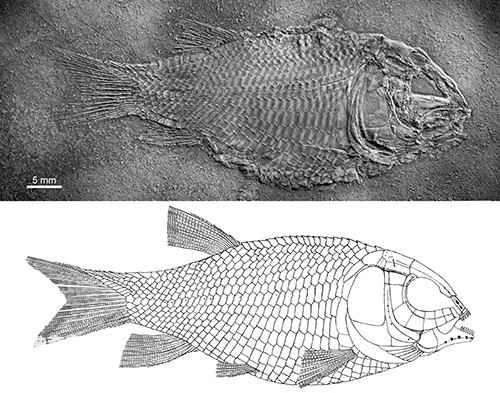
Catfish are common in both freshwater and saltwater environments, and they also have a similar jaw-opening ability. These fish expand their lower jaws to help them swallow larger prey, such as small fish, crustaceans, and even smaller mammals.
4. Pelicans
Pelicans, large waterbirds, use their flexible beaks to catch fish. Their lower beaks can expand dramatically, forming a net-like structure to capture fish in the water. While not strictly "jaw removal," this jaw-expanding ability is similar to the jaw-shedding mechanism of snakes, both facilitating the swallowing of prey larger than the beak.
5. Chameleons
Chameleons are unique reptiles, renowned not only for their flexible tongues but also for their mandibles. When hunting insects, they can open their mouths wide and extend their long tongues to swiftly capture their prey. This ability to expand their jaws allows chameleons to hunt without moving their bodies, reducing the risk of exposure.
6. Deep-sea fish
In the deep sea, many fish have evolved unique jaw-dislodging abilities to adapt to harsh environments. For example, gulper eels and black swallowers can swallow prey much larger than themselves by extending their lower jaws to their maximum extent. These fish's unique structures help them capture large quantities of prey in the food-scarce deep-sea environment.
Biological mechanisms of animal jaw dislocation
An animal's ability to dislocate its jaw depends on the structure of its bones, ligaments, and muscles. In snakes, the upper and lower jaws are not tightly connected like in mammals, but rather linked by strong ligaments and muscles. This allows snakes to freely expand their lower jaws according to the size of their prey.
Furthermore, during the dislocation process, the animal's jaw muscles undergo extreme stretching, allowing the angle of the lower jaw to increase. In some animals, after food enters the body, their lower jaw can return to its original position, thus restoring a normal bite.
Functions and advantages of jaw dislocation
Jaw dislocation provides these animals with several survival advantages:
Hunting large prey : Jaw dislocation allows animals to swallow prey much larger than their own mouths, thus expanding their food choices.
Reduced chewing time : Many animals with the ability to dislodge jaws do not chew their prey extensively, swallowing it directly into their stomachs. This saves energy and time, which is especially important in highly competitive survival environments.
Defense and Attack : In some situations, jaw dislocation is not only for hunting but also for defense or attack. For example, venomous snakes will use a significant expansion of their lower jaw to project a threat or launch an attack.
Limitations of jaw dislocation
While jaw dislocation provides these animals with many survival advantages, this behavior also has some limitations:
Energy expenditure : Jaw shedding requires a significant amount of energy from the animal, especially when catching and swallowing large prey. This means the animal needs time to recover.
Potential physical damage : Overextending the jaw can lead to ligament damage, especially when hunting prey that is too large.
Jaw expansion is an amazing survival skill in nature. Through evolution, many animals have been able to expand their jaws to swallow large prey. Snakes, crocodiles, catfish, and some deep-sea fish have survived in complex environments using this unique method. This biological phenomenon demonstrates the infinite possibilities of nature and reflects the wisdom and strength animals exhibit in adapting to different environments.