Wading birds are a group of birds that share common characteristics, such as long, slender legs, long toes and necks, and their habitats. Some of these birds include the Great White Ibis (Eudocimus albus), the Glossy Ibis (Plegadis falcinellus), the Jabiru mycteria, and the Wood Stork (Ciconia maguari).
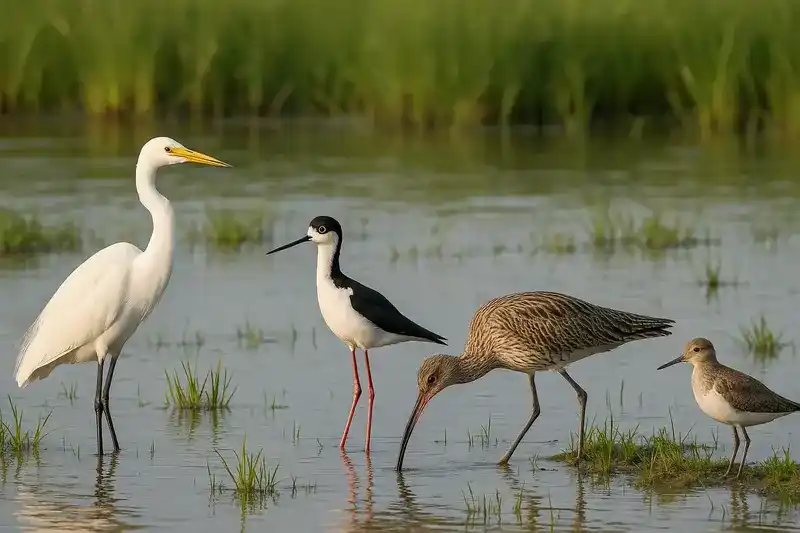
What is a wading bird?
Rose Spoonbill
White ibis
Glossy Ibis
Jabiru
American stork
Great Egret
Grey Heron
What is a wading bird?
Wading birds are birds that share common characteristics, including:
Their long, slender legs enable them to move in shallow water and maintain stability while searching for food. Similarly, their long legs help keep their feathers dry when they enter wet environments.
Their long, slender, and spread-out toes prevent them from sinking into the water and the soft mud of the riverbanks. Furthermore, they help distribute the weight of these tall birds, aiding in their balance with their long legs.
They have long beaks of different shapes to adapt to different feeding strategies.
They feed on fish, crustaceans, mollusks, and other marine life. However, their diet is not entirely aquatic; they also eat insects, small reptiles, and other terrestrial prey.
They have long, strong necks that allow them to change posture while searching for prey, improving their angle, visibility, and camouflage.
They rely on wetlands for food, reproduction, nesting, and shelter.
Most birds nest in colonies, which typically include several wading birds, as well as other waterfowl such as gulls and cormorants. These colonies, known as breeding colonies, have a safety advantage in terms of protection from predators and food supplies.
Other threats to wading birds include natural phenomena such as storms and droughts that threaten their habitats and young birds. Climate change has increased the intensity, frequency, and duration of weather events, thus exacerbating natural disasters. On the other hand, habitat fragmentation and loss caused by human development pose a serious threat to wading birds. The diversion of water sources for irrigation and human consumption, as well as the construction of dams, have also led to wetland drying and reduced river flow, thus harming these amazing animals.
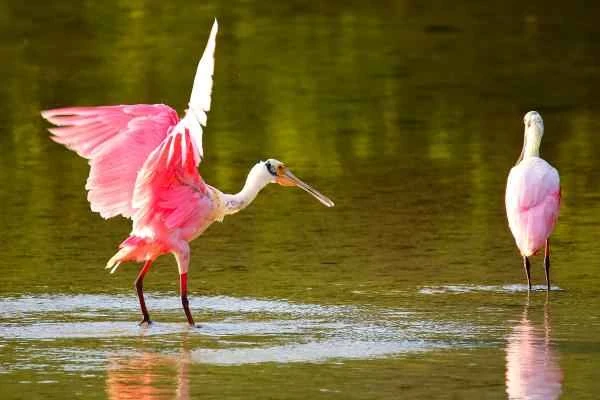
Rose Spoonbill
The Roseate Spoonbill (Platalea ajaja) is a striking wading bird with pink plumage and a distinctive long, flat, shovel-shaped beak. It inhabits wetlands throughout the southeastern United States, Central America, the Caribbean, and much of South America. Their coloration varies with age and diet, with breeding adults displaying the most vibrant colors. It swishes its beak from side to side in shallow water, filtering small fish, crustaceans, and aquatic insects for food. It typically appears in flocks and is frequently seen alongside other waterbirds.
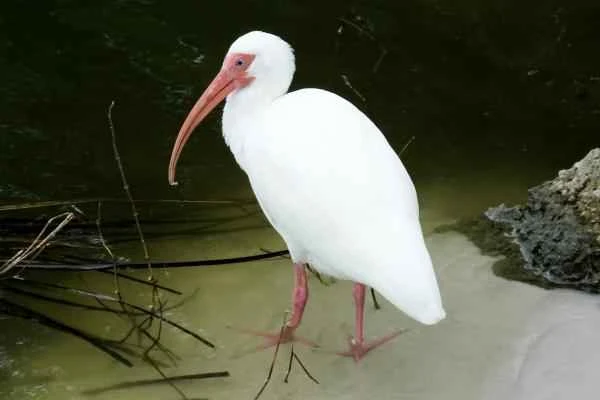
White ibis
The Great White Ibis (scientific name: *Eudocimus albus*) is a medium-sized wading bird characterized by its entirely white plumage, long, downward-curving pink or orange beak, and legs. It is widely distributed in the humid regions of the southeastern United States, Central America, the Caribbean, and South America. It prefers to inhabit swamps, mangroves, lagoon edges, and estuaries, where it feeds on insects, crustaceans, and small fish caught by probing the mud with its beak.
Glossy Ibis
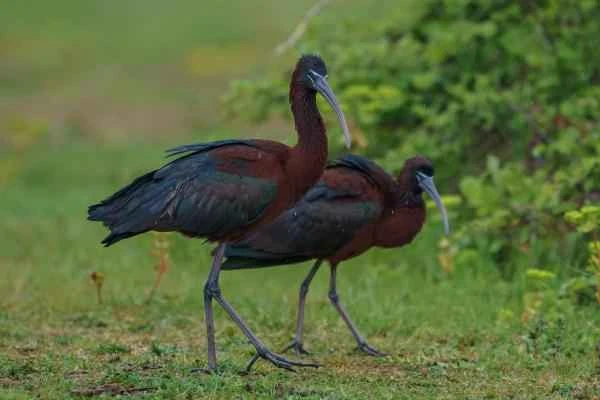
The Glossy Ibis (scientific name *Plegadis falcinellus*) is a medium-sized bird characterized by its dark plumage with metallic sheen of green, copper, and purple, which is particularly striking in sunlight. It has long, black legs and a slender, downward-curving beak, which it uses to search for invertebrates, small crustaceans, and amphibians in the mud. It is distributed in warm temperate and humid regions of all continents except Oceania and Antarctica. It inhabits lagoons, estuaries, and marshes, usually appearing in flocks, often alongside other species of ibis or herons.
Jabiru
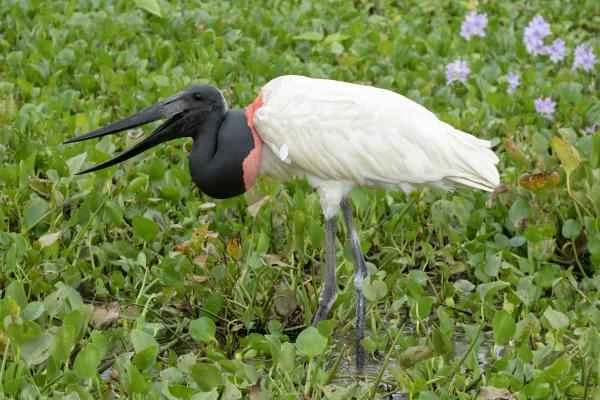
The American stork (Jabiru mycteria) is the tallest bird in Central and South America and the second largest bird in the continent in terms of wingspan. It lives near lagoons and rivers and feeds primarily on fish, mollusks, and amphibians. Its name comes from the Guarani language and means "swollen neck," because it can inflate subcutaneous air sacs in its neck, increasing its lightness, aiding breathing, and regulating body temperature.
American stork
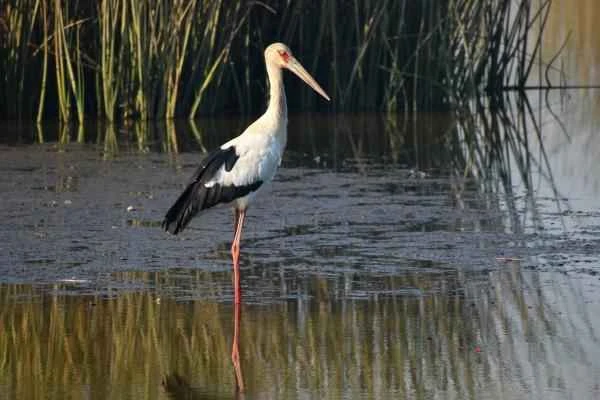
The wood stork (Ciconia maguari) is a large bird, reaching up to 130 cm in length. It has a large beak and slender red legs. It lives in wetlands in tropical and subtropical America, feeding on fish, crabs, mollusks, crustaceans, and insects. They form small flocks and typically fly at high altitudes.
Great Egret
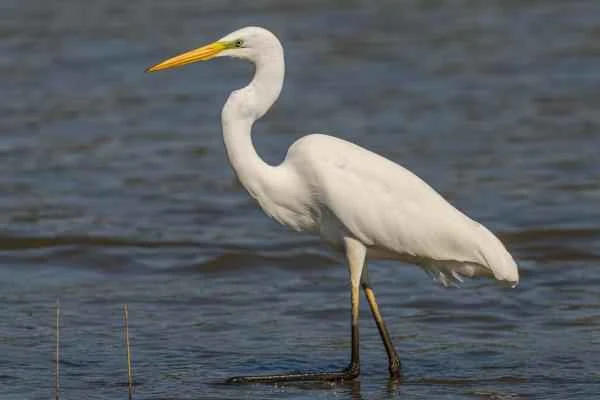
The Great Egret (Ardea alba) is a large, slender, white-feathered wading bird with a wide distribution, found on every continent except Antarctica. It has black legs and a long, orange-yellow beak. A solitary animal, it is typically found in calm, shallow waters and feeds on invertebrates, fish, and amphibians, using its beak like a harpoon.
Grey Heron
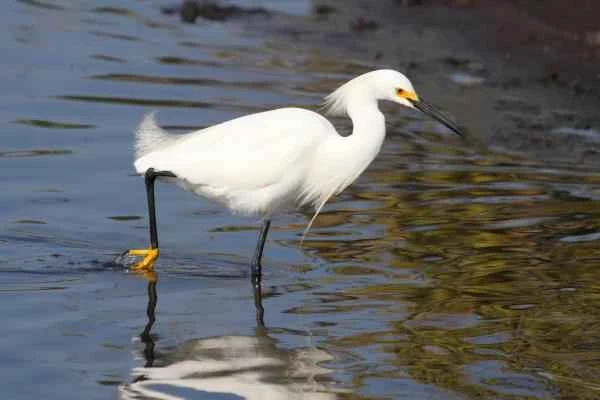
The Great Egret, also known as the Egret, is native to the Americas. It can reach a length of 60 centimeters. Its plumage is white, with the feathers on its back and chest becoming finer during the breeding season. Its beak and legs are black. Aside from its smaller size, these characteristics clearly distinguish it from the Great Egret (Ardea alba).
Black-backed egret
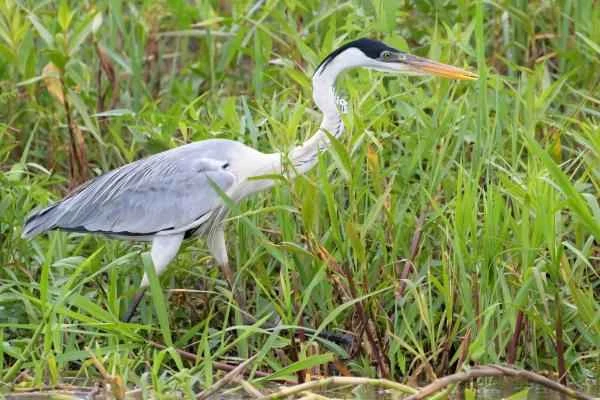
The purple egret (Ardea cocoi), native to Central and South America, is a wading bird that lives in both freshwater and brackish wetlands and often perches in trees. Its plumage is lead-white, with distinctive long feathers on the neck, back, and chest. Its beak and legs are yellow. They are diurnal animals, generally solitary, but can also form small groups.
cattle egret
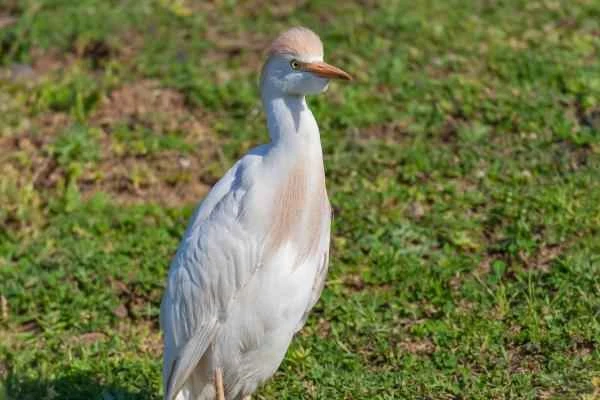
The cattle egret (Ardea ibis) inhabits all tropical, subtropical, and temperate regions of the world, and can be found in tropical savannas, grasslands, mangroves, swamps, agricultural areas, and reservoirs. It has a slender, white body, and during the breeding season, its head and neck develop golden or orange feathers. Its common name comes from the fact that it often perches on cattle.
Blue Heron
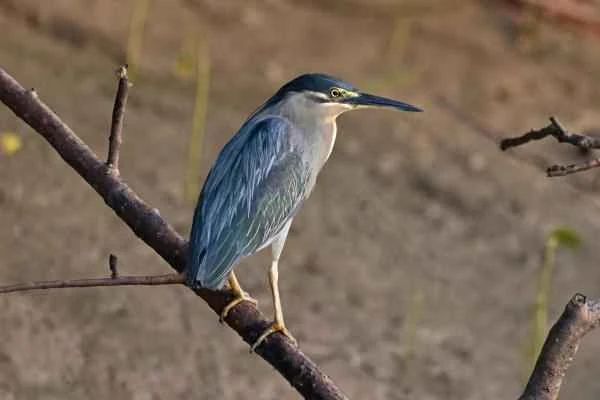
The blue heron (Butorides striata) is native to the Americas, Asia, Africa, and Oceania, and inhabits both saltwater and freshwater environments. Adults can reach 48 cm in length. Its crest and back are greenish-black. The neck and front of the chest are ochre-brown. The rest of the neck, abdomen, and flanks are grey. The back is grey but lacks any green sheen. It uses its long beak to catch fish and small insects.
Great Black Oriole
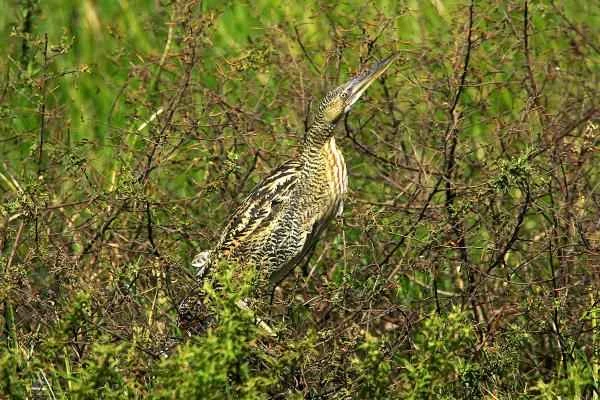
The Great Blackbird (Botaurus pinnatus) is a large wading bird that inhabits tropical America in areas covered with tall grass or reeds. It is solitary, with camouflaged light brown plumage and brown spots. A patient and agile hunter, it feeds on fish, insects, amphibians, and small mammals.
Striped Blackbird
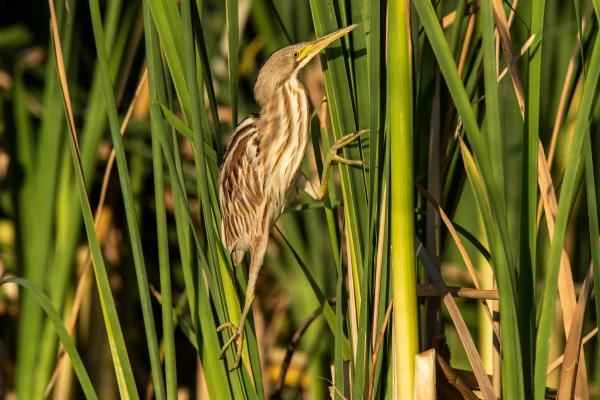
The Striped Blackbird (scientific name: *Botaurus involucris*) is a wading bird native to South America. It is small in size with black, ochre, and cinnamon-colored stripes on its plumage. It is a difficult species to observe, and its flight time is very short. It inhabits estuaries and lagoons with dense reed beds or cattails.
Red-faced Hoco
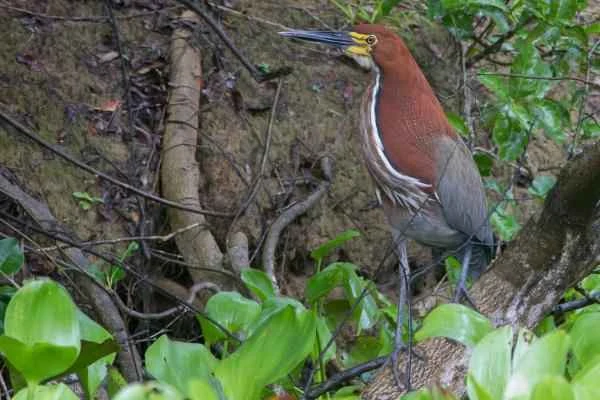
The red-faced eagle (Tigrisoma lineatum) is widely distributed in Central and South America. It inhabits environments near waterways and with abundant vegetation. Its neck is brown, and its feathers are black and white with stripes. Its back is brownish-grey and red. It is a solitary and slow-moving species.
post
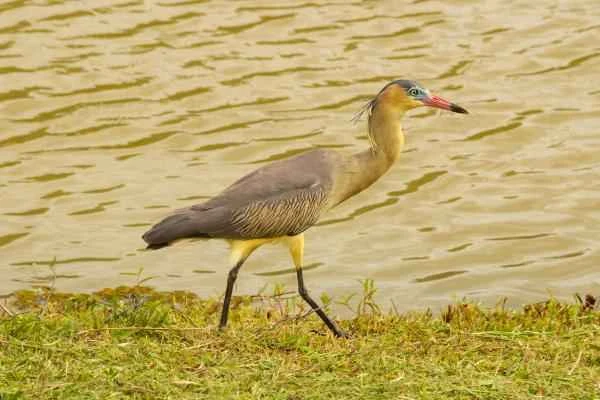
Syrigma sibilatrix, commonly known as chiflón, lives in puddles, marshes, grasslands, rural areas, and hillsides. It has a pinkish-purple beak with a black tip. Its legs are black, and its iris is grayish-white. Its back is gray or light blue, and its neck and chest are yellow. They usually appear in pairs, occasionally forming groups of up to 45 individuals. It emits a long, hoarse whistle.
Sandhill Crane
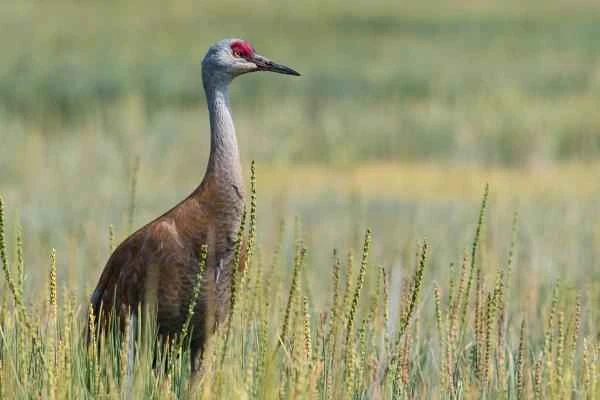
The Sandhill Crane (Antigone canadensis) is a large wading bird with predominantly grey plumage, black legs, and a striking red patch on its forehead. It is distributed throughout North America, migrating south for long distances during the winter, even reaching parts of Central America. It inhabits grasslands, wetlands, and open fields, feeding on a variety of foods including roots, grains, insects, and small vertebrates. It is known for its loud calls and dance rituals, which include leaps and coordinated movements between pairs of birds.