The Chishui River is the only "pristine river" without dams on the main stream of a first-level tributary of the Yangtze River, and it serves as an important ecological barrier for the upper reaches of the Yangtze River and the Three Gorges Reservoir area. On January 1, 2017, the Chishui River Basin (Zunyi section) became a national pilot area for the comprehensive ban on fishing.
On April 28, 2022, the Institute of Hydrobiology, Chinese Academy of Sciences, collected and captured a nearly two-foot-long eel during scientific research and monitoring in the Fuxing section of the Chishui River. According to researchers from the Institute of Hydrobiology, the eel, a native fish of the Chishui River, had disappeared for more than 20 years, making its reappearance in the Chishui River a rare occurrence.
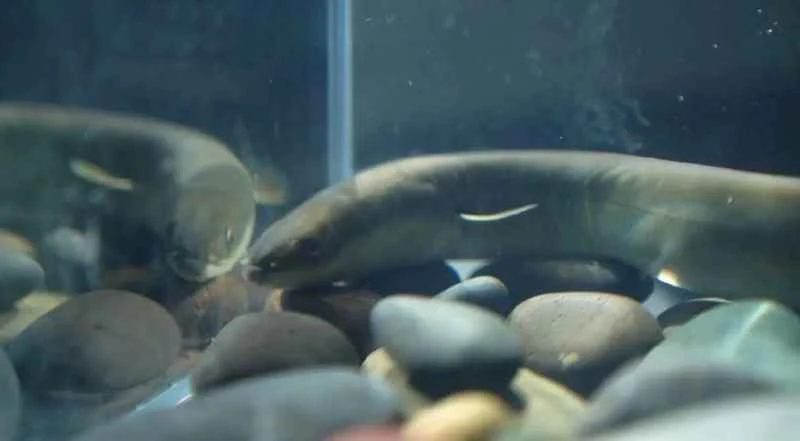
Chishui River native fish eel
According to monitoring by the Institute of Hydrobiology, Chinese Academy of Sciences, since the fishing ban was implemented in the Chishui River Basin in 2017, the fish resources of the Chishui River have recovered significantly. Native fish species that had disappeared for many years, such as eel, fine-scaled gudgeon, loach, and red-lipped loach, have reappeared in the Chishui River. The populations of rare fish species such as Yangtze sturgeon and Chinese sturgeon have increased significantly. Among them, the number of monitored Yangtze sturgeon increased from 0.1 per year before the fishing ban to 72.3 per year, and the number of Chinese paddlefish increased from 3.4 per day before the fishing ban to 8.3 per day. The fish resources have increased significantly, with the catch per boat increasing from 4.1 kg per day before the fishing ban to 8.0 kg per day, an increase of nearly 100%. The fish reproduction status has improved significantly. The number of early resource species of fish collected in the Chishui section of the Yangtze River increased from 31 species before the fishing ban to 40 species. Grass carp reproduction was monitored in both 2018 and 2020. In 2020, the reproduction of loach and gudgeon was monitored for the first time. The reproduction scale of large and medium-sized fish such as white carp and Chinese barbel has increased significantly.