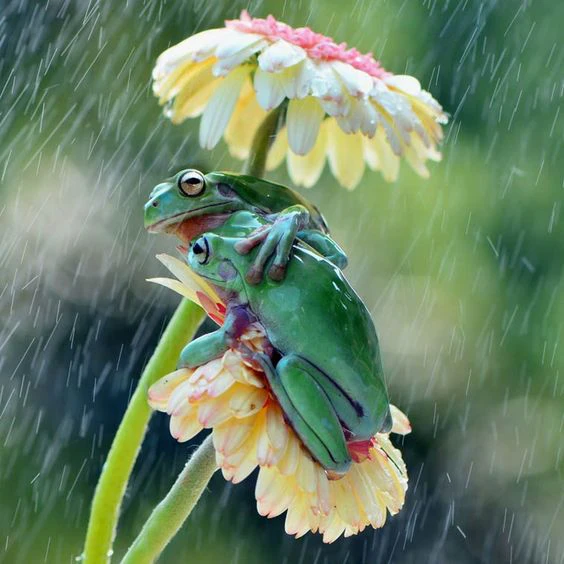
When we mention "amphibians," frogs often come to mind first, but in fact, the diversity of these animals far exceeds our imagination. Amphibians are a group of vertebrates that exist between aquatic and terrestrial life, and their life cycle typically includes a larval stage in water and an adult stage on land. According to the modern biological classification system, amphibians are mainly divided into three groups: Anura (tailless animals), Caecilians (gastropods), and Caudata (tailed animals).
This article will take you on an in-depth journey through the definition, characteristics, classification criteria, and representative species of amphibians, helping you to fully grasp the core knowledge of this unique animal phylum.
What are amphibians? What are their unique characteristics?
Amphibias are vertebrates that depend on freshwater environments for survival or reproduction, and they possess the following significant biological characteristics:
Exposed and permeable skin : Amphibians do not have scales, and their skin can directly absorb water and oxygen. Therefore, they must live in a humid environment or near a water source, otherwise they are very prone to dehydration.
Cold-blooded animals (ectothermic animals) : They cannot regulate their body temperature on their own and must rely on external heat sources (such as sunlight, warm ground, etc.) to maintain their life activities.
Solitary nature : They spend most of their time alone and only gather during the breeding season.
Their reproductive method is unique : they usually use external fertilization, lay their eggs in water or a humid environment, hatch into aquatic larvae (tadpoles), and then undergo a complete metamorphosis to develop into terrestrial organisms.
Their diet changes significantly : larvae mainly feed on plankton and organic detritus, while adults primarily feed on insects and small invertebrates, making them typical predators.
Strong auxiliary function of skin respiration : Many amphibians can breathe through their skin, and some species do not even have lungs.
Amphibian classification system
From a biological classification perspective, amphibians belong to the class Amphibia within the phylum Chordata. Extant species are mainly classified as modern amphibians (Lissamphibia) , which can be further subdivided into the following three orders:
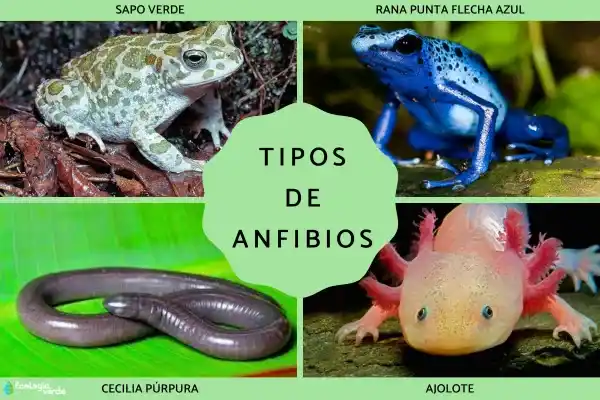
Anura : Includes frogs, toads, etc.
Gymnophiona : Commonly known as caecilians, they resemble earthworms in appearance;
Caudata : This order includes salamanders, newts, and axolotls.
Below, we will introduce the specific characteristics and representative species of these three types of amphibians in turn.
I. Anura: The World of Frogs and Toads
Anura is the most numerous group of amphibians, and its members include the frogs and toads that we are most familiar with.
Main features:
Adults are tailless; the tail degenerates during metamorphosis in juveniles.
Its hind limbs are well-developed and muscular, making them suitable for jumping;
Large, protruding eyes; wide mouth.
They primarily feed on insects, but some larger species can also prey on small mammals or other frogs.
Males attract females by vocalizing, and different species have their own unique tones in their calls.
Common families and representative species:
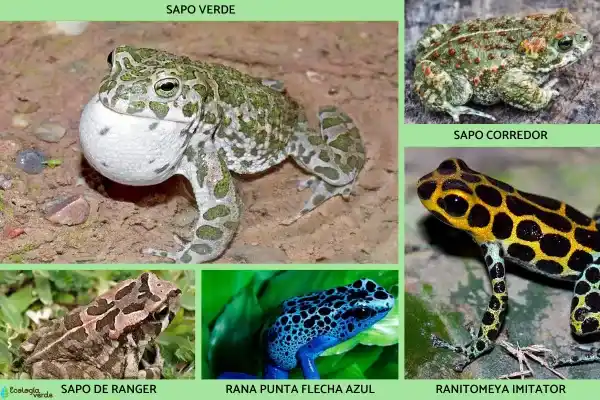
1. Bufonidae (Toads):
Characteristics: Rough skin with warts, large body size, short hind limbs;
Representative species:
Green toad (Bufo viridis)
Running toad (Bufo calamita)
Ranger's toad (Amietophrynus rangeri)
2. Dendrobatidae (poison dart frogs):
Characteristics: Brightly colored, with neurotoxins in its skin, it is a species endemic to tropical America;
Representative species:
Blue poison dart frog (Dendrobates tinctorius)
The mimicking poison dart frog (Ranitomeya imitator)
II. Gymnophiona: Mysterious creatures hidden in the soil
Caecilians are often mistaken for snakes or earthworms and are among the least known groups of amphibians.
Main features:
It has a slender, cylindrical body and no limbs;
Its skin has segmented folds, and its appearance is very similar to that of an annelid.
Visual degeneration, eyes are almost invisible;
Most species live underground and use their antennae and sense of smell to identify their environment.
Reproduction methods vary; some species are oviparous, while others can give birth directly to offspring or even fully developed adults.
Common families and representative species:
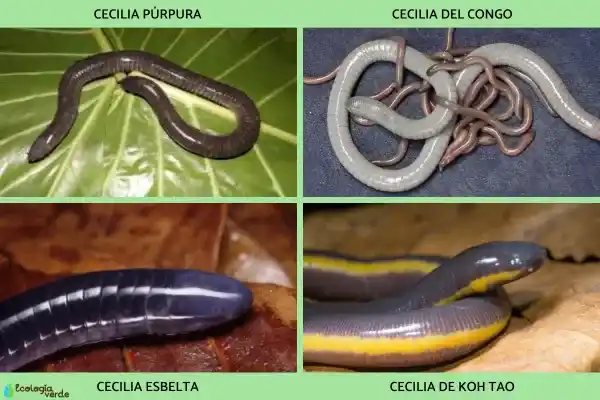
1. Caeciliidae family:
Habitat: In tropical soils;
Representative species:
Purple Caecilian (Gymnopis multiplicata)
Congo caecilomycetes (Herpele squalostoma)
Small caecilians (Dermophis parviceps)
2. Genus *Ichthyophis*:
Geographical distribution: Endemic to Asia;
Parenting habits: The mother guards the egg mass until the larvae enter the water;
Representative species: Ichthyophis kohtaoensis
III. Caudata: Elegant Amphibious Creatures
The order Caudata includes a variety of species with different body sizes, lifestyles, and forms, such as salamanders, newts, and axolotls.
Main features:
Adults have a distinct tail;
The limbs are relatively equal in size, and the body is slender.
They have diverse breathing methods: some species can exchange gases through the skin and oral mucosa;
Their size varies greatly, ranging from a few centimeters to over 1 meter;
Most species use internal fertilization, where the male transfers sperm through a spermatophore.
Common families and representative species:
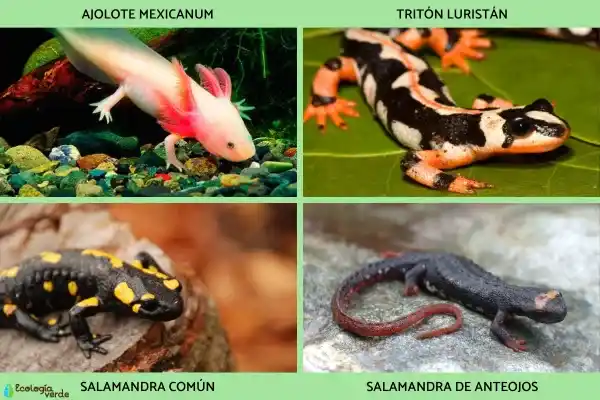
1. Ambystomatidae:
Representative species: Ambystoma mexicanum
A representative example is the phenomenon of "juvenile maturation," where the external gill structure is retained even after adulthood.
Completely aquatic, endangered species.
2. Salamandridae:
Habitat: Europe, Asia, North America and North Africa;
Characteristics: Rich and varied body colors, often with obvious spots or stripes;
Representative species:
Lorristan salamander (Neurergus kaiseri): with striking black and white contrast, it is an endangered pet species;
Common salamander (Salamandra salamandra): Possesses venom glands;
Spectacled newt (Salamandrina terdigitata): It has yellow stripes on its eyes, making it appear as if it is wearing glasses.
In conclusion, the diversity of amphibians far exceeds our imagination.
This article showcases the diversity of amphibians in terms of morphology, behavior, and reproduction. From agile frogs and caecilians hiding deep in the mud to elegant and colorful salamanders, they collectively demonstrate the miracle of life's adaptation.
If you'd like to delve deeper into the knowledge of wild animals, please visit our website "Animal Encyclopedia" to unveil the mysteries of nature together!
bibliography
Beatty, R., Beer, A., and Deeming, C. (2010). The Book of Nature. Doreen Kindersley, UK.