Flying dinosaurs are an indispensable and crucial link in the evolution of modern birds. Although these dinosaurs lived hundreds of millions of years ago, the fossils they left behind provide paleontologists with invaluable information, helping to understand not only the origin and evolution of birds, but also revealing many details of natural history, such as geology and climate.
This article will take you on an in-depth journey into various flying dinosaurs and their characteristics, and introduce pterosaurs, flying reptiles often mistaken for dinosaurs. They were among the earliest vertebrates on Earth to acquire the ability to fly.
Types and characteristics of flying dinosaurs
Dinosaurs belong to the Sauropsida phylum of vertebrates and first appeared during the Triassic period, 250 million years ago. They are mainly divided into two orders:
Ornithischia
The word originates from Greek and means "bird pelvis," referring to the posterior extension of the pubis bone, similar to that of modern birds. However, modern birds do not originate from this group. Ornithischian dinosaurs were mostly herbivorous, widely distributed, and went extinct at the end of the Cretaceous period, about 65 million years ago.
Saurischia (Saurischia)
The name means "lizard pelvis," referring to the pubis bone pointing forward toward the head. This group includes a large number of carnivorous and herbivorous dinosaurs and is also the ancestral group of modern birds. Flying dinosaurs evolved gradually from the Saurischia order.
Morphological evolutionary characteristics of flying dinosaurs
In order to fly, these dinosaurs developed the following key features during their evolution:
Hollow skeleton : Reduces weight and facilitates flight.
Three-toed forelimbs : Improve grip strength, laying the foundation for the future development of wing feathers.
Feathers : They may have originally evolved from scales for insulation, and later gradually evolved into flight structures.
Alula : A structure formed by the degeneration of the forelimb phalanges, still visible on the edge of the wings of extant birds.
Keel : A sternal protuberance that serves as the attachment point for flight muscles and is a key structure for the flight ability of modern birds.
A list of representative flying dinosaurs
Archaeopteryx spp.
It is considered an important transitional species between dinosaurs and birds. It lived in what is now southern Germany during the Late Jurassic period, about 150 million years ago. Although it retained many dinosaur features, its wings and feather structure were similar to those of modern birds, giving it a certain gliding ability.
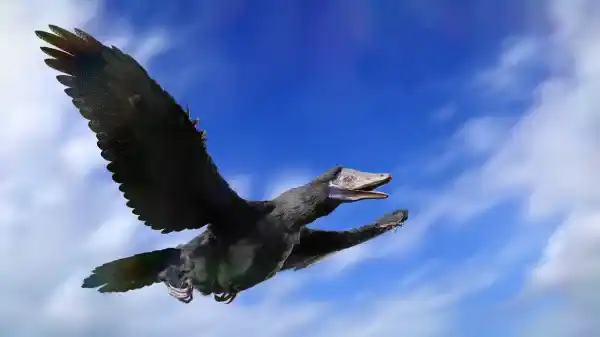
Dawn Bird (Aurornis xui)
Living in China about 160 million years ago, its fossils were discovered earlier than Archaeopteryx, so it may be one of the earliest dinosaurs with the potential to fly.
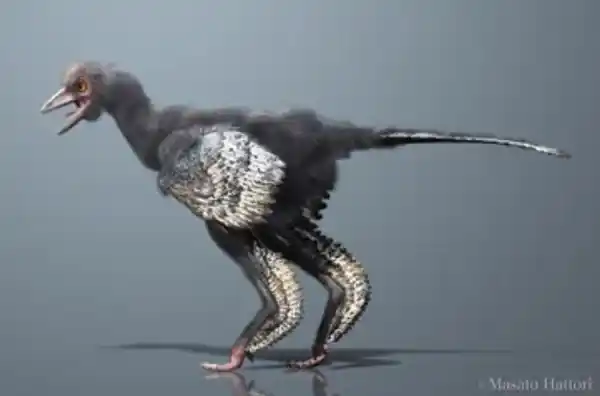
Xiaotingia zhengi
Small in size, it lived in China around the Late Jurassic period and is also believed to have feathers and a bipedal gait similar to birds, representing another important link in bird evolution.
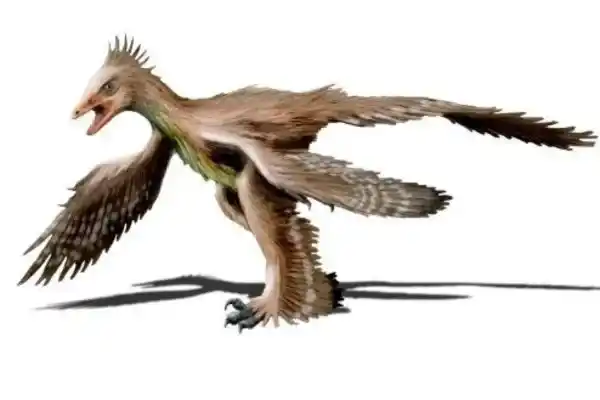
Anchiornis huxleyi
Meaning "close to birds," it lived in China 155 million years ago. It had long feathers and well-developed wings, but its ability to fly remains controversial.
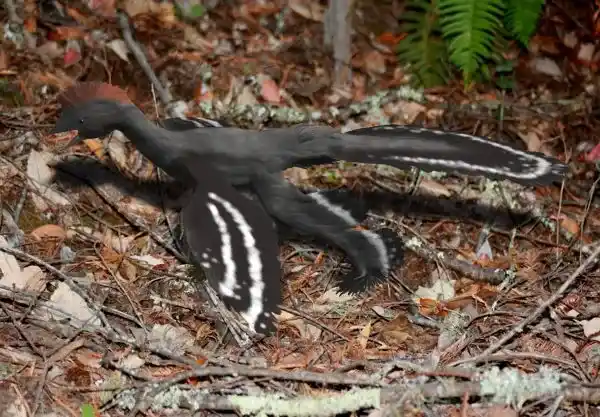
Rahonavis ostromi
It lived in Madagascar about 70 million years ago. It was about 70 centimeters long and had a long tail and feathers, but whether it had the ability to fly fully is still in doubt.
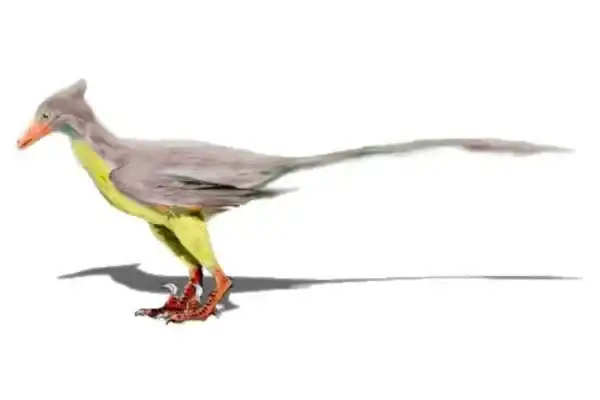
Balauur bondoc
They lived in Europe about 70 million years ago. They could reach 2 meters in length, with short but powerful hind limbs and fused skeletal features typical of birds.
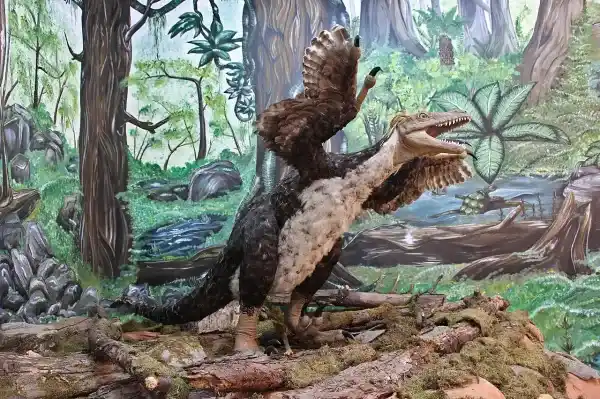
Microraptor spp.
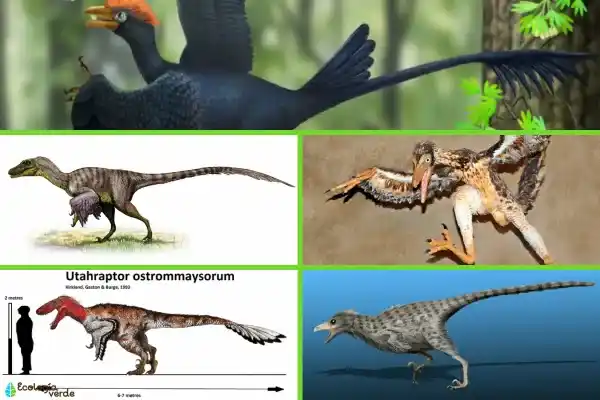
It includes three known species that lived in China during the Early Cretaceous period (approximately 125 million years ago). They were less than 1 meter long and had long feathers on both their forelimbs and hindlimbs, suggesting they were capable of active flight.
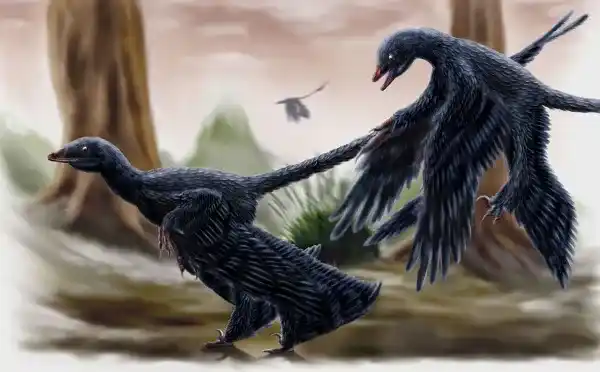
Himalayan Lesser Hunter Dragon (Unenlagia comahuensis)
The fossils were discovered in Patagonia, Argentina, dating back approximately 90 million years. Although it could not fly actively, it possessed a feathered tail and forelimbs suitable for gliding and balance.
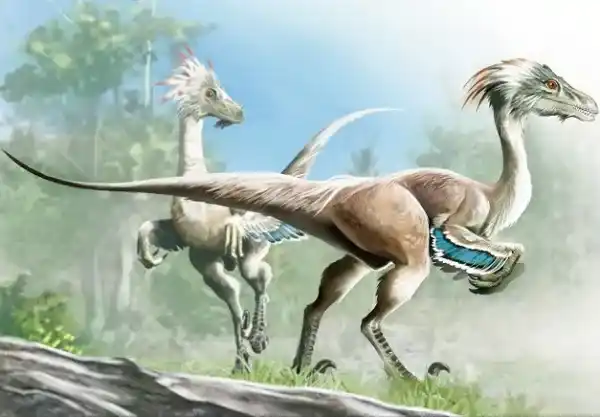
Other dinosaurs that may have possessed flight capabilities
Jeholornis palmapenis
Velociraptor mongoliensis
Sinosauropteryx (Sinornithosaurus millenii)
Utahraptor ostrommaysorum
Mahakala omnogovae
These species demonstrate the diversity of the transition from reptiles to modern birds.
Pterosaurs were not dinosaurs.
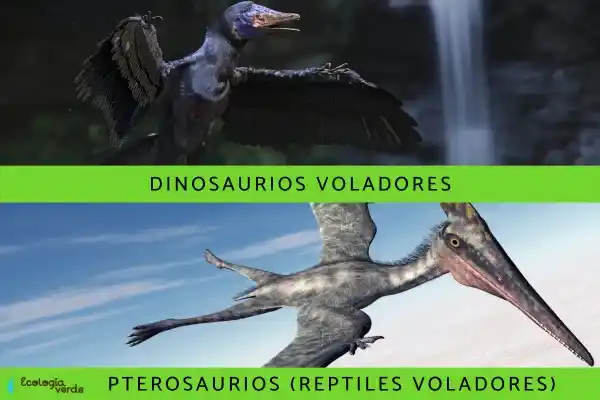
Many readers mistakenly believe that pterosaurs were flying dinosaurs, but in fact, pterosaurs (Pterosauria) were flying reptiles that lived alongside dinosaurs and belong to a separate branch of vertebrate evolution. They appeared as early as about 220 million years ago and were the earliest vertebrates on Earth to possess the ability to fly.
The difference between pterosaurs and flying dinosaurs:
Pterosaur wings were membranous structures supported by an extremely long finger, rather than feathers.
They possess unique skeletal structures , such as "pteroid bones," used to control flight direction.
Pterosaurs mostly lived by the sea or lakeside and behaved similarly to modern seabirds.
Common Pterosaur Species
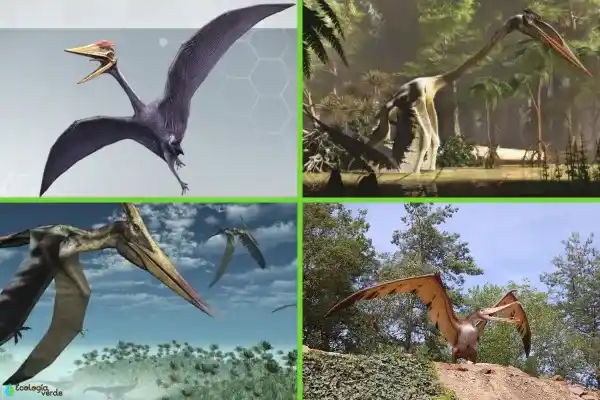
Zhejiang Pterosaur (Zhejiangopterus linhaiensis)
Discovered in China, it has a wingspan of about 3.5 meters, a long beak, and a medium body size.
Quetzalcoatlus northropi
Living in Texas, North America, it is the largest flying animal discovered to date, with a wingspan of 10–11 meters and a weight of over 100 kilograms.
Pterodactylus spp.
The earliest named pterosaur species could reach a length of up to 1.5 meters and mainly fed on small animals.
Cearadactylus atrox
Discovered in Brazil, fossil teeth indicate that it primarily fed on fish, and could reach a length of 5.5 meters and a weight of about 15 kilograms.
Other pterosaur genera:
genus Gnathosaurus
genus Ornithocheirus
Pterodaustro
Tropeognathus
genus Rhamphorhynchus

Conclusion
Flying dinosaurs and pterosaurs represent two distinct paths in the evolution of flight on Earth. The former are the ancestors of modern birds, while the latter are extinct flying reptiles. By studying the fossils of these ancient creatures, we not only understand the origins of birds but also gain a deeper understanding of the diversity of Earth's evolution.
References
Díaz Aros, R. (2012). The origin of dinosaurs (dinosaurs: sauropods-ornipods).
Pterosaur (winged lizard), read the comments. Excerpt from: https://elementos.buap.mx/directus/storage/uploads/00000001434.pdf