Amazingly, despite the extremely harsh conditions of the mountain environment—low air pressure and thin oxygen—many animals have successfully survived and reproduced there. In fact, these animals are able to survive in the high mountains thanks to the unique adaptations they have developed over a long period of evolution.
This article will introduce you to 80 typical mountain animals, covering a wide range of species from the Asian yak to the Andean condor of the Americas, the Atlas baboon of Africa, the snow leopard of the Himalayas, and even the European alpine osprey. If you are interested in these creatures living in extreme mountain environments, please continue reading this comprehensive science article.
Detailed Explanation of Representative Mountain Animals
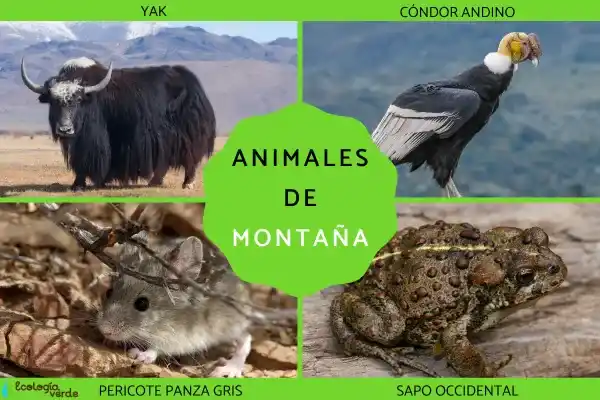
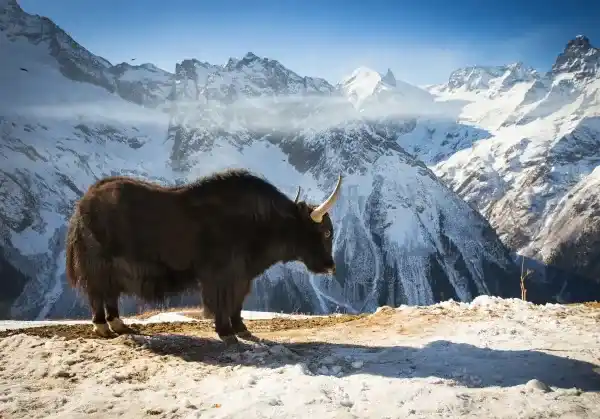
1. Yak ( Bos mutus )
The yak is a large mammal widely distributed in Central Asia and the Himalayas. They possess thick, dense black, white, or brown hair to withstand the extreme cold of high-altitude climates. Yaks have prominent shoulder humpes, and males are enormous. They are an important livestock resource for the local Tibetan people. Currently, there are two subspecies: wild and domesticated. The wild yak is known as *Bos mutus grunniens *.
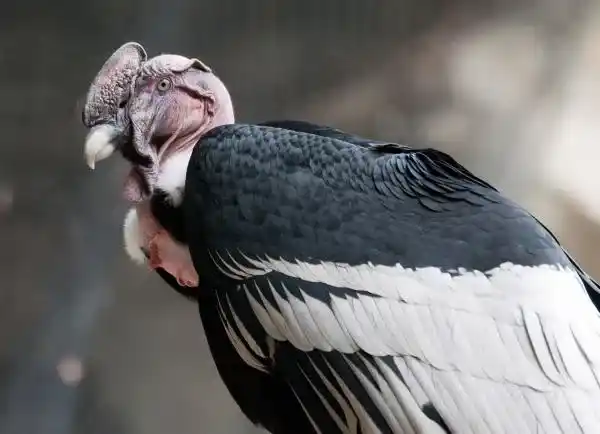
2. Andean Condor ( Vultur gryphus )
Living in the Andes Mountains of South America, the Andean condor is one of the world's widest-winged flying birds, with a wingspan exceeding 3 meters. It can fly at altitudes above 6,000 meters and is an indispensable scavenger in the mountain ecosystem.
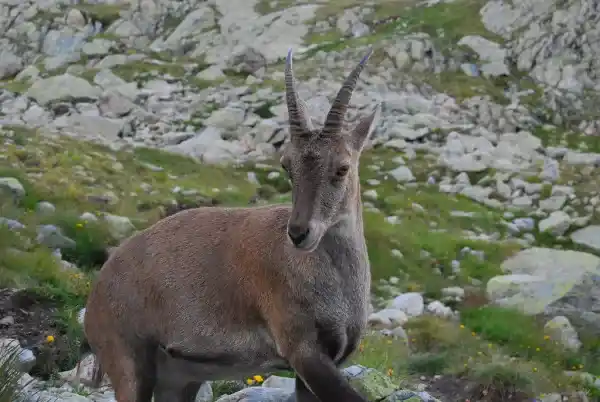
3. Argali/ Rupicapra rupicapra
Distributed in the high-altitude regions of Europe, including the Alps, Carpathians, and Caucasus, there are seven subspecies. Summer coat is reddish-brown, and winter coat is dark brown. Highly gregarious, they are typical alpine herbivores.
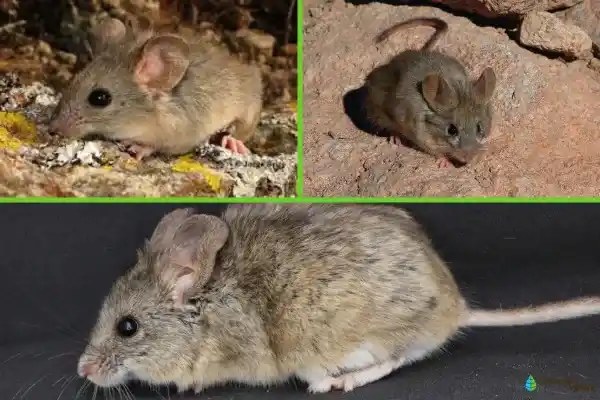
4. Pericote panza gris, Phyllotis xanthopygus
Living on the slopes of the Andes Mountains in South America, it is considered one of the mammals with the highest altitude distribution. Its traces have been found at altitudes above 6,000 meters, and it can also survive at sea level.
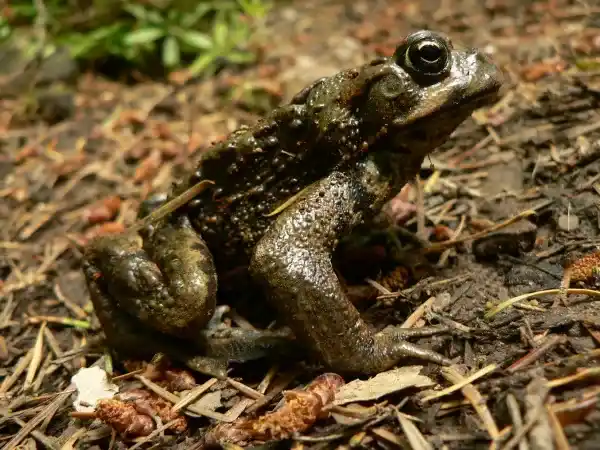
5. Western Toad ( Anaxyrus boreas )
They are found in the western United States, in mountainous wetlands from the Pacific coast to the Cascade Mountains, at altitudes up to 3,640 meters. A female toad can lay up to 15,000 eggs at a time.
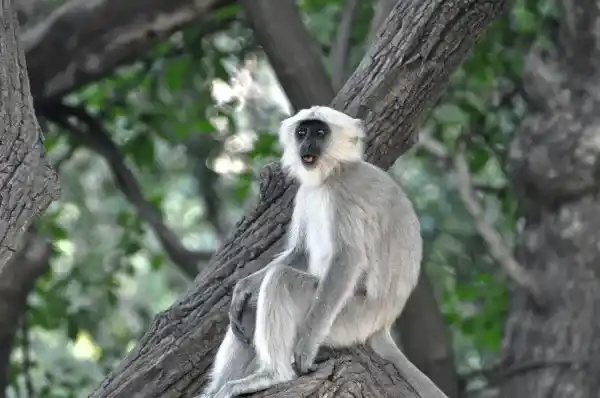
6. Black Snub-nosed Langur ( Rhinopithecus bieti )
These are plateau primates unique to China, mainly distributed in the Yunling Mountains of northwestern Yunnan, inhabiting altitudes up to 4,700 meters. They are among the monkeys living in the most extreme mountain environments.
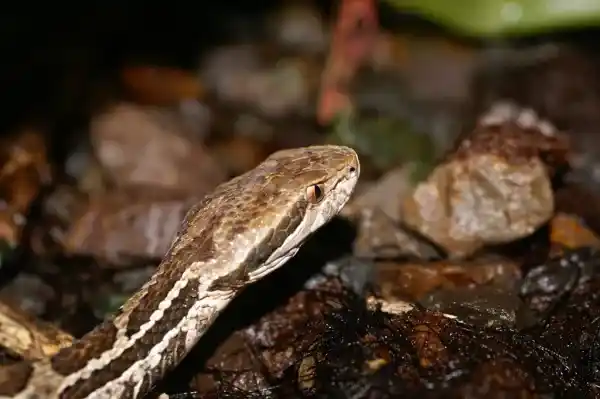
7. Highland Pit Viper ( Cerrophidion godmani )
It lives in the highlands and mountains of Central America, at altitudes ranging from 1400 to 3500 meters. It is poisonous, but the mechanism of its toxicity has not been fully understood.
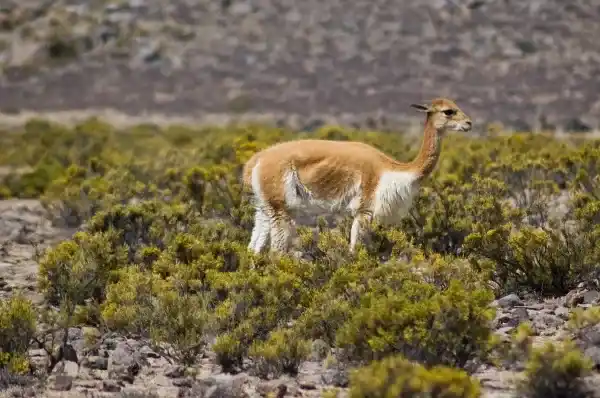
8. Alpaca (Vicuña, Vicugna vicugna )
Belonging to the camel family, it is a symbolic species of the Andes Mountains, distributed in the high-altitude regions of Peru, Bolivia, Chile, and Argentina (above 3200 meters). Small in size, weighing only about 50 kilograms, it is famous for its valuable wool.
9. Alpine Salamander ( Salamandra atra )
This species is endemic to the Alps and is highly nocturnal. Due to its harsh living environment, it has an unusually long gestation period, an adaptation to the high-altitude environment. It feeds on insects, worms, and mollusks.

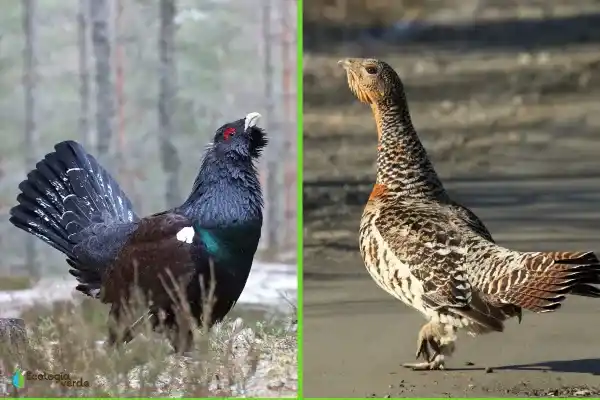
10. Western Capercaillie ( Tetrao urogallus )
It is distributed in the European mountains such as the Pyrenees, Alps, and Jura Mountains. The male is larger with glossy black plumage; the female is smaller with brownish-yellow plumage, exhibiting typical sexual dimorphism.
Other mountain animal list (categorized by region)
Spanish mountain animals
Vulture ( Gyps fulvus )
Common squirrel ( Sciurus vulgaris )
White-collared Thrush ( Turdus torquatus )
Iberian Lynx ( Lymph pardinus )
Pine marten ( Martes martes )
Bearded Vulture ( Gypaetus barbatus )
Iberian brown bear ( Ursus arctos pyrenaicus )
Gray dormice ( Glis glis )
Iberian wolf ( Canis lupus signatus )
Stone marten ( Martes foina )
Argentine mountain animals
Cougar ( Puma concolor )
Southern Andean deer ( Hippocamelus antisensis )
Andean ostrich ( Rhea pennata )
Pudu puda (South American deer)
Mala rabbit ( Dolichotis patagonum )
Small spotted cat ( Leopardus guigna )
Red Woodpecker ( Campephilus magellanicus )
Andean tit ( Phrygilus gayi )
Chinchilla ( Chinchilla chinchilla )
Grey fox ( Lycalopex griseus )
Colombian mountain animals
Tiger cat ( Leopardus tigrinus )
Andean raccoon ( Nasuella olivacea )
Magdalena spider monkey ( Ateles hybridus )
Mountain tapir ( Tapirus pinchaque )
Andean bear ( Tremarctos ornatus )
Hummingbird ( Boissonneaua flavescens )
White-tailed deer ( Odocoileus virginianus )
Highland Eagle ( Geranoaetus melanoleucus )
Red squirrel ( Sciurus granatensis )
Mountain Toucan ( Andigena nigrirostris )
American mountain animals
Mule deer ( Odocoileus hemionus )
White-tailed Thunderbird ( Lagopus leucura )
Peregrine Falcon ( Falco peregrinus )
Promontory ( Antilocapra americana )
White-tailed deer ( Odocoileus virginianus )
American badger ( Taxidea taxus )
Canadian lynx ( Lyx canadensis )
White sturgeon ( Acipenser transmontanus )
The Trumpeter Swan ( Cygnus buccinator )
Wolverine ( Gulo gulo )
African mountain animals
Barbary macaque ( Macaca sylvanus )
Barbary leopard ( Panthera pardus panthera )
Barbary deer ( Cervus elaphus barbarus )
Hermit Ibis ( Geronticus eremita )
Atlas sheep ( Ammotragus lervia )
Atlas Gazella ( Gazella cuvieri )
Atlas viper ( Vipera monticola )
Blue monkey ( Cercopithecus mitis )
Mountain gorilla ( Gorilla beringei beringei )
Ethiopian wolf ( Canis simensis )
Himalayan animals
Asiatic black bear ( Ursus thibetanus )
Red Panda ( Ailurus fulgens )
Indian fox ( Vulpes bengalensis )
Himalayan musk deer ( Moschus leucogaster )
Blue Sheep ( Pseudois nayaur )
Himalayan blue sheep ( Naemorhedus goral )
Golden snub-nosed monkey ( Trachypithecus geei )
Brown-crowned Warbler ( Horronis brunnescens )
Striped Babbler ( Trochalopteron lineatum )
Putao muntjac ( Muntiacus putaoensis )
Himalayan serow ( Capricornis thar )
Himalayan frog ( Ombrana sikimensis )
Himalayan Thrush ( Turdus maximus )
Animals of Mount Everest
Flying squirrel ( Ochotona spp. )
Alpine spider ( Euphrrys omnisuperstes )
Indian goose ( Anser indicus )
Yellow-billed Jackdaw ( Pyrrhocorax graculus )
Himalayan antelope ( Hemitragus jemlahicus )
Himalayan wolf ( Canis himalayensis )
Snow leopard ( Panthera uncia )
Alpine Animals
Red Fox ( Vulpes vulpes )
Alpine marmot ( Marmota marmota )
High Mountain Pipit ( Prunella collaris )
Alpine salamander ( Ichthyosaura alpestris )
Collar Snake ( Natrix natrix )
Alpine ibex ( Capra ibex )
Vipera aspis
Roe deer ( Capreolus capreolus )
Northern Owl ( Aegolius funereus )
Golden Eagle ( Aquila chrysaetos )
If you'd like to read more similar content, please visit our "Wildlife" category to continue exploring this beautiful yet harsh mountain ecosystem.