Sea turtles are a type of marine reptile. Below is a detailed overview of sea turtles and their habits:
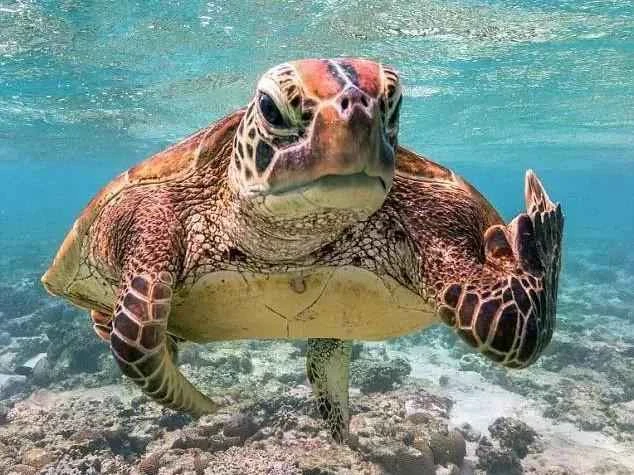
Classification and characteristics
Classification: Sea turtles belong to the class Reptilia, and can be classified in different ways depending on the species and subspecies.
Characteristics: Sea turtles typically have a flattened body, a hard shell, and wing-like limbs that enable them to swim in the ocean. Their heads usually have a beak-like mouth used for catching food.
Distribution and ecological environment
Distribution: Sea turtles are widely distributed in the world's oceans, and different species of sea turtles inhabit different waters.
Ecological environment: Sea turtles are typical marine creatures, mainly living in the ocean. They are more common in tropical and subtropical waters, but some species also appear in temperate waters.
Dietary habits
Diet: The diet of sea turtles varies from species to species, but they are usually omnivorous, including eating seagrass, algae, mollusks and aquatic plants.
Lifestyle
Migration: Sea turtles undertake long-distance migrations at different stages of their life cycle, such as mating, laying eggs, and foraging.
Reproduction: Sea turtles lay their eggs on beaches. They return to specific beaches to lay their eggs, and the female turtle buries the eggs in the sand before leaving her ovary.
Relationship with humans
Conservation: Due to the impact of various human activities, the population of sea turtles has generally declined. Therefore, various regions are carrying out conservation efforts for sea turtles, including establishing protected areas, strengthening supervision, and conducting scientific research.
Economic value: Sea turtles are of economic and cultural significance to some coastal countries, and some places develop tourism activities during the sea turtle nesting season.
Special characteristics
Endangered species: Many sea turtle species are endangered, and the numbers of some of them have declined sharply due to human intervention.
Ecological role: As an important part of the ecosystem, sea turtles affect the balance of the marine food chain.
In summary, sea turtles play a vital role in marine ecosystems due to their unique characteristics and lifestyles, but they are facing survival challenges due to a range of human activities. Therefore, the protection and research of sea turtles are of paramount importance.