The Tricarunculatus (Procnias tricarunculatus) is a migratory bird found in the tropical rainforests of Central America, a natural wonder known for its striking appearance and unique behavior. This article provides a comprehensive overview of this mysterious bird, including its scientific classification, morphological characteristics, distribution, ecological behavior, and conservation status, offering a deeper understanding of this natural marvel.
1. Scientific taxonomy of the Three-Legged Bellbird
The Tricarunculatus belongs to the Cotingidae family and is a very unique species within it. Its scientific name is *Procnias tricarunculatus*, where "Procnias" is the genus name and "tricarunculatus" is derived from Latin, meaning "three fleshy wattles," which aptly reflects the most distinctive physical characteristic of the male. This species inhabits the tropical rainforests of Central America and is a migratory bird, its migration closely tied to its habitat selection.
2. Zoological History: The Discovery and Naming of the Three-Fleshed Bellbird
The Three-Meat Bellbird was first discovered and formally named by European ornithologists in the 19th century. Due to its distinctive appearance and visually striking courtship behavior, the Three-Meat Bellbird has always been an important species in ornithological research. Through in-depth studies of its ecology and behavior, scientists have gradually unveiled the mysteries of this enigmatic bird.
3. Morphological characteristics and physical properties: appearance, body length, weight, lifespan
physical characteristics
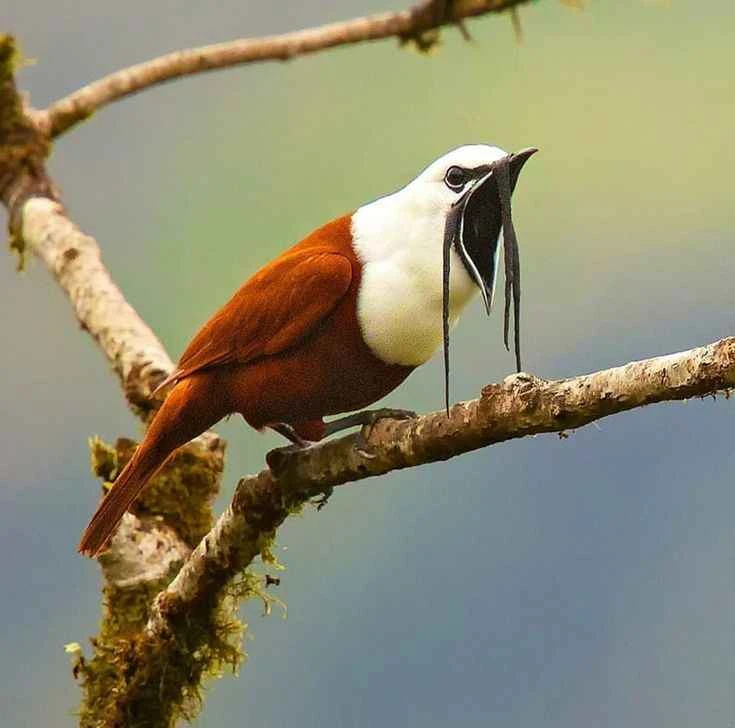
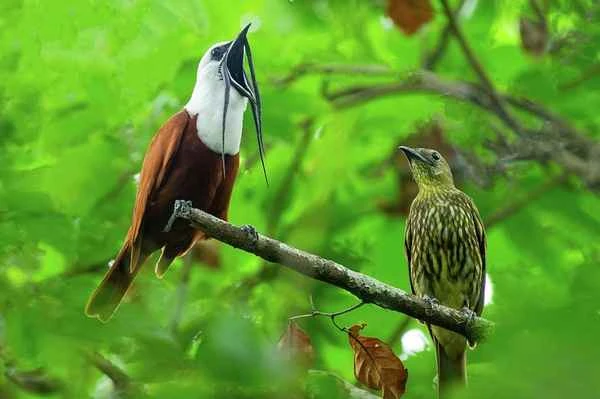
The male and female Three-Willow Bellbird differ greatly in appearance, which is one of their most distinctive features. The male has a white head and throat, with the rest of its feathers being chestnut brown. Most striking are the three long, thin, curved black wattles at the base of their beaks, which, especially during courtship, are key to attracting females. The female's plumage is predominantly olive green with yellow stripes on her abdomen, and her overall appearance is more understated than the male's.

Body length and weight
The three-lobed bellbird is about 30 cm long. Males are slightly heavier than females, usually weighing around 250 grams. Females are slightly lighter, weighing around 220 grams.
life
Three-flesh bellbirds have a long lifespan, typically living 12-15 years or even longer if there are no external threats.
4. Global Distribution and Habitat: A Rainforest Star of Central America
The three-bellied bird is mainly distributed in the tropical rainforests of Central America, including Costa Rica, Nicaragua, and Panama. They live in high-altitude rainforests, typically inhabiting the upper canopy and preferring to live in groups among the treetops. The three-bellied bird has relatively demanding habitat requirements; suitable temperatures and abundant vegetation are crucial for their survival.
5. Ecology and Behavior: Courtship and Social Interaction of the Three-Skinned Bellbird
Ecological role
As a member of the rainforest, the three-bellied bird plays an ecological role in pollination. They often touch the stamens of flowers while flying, thus promoting plant reproduction to some extent. Their calls also frequently echo through the rainforest, becoming a signature sound in the bird world.
Behavioral characteristics
Male three-winged bellbirds typically display visually striking behavior during the breeding season. They call loudly, vibrate their throats, and wiggle their three black wattles to attract females. Males also compete with each other in this display of skill, with the one performing better likely to win the female's favor.
6. Migration patterns: from tropical rainforests to warmer habitats
The three-flesh bellbird is a typical migratory bird, migrating annually according to the seasons. They typically migrate to lower altitudes during the winter and return to higher altitudes in the spring and autumn. During migration, they undertake long flights and rely on natural landmarks to orient themselves.
7. Daily activities and social behavior: socialization and foraging
The daily activities of the three-bellied pheasant mainly include foraging, socializing, and courtship. Their foraging primarily focuses on tree fruits, seeds, and nectar. Male three-bellied pheasants typically hop between branches in search of food, and during the courtship season, they exhibit more social behavior, gathering in groups and communicating.
8. Diet and foraging strategies: Primarily feeds on fruits, supplemented by nectar.
The diet of the three-bellied bird mainly consists of fruits and nectar from tropical rainforests. They primarily feed on fruits, especially those of certain tropical plants, while nectar serves as a secondary food source. When foraging, the three-bellied bird is very agile, capable of flying, hopping, and climbing to find food.
9. Breeding: Showing off courtship techniques and carefully raising chicks.
The breeding behavior of the three-bellied pheasant is a visual feast in nature, with males attracting females through highly entertaining displays of skill. Their breeding season typically runs from spring to early summer, though the exact timing varies depending on the local climate.
Male courtship behavior
During the breeding season, male three-winged bellbirds engage in fierce courtship competition, primarily attracting females by displaying their vibrant plumage and three drooping black wattles. These wattles become key props for the males to demonstrate their strength; whenever a male spreads his wings, the three wattles swing, producing a deafening sound, while the male also emits a unique call, creating a "sound and light" effect. Males not only display their wattles but also demonstrate their physical strength and health through flight, hopping, and singing.
Females choosing a mate
When choosing a mate, female three-bellied lorikeets typically judge a male's health and genetic quality based on his "showmanship." Only males with outstanding performances are given the opportunity to mate. Females are very selective in their choice of males, paying attention not only to their appearance and performance but also to their physical condition, calls, and the persistence of their courtship behavior.
Nest building and raising chicks
Once the female selects a suitable male, they will begin building the nest together. The nest of the three-bellied wattle is typically built high in the trees, near the branches. The female will find a relatively secluded spot on the branch and construct a small but sturdy nest, primarily composed of twigs, leaves, and other plant materials.
During each breeding season, the female bird typically lays 2-3 eggs. She is responsible for incubating these eggs, which usually lasts about 24 days. During this time, the male bird is primarily responsible for protecting the nest from predators and providing food for the female.
The growth of chicks
After hatching, the chicks are completely dependent on the parents for the first few weeks. They grow rapidly, and are primarily fed fruits, insects, and nectar by their parents. Around two months later, the chicks begin to attempt flight and gradually become independent.
It is worth noting that the breeding period of the three-lobed bellbird is relatively long. The parents usually continue to care for the chicks until they are not yet fully independent, ensuring that they can survive in the natural environment.
Challenges and Conservation of the Reproductive Cycle
The breeding process of the Three-Meat Bellbird is not only fraught with fierce competition but also faces threats from the natural environment and human activities. Habitat destruction, climate change, and human disturbance can lead to a decline in the bird's breeding success rate. Protecting its breeding environment and habitat is crucial to ensuring the continuation of this species.
10. Status and Level of Protection: Under threat, requiring protection.
The three-bellied bird is currently under severe protection and has been listed as a "Vulnerable" species (VU). Due to habitat destruction, environmental pollution, and illegal hunting, the population of the three-bellied bird is gradually declining.
Population status
Currently, the population of the three-bellied pheasant has declined significantly, and its distribution range is gradually shrinking. Multiple conservation organizations are making active efforts to protect this beautiful species.
Major threats and natural enemies
The main threats to the three-bellied bird come from habitat loss, deforestation, and the impact of human activities. In addition, natural predators, including large birds of prey, threaten its survival.
11. Conservation Measures: Strengthen Habitat Protection and Research
Currently, measures to protect the three-bellied pheasant mainly include protecting its tropical rainforest habitat, prohibiting illegal hunting, and carrying out ecological restoration. Scientists are also conducting long-term research to further understand its ecological habits and behaviors in order to develop more effective conservation strategies.
12. Ecological Value: Important Ecological Role
The three-fleshed bellbird plays an important role in the ecosystem, especially in plant pollination and ecological balance. Their activities not only maintain plant reproduction but also provide habitats and food sources for other species.
13. Cultural and Economic Value: A Precious Resource in Nature
The three-flesh bellbird is a highly prized bird, beloved by bird enthusiasts and nature photographers. Furthermore, their beautiful appearance and acrobatic displays attract numerous tourists, contributing to the development of the local ecotourism economy.
14. Closely related species: A relative of the three-fleshed pheasant.
| Species name | Feature Description | Habitat and Distribution |
|---|---|---|
| Yellow-throated Umbrella Bird (Procnias aurora) | Slightly larger in size, the male has yellow throat feathers and a wattle at the base of its beak. | Central American low-altitude rainforest |
| White-throated Umbrella Bird (Procnias albus) | The male has a white throat, while the female has darker plumage and is smaller in size. | Colombia and Venezuela |
Conclusion
The Three-Waisted Bellbird is undoubtedly a "show-off star" in nature, its three drooping wattles and unique courtship behavior captivating all who behold it. As a threatened species, we all have a responsibility to protect them, allowing these beautiful birds to continue to fly freely in the rainforest and showcase their unique charm.