The long-eared umbrella bird (scientific name: *Cephalopterus penduliger*) is one of the most representative species in the umbrella bird family, its distinctive appearance and behavior making it a star in the rainforest. This article will explore this mysterious bird in detail from multiple perspectives, including its morphological characteristics, habitat, behavioral habits, breeding methods, and conservation status.

Scientific taxonomy of species
The Long-eared Umbrella Bird belongs to the family Cotingidae and the genus Cephalopterus. This species is mainly distributed in the tropical rainforests of South America, especially in Colombia and Ecuador. Unlike other members of the Cotingidae family, the Long-eared Umbrella Bird has distinctive physical characteristics, with its "earlobe"-like feathers being its most prominent feature.
Kingdom : Animalia
Phylum : Chordata
Class : Aves
Order : Passeriformes
Family : Cotingidae
Genus : Cephalopterus
Species : Long-eared Umbrella Bird (Cephalopterus penduliger)
The long-eared umbrella bird ( Cephalopterus penduliger ) is a unique bird species in the umbrella bird family, mainly distributed in the tropical rainforest regions of South America.
Zoological History: First Discoveries and Naming
The long-eared umbrella bird, scientifically named *Cephalopterus penduliger*, was first named by a renowned zoologist in the 19th century and remains an important subject of ornithological research. Its distinctive "earlobe" plumage initially led some to believe it was a variant of the umbrella bird genus, until further taxonomic studies clarified its unique characteristics.
Morphological characteristics and physical properties
physical characteristics
The Long-eared Umbrella Bird is a medium-sized bird, with adults measuring about 30-35 cm in length. Its most striking feature is the feathers on its head and neck, especially the pair of long, drooping, ear-like feathers. The male's head feathers are usually a bright blue-green, while the ear feathers are particularly prominent, long and curved, resembling natural "earrings."
Body length and weight
Adult male long-eared umbrella birds are about 35 cm long, while females are slightly smaller, about 30 cm long. In terms of weight, males weigh about 250-300 grams, while females are slightly lighter.
life
In their natural environment, long-eared umbrella birds typically live for 10 to 12 years. However, many long-eared umbrella birds do not live to a very old age due to habitat changes and predator threats.
Global distribution and habitat
Habitat
The long-eared umbrella bird is mainly distributed in the tropical rainforests of South America, especially in the low-altitude areas of Colombia, Ecuador, and Peru. They prefer to inhabit humid tropical rainforests, particularly favoring the upper canopies. These areas are densely forested, moist, and teeming with life, providing them with abundant food sources and sheltered habitats.
Global distribution
The long-eared umbrella bird has a relatively small distribution range, mainly concentrated in the forest areas of Colombia and Ecuador, especially in tropical rainforests. Due to its limited habitat, its global distribution is quite restricted.
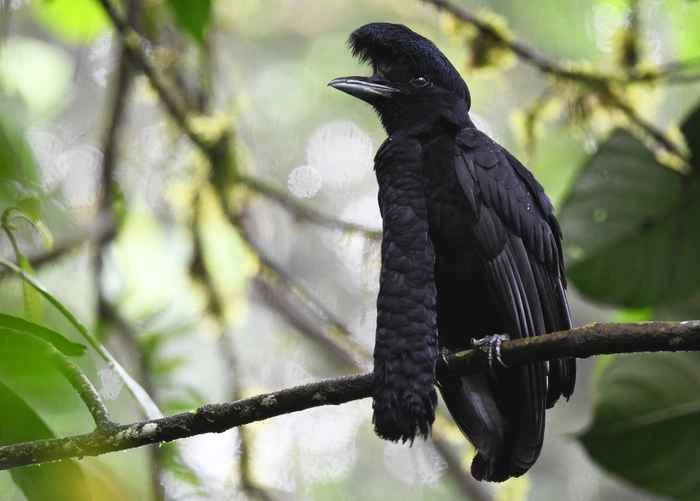
Ecology and Behavior
Ecological role
The long-eared umbrella bird is a typical tropical rainforest species, playing an important ecological role. Through seed dispersal and pollination, they help maintain the balance of the local ecosystem. Furthermore, the long-eared umbrella bird is part of the food chain for other birds and predators, promoting biodiversity.
Behavioral Habits
The long-eared umbrella bird exhibits highly social behavior, often operating in small groups, especially during the breeding season when there is a clear male-female pairing. Males display their health and strength through a courtship dance that spreads their magnificent "ear-like" feathers. Females then carefully observe the male before deciding whether to choose him.
Migration patterns
The long-eared umbrella bird is a non-migratory bird. They mostly inhabit fixed areas and may move short distances to different habitats with the changing seasons, but they do not undertake long-distance migrations like other migratory birds.
Daily activities and social behavior
Daily activities
The long-eared umbrella bird's daily activity cycle is similar to that of many tropical birds, primarily foraging and socializing during the early morning and evening. They typically inhabit the middle and upper canopies of trees, and their main food sources are berries, fruits, and small insects.
Social behavior
The social behavior of the long-eared umbrella bird is mainly reflected in its courtship process. The male attracts the female's attention by displaying its feathers among the branches. During the breeding season, the male spreads its long ear feathers and uses dances and calls to express its courtship intentions to the female.
Diet and foraging strategies
The long-eared umbrella bird has a very diverse diet, mainly consisting of fruits, berries, seeds, and insects. They employ a "perched foraging" strategy, foraging while perched on branches rather than in flight. This foraging method helps them better avoid predators in dense forests.
Reproduction
The breeding season for the long-eared umbrella bird typically coincides with the rainy season. Females choose a secluded location to nest, usually among branches or in tree crevices. Males attract females by displaying their feathers, singing, and dancing. After the breeding season ends, the female lays 1-2 eggs in the nest, with an incubation period of approximately 2-3 weeks.
Current status and protection level
Preserve the status quo
The long-eared umbrella bird is currently listed as a "near threatened" species, primarily threatened by habitat destruction and illegal hunting. Due to deforestation and farmland expansion, the long-eared umbrella bird's habitat is gradually decreasing, and its population is declining.
Protection level
According to the International Union for Conservation of Nature (IUCN), the long-eared umbrella bird is listed as a "near threatened" species. This means that without effective conservation measures, its population may decline rapidly and it faces the risk of extinction.
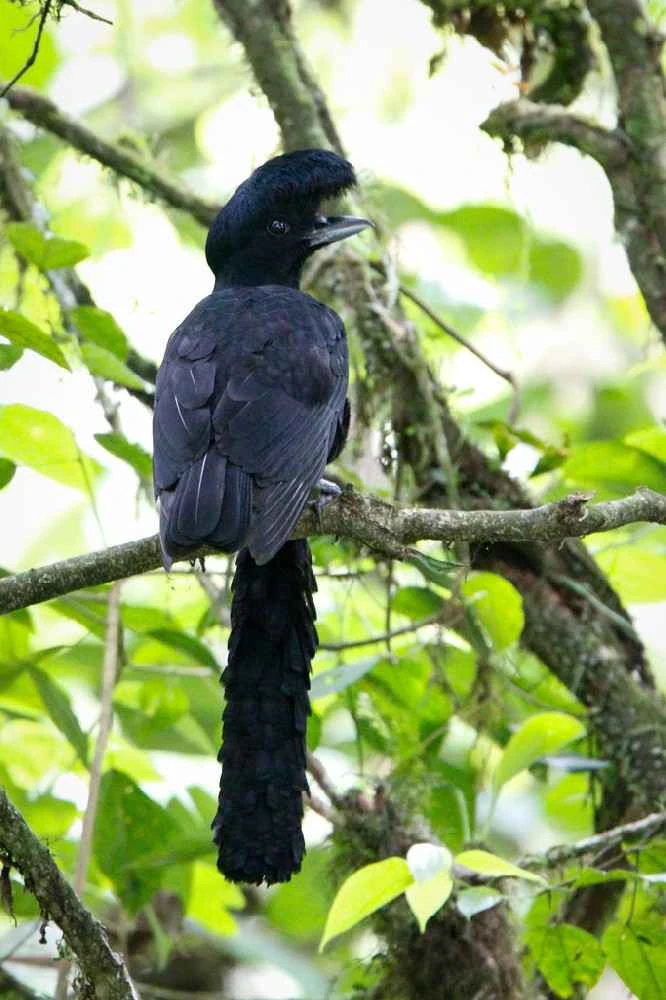
Population status and major threats
Population status
Currently, the population of the long-eared umbrella bird has declined significantly. According to the latest survey data, it is estimated that fewer than a few thousand individuals remain globally, mostly distributed in the forest areas of Colombia and Ecuador.
Major threats and natural enemies
The main threat to the long-eared umbrella bird comes from habitat destruction. Deforestation, agricultural expansion, and urbanization have severely threatened their habitat. In addition, they also face predation threats from birds of prey and some carnivores.
Conservation measures and ecological value
Protective measures
Currently, many conservation organizations are working to protect the long-eared umbrella bird and its habitat. Conservation measures include establishing nature reserves, forest restoration projects, and restricting logging activities. In addition, scientists are actively monitoring the population dynamics of the long-eared umbrella bird to ensure its survival and reproduction in the natural environment.
Ecological value
As an important species in tropical rainforests, the long-eared umbrella bird not only plays a vital role in the ecosystem but also promotes plant dispersal and maintains ecological balance. Their presence is crucial to the health of forest ecosystems.
Related cultural and economic value
Related Culture
The long-eared umbrella bird holds a place in local indigenous cultures, especially in regions like Colombia and Ecuador, where it frequently appears in folklore and artwork, symbolizing beauty and mystery.
Economic value
The long-eared umbrella bird's beautiful plumage and unique appearance make it a highlight of ecotourism. The booming development of ecotourism has increased public awareness of this species and brought economic benefits to the local area.
Table of closely related varieties
| Species name | Distribution area | physical characteristics | Habitat |
|---|---|---|---|
| Long-eared Umbrella Bird (Cephalopterus penduliger) | Colombia, Ecuador | Blue-green head, long ear feathers | Canopy area of tropical rainforest |
| Grey Umbrella Bird (Cephalopterus griseus) | Colombia, Panama | Grey feathers, shorter ear feathers | Tropical lowland forest |
| Blue Umbrellabird (Cephalopterus ornatus) | Colombia | Bright blue feathers | High-altitude cloud forest |
The long-eared umbrella bird is a unique creature of the tropical rainforest, possessing not only stunning visual beauty but also playing a vital role in the ecosystem. With a deeper understanding of this species and the continuous improvement of conservation measures, we have every reason to believe that the long-eared umbrella bird's future will be even brighter.