What animal has the largest penis?
In the animal kingdom, penises vary in size, with some species evolving extremely large reproductive organs, primarily related to reproductive strategies, species adaptation, and lifestyle. This article will detail several animals with astonishingly large penises and explain why their reproductive organs have evolved to be so enormous.
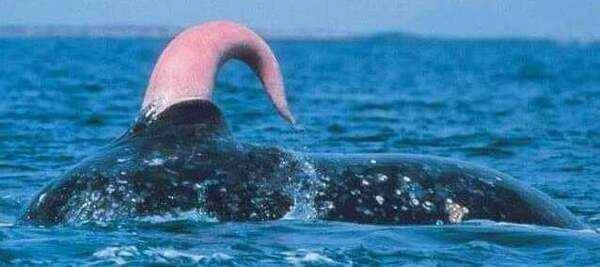
1. Blue whale – the animal with the largest penis in the world.
The blue whale ( Balaenoptera musculus ) is the largest mammal on Earth, and its penis is also the largest in the world, making it a true "giant" of nature. A blue whale's penis can reach 2.4 to 3 meters in length and about 30 centimeters in diameter, while its weight is close to 60 to 70 kilograms . The blue whale's enormous reproductive organ is commensurate with its massive body size and supports its reproductive activities.
Why is the penis of a blue whale so large?
Blue whales live in the ocean, and their mating process usually takes place in the water, thus requiring a strong and large penis to ensure successful fertilization. Furthermore, because blue whale females have relatively large reproductive organs, males need sufficiently long reproductive organs for successful pairing and sperm delivery.
2. Walrus – enormous and flexible reproductive organs
The walrus ( Odobenus rosmarus ) is also one of the animals with a large penis. The penis of an adult male walrus can reach 50 to 70 centimeters in length, and its baculum is also very large, one of the longest among mammals, exceeding 60 centimeters . Male walruses rely on their strong and flexible penises for reproduction, which is crucial in the competition during the breeding season.
Why are walruses' penises so powerful?
Male walruses engage in fierce battles for females, and their large penises are a hallmark of their reproductive competitiveness. Walruses also need to reproduce in the water, so a long, flexible penis helps with precise positioning and effective mating.
3. Crocodile – the “giant” of reptiles
Although crocodiles are large, their penises are proportionate to their size. Unlike mammals, a crocodile's penis does not become erect during mating; instead, it maintains a constant structure, reaching up to 30 centimeters in length, and has a relatively complex shape. The crocodile's penis contains a strong cartilaginous structure, enabling stable mating underwater.
The uniqueness of crocodile penis
Crocodiles possess an erection mechanism unlike that of mammals, which helps them perform reproductive tasks in underwater environments. Furthermore, as crocodiles are cold-blooded animals, the structure and function of their penises are adapted to their lifestyles in diverse climatic environments.
4. African elephants – the reproductive wonders of the largest land mammals.
As the largest land mammal, the African elephant ( Loxodonta africana ) also boasts an impressive penis. The penis of an adult male elephant can reach 1 meter in length and possesses remarkable control, allowing it to move flexibly like a "probe." This flexibility of reproductive organs enables them to find and mate with females in complex breeding environments.
Evolutionary advantages of elephant penis
Elephant reproductive behavior involves complex social interactions. A large penis not only helps males compete within the group, but also ensures more efficient transfer of sperm to the female during mating, increasing reproductive success.
5. Ducks – The Wonderful World of Rotating Penises
Some ducks, particularly the Argentine lake duck ( Oxyura vittata ), possess complex and extremely long spiral penises, reaching up to 40 centimeters in length, almost equivalent to their own body length. The reproductive organs of these ducks have evolved complex shapes to adapt to their unique reproductive ecology.
Why do ducks have such a unique penis?
The Argentine lake duck's penis is spiral-shaped with barbed structures, which helps it maintain stability during mating and prevents other males from interfering with the breeding process. Furthermore, this unique penis structure is adapted to the female duck's reproductive tract, increasing the success rate of reproduction.
6. Kangaroo – A unique mammal with two penises
Marsupials such as kangaroos possess dual penises, a structure that allows them greater flexibility in reproduction. While the penis length of kangaroos is not as astonishing as that of blue whales or elephants, their dual penis structure is quite unique.
Functions of dual penis
The kangaroo's double penis matches the female kangaroo's double vagina. This unique reproductive system allows the kangaroo to mate multiple times in different reproductive cycles, providing its offspring with more reproductive opportunities.
7. The "Champion" of Marine Life – Sharks
Unlike mammalian reproductive organs, sharks possess a structure called a "copulatory organ" used to deliver sperm into the female's body. This organ, typically located on either side of the anal fin, is elongated and helps them reproduce precisely in the water.
The uniqueness of shark penis
Because sharks live in water, they require specialized mating tools to ensure successful sperm delivery. The design of a dual copulatory organ improves reproductive success rates, especially in the complex marine environment.
Conclusion: Evolutionary association between penis size and reproductive success
The size, shape, and structure of penises vary greatly in the animal kingdom, largely influenced by evolutionary pressures and reproductive strategies. The enormous penises of giant animals like blue whales, elephants, and walruses, matching their body size, facilitate better mating in aquatic or terrestrial environments, while the complex structures of animals like ducks reflect their unique adaptations to reproductive competition. Whether for mate acquisition, increasing reproductive success, or ensuring precise mating in complex environments, the evolution of animal reproductive organs is a response to the challenges of survival and reproduction.