When we mention "bedbugs," many people might first think of those pests that everyone avoids. However, in the insect world, some bedbugs have garnered attention for their unique colors and dazzling appearances. Their bodies vary greatly in shape and are incredibly colorful, even earning them the title of "jewels of the insect world." This article will introduce you to 10 of the world's most beautiful bedbugs, including the Picasso beetle, the red-edged bedbug, the ornate shield beetle, the hibiscus harlequin beetle, the lychee/longan beetle, the gem beetle/metal shield beetle, the giant mesona beetle, the clown bedbug, the eucalyptus bedbug, and the bizarrely-looking human-faced bedbug. These insects are not only visually stunning but also possess unique ecological value.
1. Picasso Bug ( Sphaerocoris annulus )
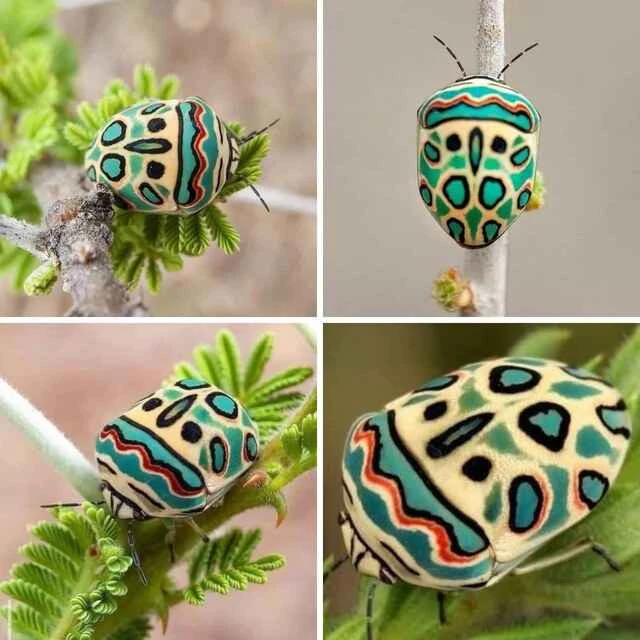
The Picasso bug is a shield bug that lives in Africa and is known for its highly artistic geometric patterns. Its shell is predominantly bright green, adorned with multiple black, yellow, or orange rings. This unique pattern is reminiscent of the abstract paintings of the Spanish painter Pablo Picasso, hence the name "Picasso bug".
These bedbugs are mainly distributed in sub-Saharan African countries, typically inhabiting shrublands and grasslands, feeding on plant sap. Their hard exoskeletons not only protect them from physical damage but also serve as a warning to predators through their coloration. Like other bedbugs, the Picasso bug also has the ability to release a foul odor; when they feel threatened, they secrete a strong scent to repel predators.
The Picasso beetle's life cycle includes egg, nymph, and adult stages. The larvae gradually change color as they grow, eventually displaying the unique and beautiful patterns of the adult. Due to their vibrant colors and distinctive shapes, they have become a focus of attention for insect photographers and researchers.
2. Red-bordered Stink Bug ( Edessa rufomarginata )
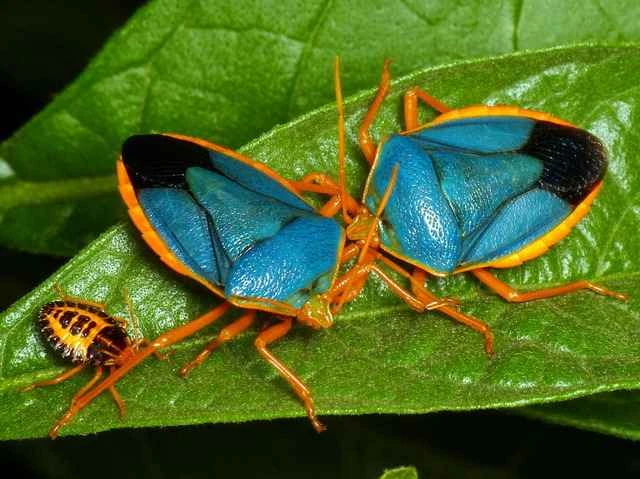
The red-edged stink bug is a beautiful shield bug found in South America, known for its emerald-green sheen and striking red edges. This brightly colored appearance not only enhances its ornamental value but also serves as a warning, deterring predators.
They typically inhabit tropical forests, farmlands, and gardens, feeding on plant leaves and fruits, with a particular fondness for legumes and nightshade plants. While they play an important role in the ecosystem, their feeding habits can, in certain situations, negatively impact agricultural crops.
When threatened, the red-edged bed bug releases a strong odor, a typical defense strategy of shield bugs. Their life cycle includes egg, nymph, and adult stages. The larvae gradually darken in color as they grow, eventually developing into adults with red edges.
3. Splendid Shield Bug ( Poecilocoris splendidulus )
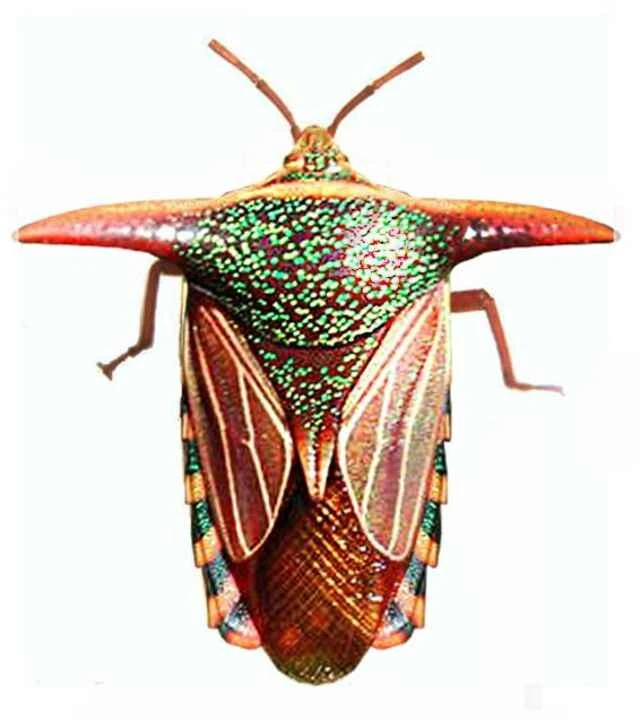
The magnificent shield beetle is known as the "jewel of the insect world" for its metallic blue, green, and purple exoskeleton. They are mainly distributed in Southeast Asia, especially in the tropical rainforests and warm, humid regions of China, Japan, and Indonesia.
These bedbugs are known for their extremely vibrant appearance; under sunlight, their exoskeletons display a dazzling iridescent sheen. This coloration does not come from pigments, but rather from the refraction and interference of light by the microscopic structure of their epidermis, similar to the iridescent effect of butterfly wings.
The ornate shield beetle primarily feeds on plant sap and prefers to inhabit trees and bushes. When threatened, it releases a foul-smelling secretion to repel predators. Furthermore, this insect has a unique reproductive behavior: females often lay their eggs on the underside of leaves and guard the larvae until they are capable of independent survival.
Due to their captivating appearance, the ornate shield beetle has become a favorite subject of study for many entomologists and photographers. In nature, they are not only beautiful creatures, but also an important part of maintaining ecological balance.
4. Harlequin Bug ( Murgantia histrionica )
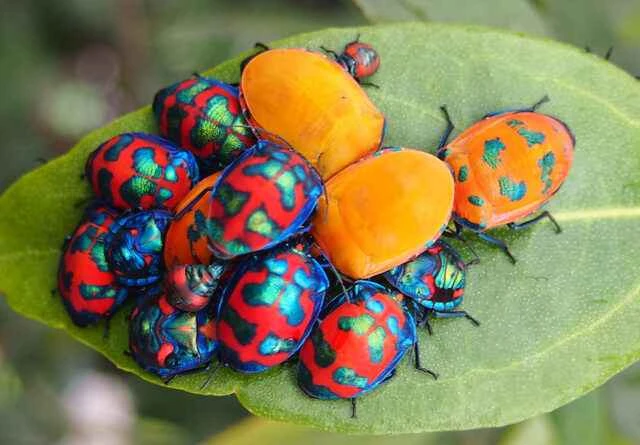
The hibiscus harlequin beetle gets its name from its distinctive black and orange markings, resembling the costume of a circus clown, making it quite eye-catching. They are mainly distributed in North America, especially in farmlands and gardens in the southern United States and Mexico.
These bedbugs primarily feed on cruciferous plants (such as cabbage, radish, and mustard greens), and are therefore often considered agricultural pests. They use their needle-like mouthparts to pierce plant tissues and suck out internal sap, causing leaves to wither, change color, and even affecting plant growth.
The hibiscus henryi beetle's life cycle consists of egg, nymph, and adult stages. The larvae are pale in color, gradually developing the bright markings of the adults. This beetle has an extremely high reproductive capacity, typically producing multiple generations per year. Therefore, in crop-growing areas, they often require ecological control measures (such as biological control by natural enemies or physical protection) to suppress their population.
Although they are considered pests in agriculture, from a biological perspective, the hibiscus horn beetle's color and shape do have extremely high ornamental value and have become an important object of entomological research.
5. Lychee/Longan Stink Bug ( Tessaratoma papillosa )
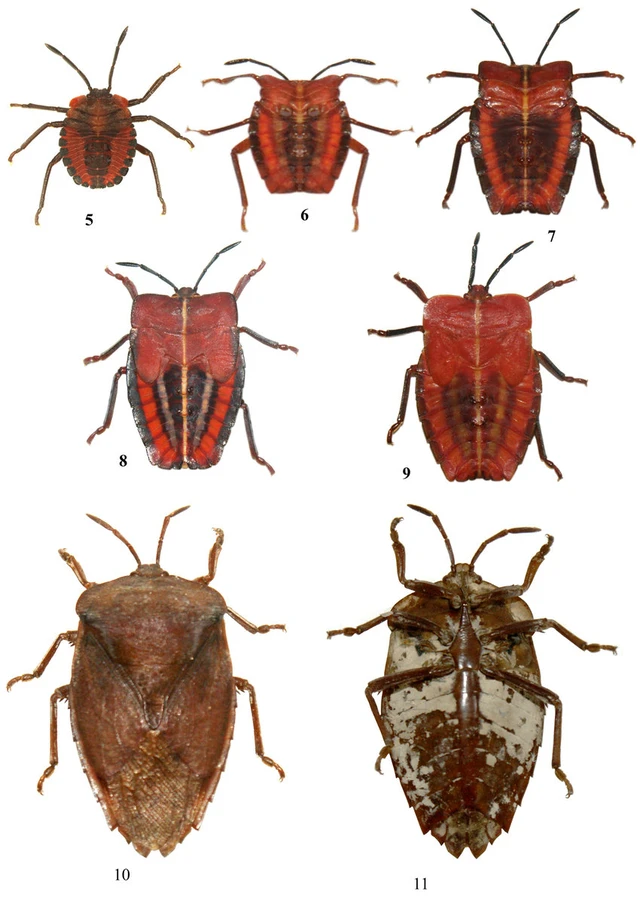
The lychee bedbug is a type of bedbug mainly distributed in East and Southeast Asia, commonly found on fruit trees such as lychee and longan. They are relatively large, usually reddish-brown or orange-brown, and have a hard, shield-like exoskeleton that protects them from physical damage.
This bedbug feeds on the sap of fruit trees, particularly favoring the tender leaves and fruits of lychee and longan, thus being considered a major pest by fruit growers. Their feeding behavior leads to deformed fruit, stunted tree growth, and in severe cases, even reduced fruit yield. Due to their high reproductive rate, their numbers in orchards can sometimes increase dramatically, necessitating ecological control or biological management measures to reduce their damage to crops.
The nymphs of the lychee stink bug are brightly colored, usually orange-red or yellow, and gradually darken as they grow. They also possess the typical defense strategy of shield bugs—when threatened, they release a highly pungent odor to repel predators.
Although litchi bedbugs are considered pests in agriculture, they remain valuable research subjects in entomological studies, especially regarding their ecological adaptability, chemical defense mechanisms, and symbiotic relationship with fruit trees.
6. Jewel Bug/Metallic Shield Bug
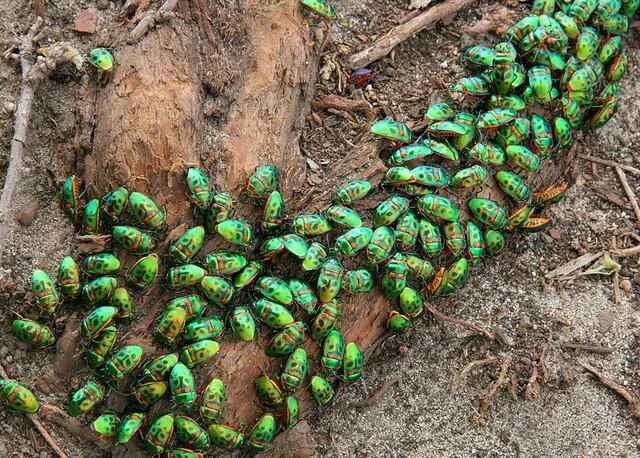
Jewel bugs ( Scutiphora pedicellata ) are among the most stunning insects in the Scutelleridae family, often referred to as "jewels of the insect world" due to their metallic sheen. Their exoskeletons display emerald green, blue, purple, or gold colors with dappled light and shadow effects. This dazzling coloration originates from the refraction of light by the microstructure of their epidermis, rather than from pigment deposition.
Jewel beetles are mainly distributed in Australia, India, and Southeast Asia, preferring to inhabit warm and humid environments, especially orchards and forest edges. Their diet consists primarily of plant sap, with a strong preference for legumes and solanaceous plants. While some species can cause damage to agricultural crops, their overall numbers are small and their impact is limited.
When faced with predators, gem beetles release a pungent odor that effectively repels enemies. Their vibrant colors also serve as warning coloration, alerting birds and other predators that they are not palatable. Furthermore, their life cycle consists of three stages: egg, nymph, and adult. The larvae typically exhibit color variations different from the adults, gradually developing a metallic sheen as they mature.
Due to their vibrant appearance, gem beetles have become a focus of attention for insect photographers and researchers. Scientists are studying their color formation mechanisms to explore the applications of biological color in optics and materials science.
7. Giant Mesquite Bug
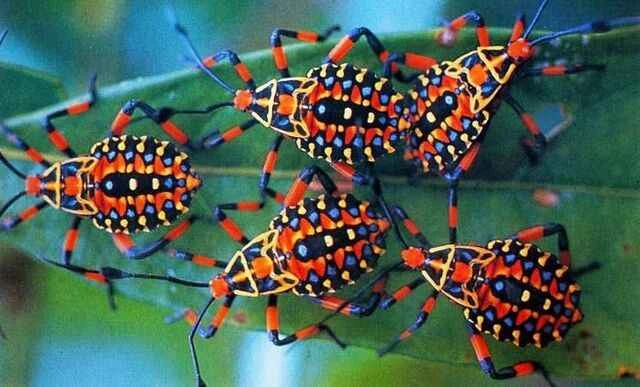
The giant bean tree bug ( Thasus neocalifornicus ) is a large bedbug mainly distributed in arid and semi-arid regions of North America, especially the southern United States and Mexico. This insect is known for its enormous size and striking reddish-black larvae, while the adults are more subdued in color, usually brown or green, to adapt to their surroundings.
These bedbugs primarily feed on the sap of the Prosopis spp., a drought-resistant plant that thrives in arid regions. Both larvae and adults use their proboscis-like mouthparts to pierce plant tissue and suck out the sap. While they do have some impact on plant growth, they typically do not cause significant economic losses.
Like other shield bugs, the giant mesona chinensis releases a pungent odor when threatened to repel predators. They are highly gregarious, especially during their larval stage, roosting in groups on the branches of mesona trees.
This insect's life cycle consists of three stages: egg, nymph, and adult. The bright colors of the nymph stage may serve as a warning, preventing attacks from birds and other predators, while the adults rely on camouflage to blend into their environment. Although they are not traditionally considered pests, in some areas, an overabundance of them can put stress on the growth of bean trees.
8. Clown Stink Bug
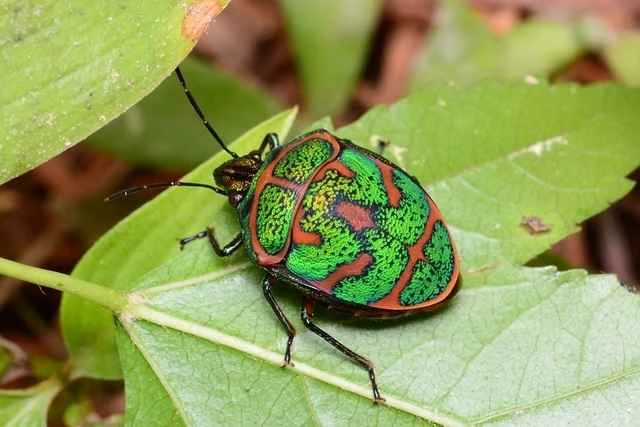
The clown bug ( Elasmucha grisea ) is a brightly colored shield bug, named for its colorful appearance and unusual body shape. Its body usually displays intricate patterns of red, yellow, black, and white, resembling the costume of a circus clown, hence the name "clown bug" given to it by entomologists and enthusiasts.
These bedbugs are mainly distributed in Europe and Asia, inhabiting forests, grasslands, and shrublands, feeding on the sap of trees and herbs. They have a wide diet, adapting to different plant species, and therefore can be found in various ecosystems.
Like most shield bugs, clown stink bugs possess a unique chemical defense mechanism. When threatened, they release a strong odor to repel potential predators. This scent originates from specialized scent glands that effectively deter birds, lizards, and other insects from hunting them.
It is worth noting that clown bedbugs exhibit rather unique parenting behavior. Female bedbugs protect their eggs, even continuing to care for the nymphs after they hatch, providing them with additional protection. This parenting behavior is relatively rare among bedbugs, demonstrating their unique ecological adaptation strategy.
9. Eucalyptus Stink Bug
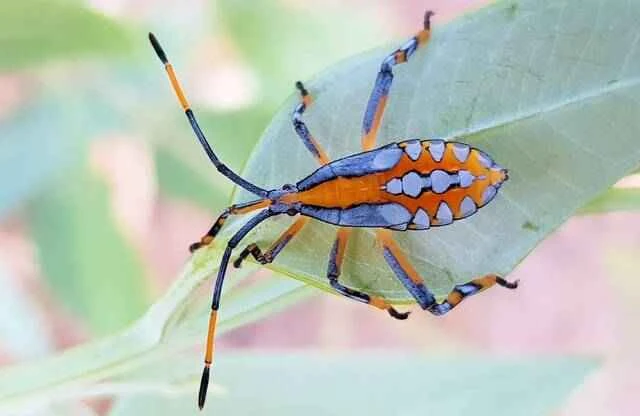
The eucalyptus bedbug ( Lyramorpha rosea ) is a bedbug specialized for eucalyptus ecosystems, known for its pink, orange, or pale purple exoskeleton. This insect is primarily found in Australia, where it establishes stable populations in areas rich in eucalyptus trees.
Like other shield bugs, eucalyptus stink bugs pierce the leaves and twigs of eucalyptus trees with their proboscis-like mouthparts to suck sap. While they usually do not cause fatal damage to healthy eucalyptus trees, excessive numbers can affect tree growth and even cause leaves to wither.
The colors of eucalyptus stink bugs not only give them a beautiful appearance but also help with camouflage, making them difficult to spot among the bark and leaves of eucalyptus trees. Furthermore, when threatened, they secrete a liquid with a distinctive odor to repel predators. This defense mechanism is crucial for their survival in the wild.
The eucalyptus bedbug's life cycle consists of three stages: egg, nymph, and adult. The nymphs are darker in color, gradually displaying more vibrant colors as they mature. In entomological research, this insect has attracted considerable attention due to its unique ecological adaptability and color variability.
10. Face Bug
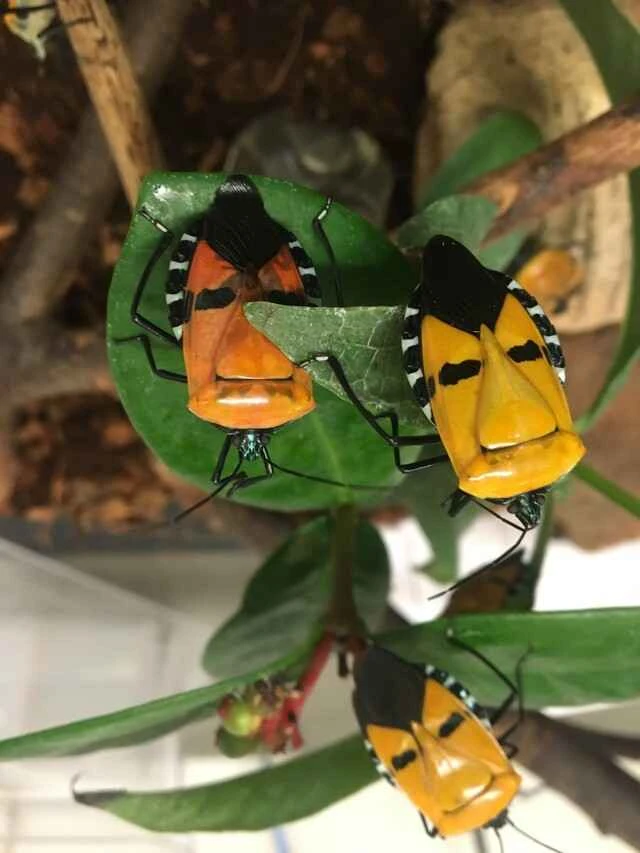
The human-faced stink bug is a unique type of shield bug with a back pattern that closely resembles a human face, making it a spectacle in the insect world. This "face" may consist of black, white, or yellow spots arranged in a way reminiscent of human facial features, including eyes, nose, and mouth.
These bedbugs are mainly distributed in the tropical rainforests of Southeast Asia and South America. They typically live among trees and bushes, feeding on plant sap. Due to their unique appearance, they often become the focus of attention for entomologists and photographers.
Like other shield bugs, the human-faced stink bug releases a foul-smelling secretion when threatened to repel predators. Their mimicry may also confuse predators, making them harder to target.
Scientists are studying the pattern formation mechanism of these bedbugs in an attempt to understand their role in natural selection. Although they are not common insects, their unique appearance makes them one of the most amazing insects in nature.
Summarize
These bedbugs are renowned not only for their vibrant appearance and unique biological characteristics but also for their vital role in the ecosystem. Their striking colors are not only a masterpiece of nature but also an important strategy for adapting to their environment and warning off predators. For entomologists, photographers, and nature enthusiasts, these bedbugs are undoubtedly fascinating creatures worthy of exploration and study.