In zoology, the word "monkey" is usually used to refer to all platyrrhini and catarrhini primates. In everyday life, we also often refer to all primates collectively as "monkey" or "apes," and these two words are also broadly synonymous in Chinese.
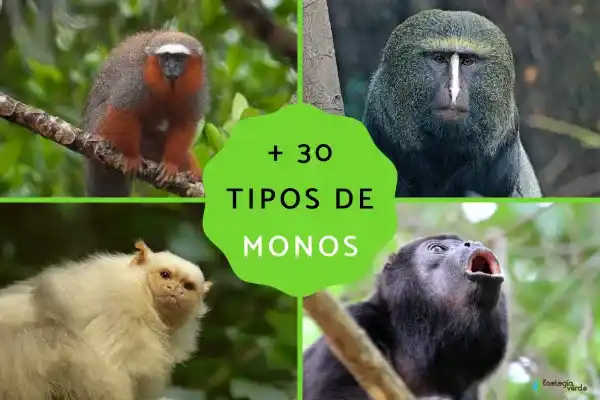
There are approximately 260 to 300 known primate species worldwide. Although they all belong to the same order (Primates), they vary significantly in appearance, habits, and ecological characteristics. For the convenience of scientific research, humans have divided them into different classification levels. The following are five main types:
I. Estrepsirrhini (wet-nosed primates)
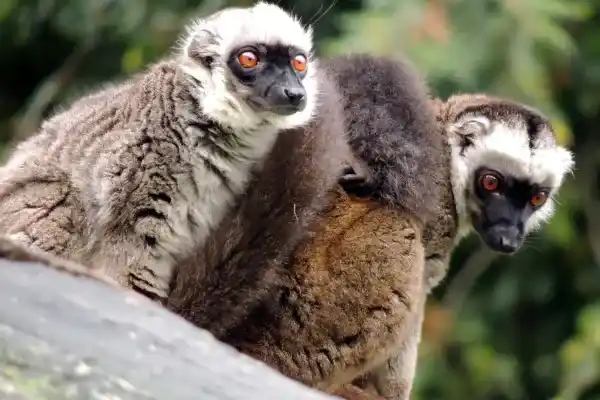
Wet-nosed monkeys, also known as "crooked-nosed monkeys," include lemurs (such as ring-tailed lemurs), bush monkeys, and slow lorises. Their main characteristics include:
It has a moist nose pad at the tip of its nose, similar to that of a cat or dog;
The nostrils are comma-shaped and narrowly spaced.
They are highly nocturnal and have a keen sense of smell.
Smaller brain;
The lower incisors are arranged like a comb, used to groom the hair;
It has a dual-cavity uterus;
It has "hair grooming claws" for combing its fur;
Most tails lack the ability to grasp.
They are considered to be relatively "primitive" primates in terms of behavior and morphology.
Representative species include: lemurs, bush monkeys, slow lorises, and aye-aye.
II. Haplorrhini (Primates with Dry Noses)
Dry-nosed primates are a more evolved group of primates, including monkeys, apes, and humans. Their main characteristics include:
No wet nose;
The sense of smell has relatively degenerated;
Highly diurnal;
It has a complete posterior orbital septum;
More complete brain development;
Single births were the most common.
Lack of facial whiskers;
This includes New World monkeys, Old World monkeys, and great apes.
Dry-nosed monkeys are divided into two main branches: narrow-nosed monkeys (Old World monkeys) and broad-nosed monkeys (New World monkeys).
III. Catarrhini primates
Including all Old World monkeys, great apes, and humans, it is the most evolved branch of the drupeformes, characterized by:
The nostrils are close together and pointing downwards;
It has 32 teeth;
Flat nails;
The tail is not used for grasping, and some species are tailless;
Significant sexual dimorphism (males are larger);
They are highly gregarious and have complex social structures.
They are mainly divided into three categories:
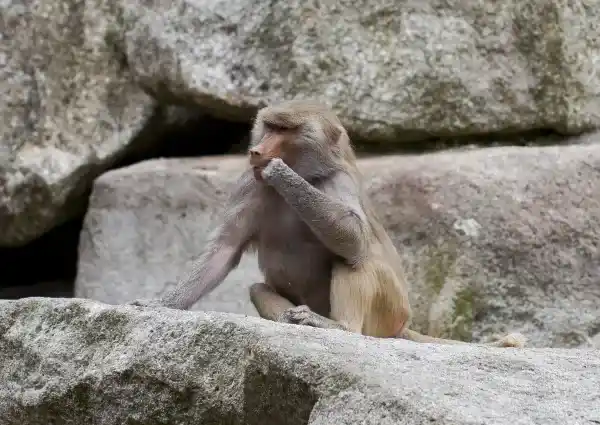
Old World monkeys (Cercopithecidae) : such as baboons, macaques, and colobus monkeys;
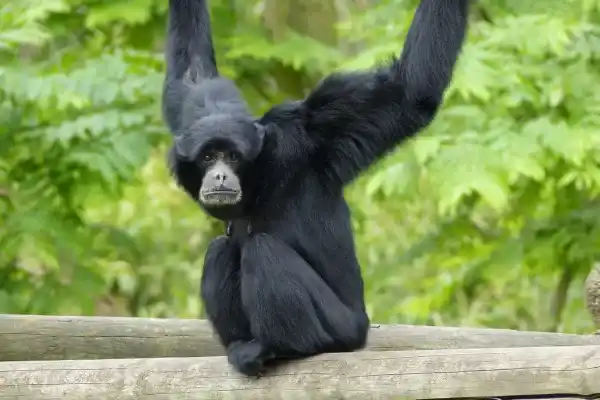
Hylobatidae : such as gibbons and siamangs, whose long arms facilitate swinging movement;
Great apes (Hominidae) : including humans, chimpanzees, gorillas, orangutans, bonobos, etc.
IV. Old World Monkeys (Cercopithecoidea)
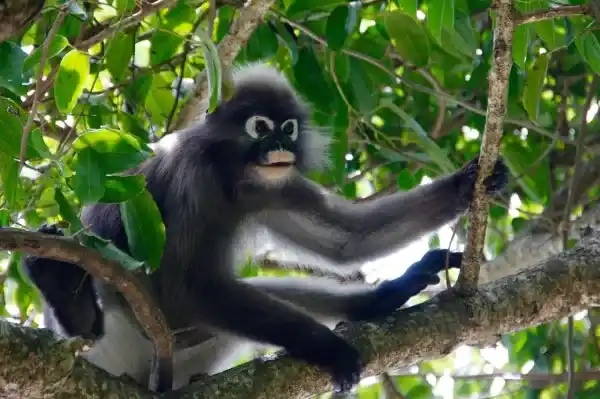
These monkeys live in Africa and Asia, and common examples include baboons, rhesus macaques, colobus monkeys, langurs, and vervet monkeys. Their characteristics include:
Large in size;
A tail without a gripping function;
The buttocks are often covered with brightly colored cushions;
It is widely distributed in Africa, South Asia, Southeast Asia and other regions.
V. Platyrrhini (New World Monkey)
Primates living in Central and South America, such as capuchin monkeys, howler monkeys, squirrel monkeys, marmosets, and tamarins. Key characteristics include:
The nostrils are wide-set and open to the sides;
The tail is mostly a grasping tail;
They are generally small in size;
Most are arboreal animals;
It does not have a seat cushion.
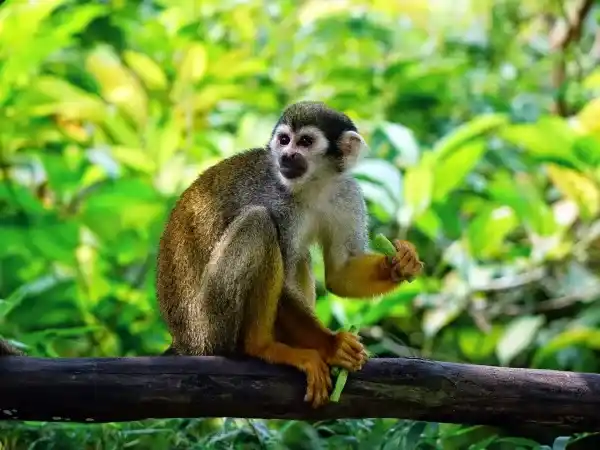
Introduction to Selected Representative Monkey Species
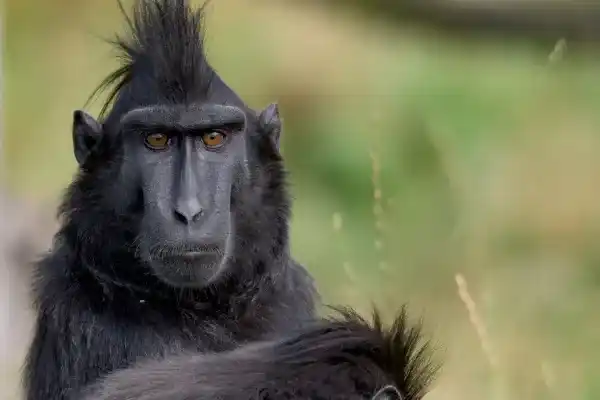
1. Crested macaque (Macaca nigra)
An endangered species from Sulawesi, Indonesia. Known for its black fur, red eyes, and crest of feathers on its head, it is frugivorous, lives in groups, and can live up to 20 years.
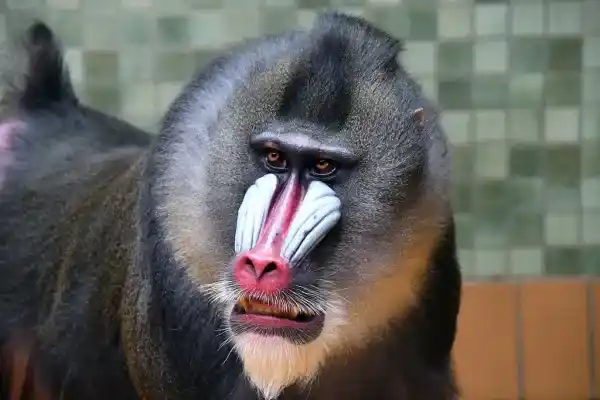
2. Mandrill (Mandrillus leucophaeus)
It inhabits Cameroon, Nigeria, and Bioko Island. It has grayish-brown fur, a red cushion on its rump, significant sexual dimorphism, and is highly gregarious.
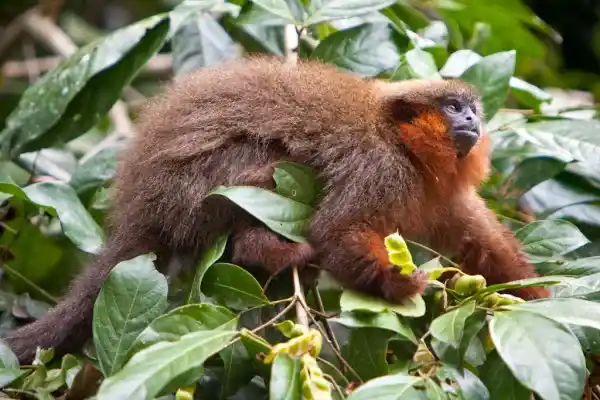
3. Plecturocebus discolor
They live in Peru, Colombia, and Ecuador. They are arboreal, diurnal, and monogamous, and their diet includes more than 30 kinds of plants such as leaves and fruits.
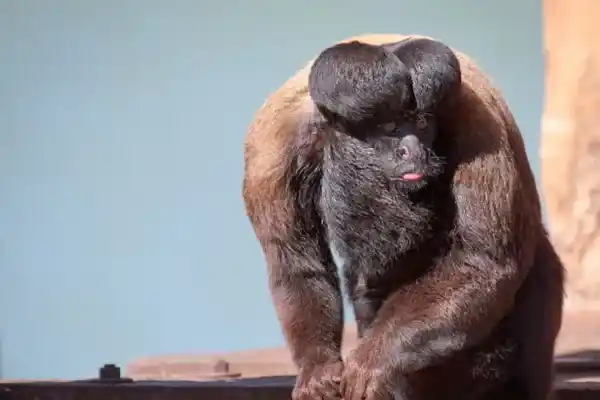
4. Black-bearded monkfish (Chiropotes satanas)
Endemic to Brazil, it is named for its thick black whiskers and tail. It mainly feeds on fruits and seeds, and lives in groups of up to 40 individuals.
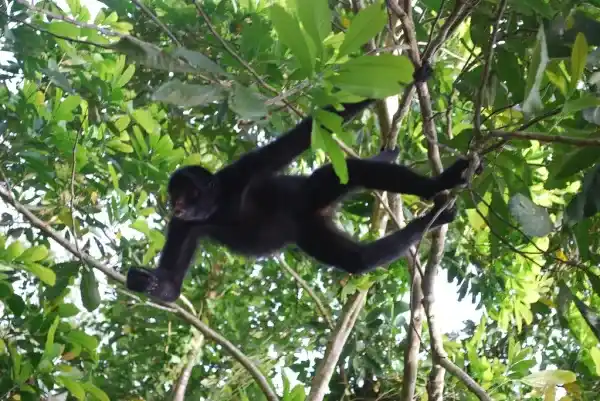
5. Peruvian spider monkey (Ateles chamek)
Living in the Amazon rainforests of Peru, Bolivia, and Brazil, with a highly grasping tail, a lifespan of about 20 years, and endangered.
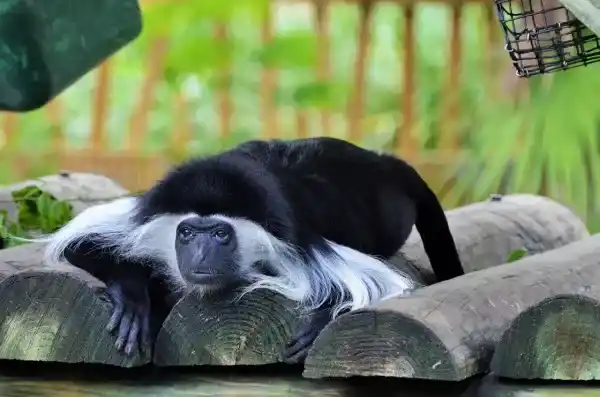
6. East African black-and-white colobus monkey (Colobus guereza)
It is the largest species of colobus monkey, living in the forests of central and eastern Africa. It is herbivorous and has a magnificent black and white coat.
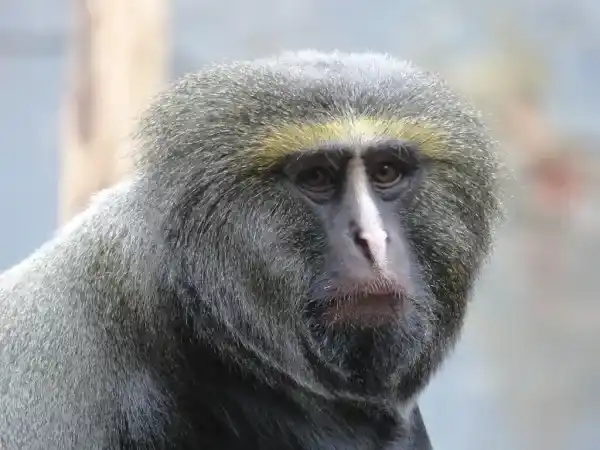
7. Owl-faced monkey (Cercopithecus hamlyni)
Living in Congo and Rwanda, with a face resembling an owl, they are highly gregarious, feed mainly on leaves, and are an endangered species.
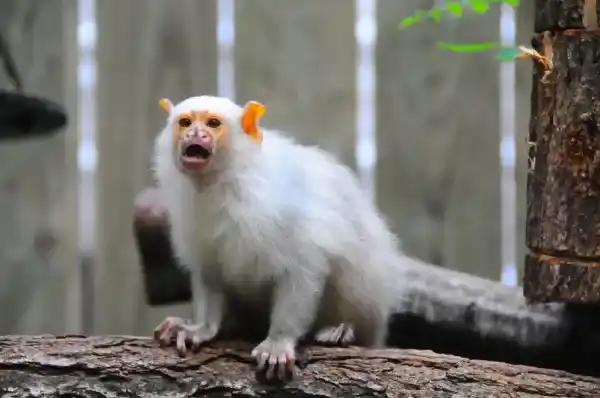
8. Silver marmoset (Mico argentatus)
It inhabits the Amazon rainforest in Brazil, has white fur, a pink face, and an ungraspable tail. It is active during the day and feeds on fruits, insects, and small animals.
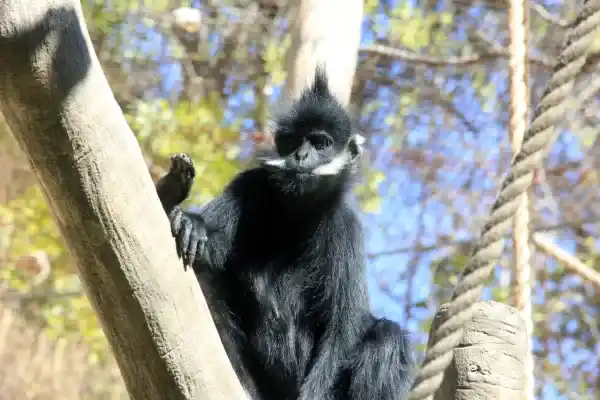
9. François leaf monkey (Trachypithecus francoisi)
They live in the limestone forests of northern Vietnam and southern China. Adults have black fur and distinct white sideburns on their cheeks, while cubs are bright orange.
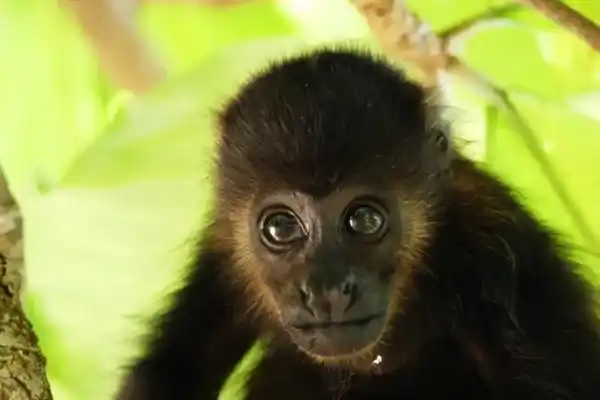
10. Alouatta palliata (Shoulder Monkey)
Distributed in countries such as Mexico, Colombia, and Peru, it is a highly social howler monkey with a loud voice, which mainly eats leaves and fruits.
More monkey species listed (categorized)
Representative of wet nasal products
Madagascar aye-aye (Daubentonia madagascariensis)
Ring-tailed lemur (Lemur catta)
Northern shrub monkey (Galago senegalensis)
Crowned lemur (Propithecus coronatus)
White-headed lemurs (Eulemur albifrons)
The slow loris (Loris lydekkerianus), etc.
Old World dry nose representatives
Jackal (Papio ursinus)
Tamburi monkey (Cercopithecus campbelli)
Spotted langur (Pygathrix nemaeus)
Proboscis monkey (Nasalis larvatus)
Mandrillus sphinx, etc.
New World Dry Nasal Products Representative
Golden Lion Tamarin (Leontopithecus rosalia)
Capucine monkey (Cebus capucinus)
Ateliers geoffroyi
Red howler monkey (Alouatta seniculus)
Pygmy marmoset (Cebuella pygmaea), etc.
Great apes
Western gibbon (Hoolock hoolock)
Hylobates klossii
Symphalangus syndactylus
Bonobo (Pan paniscus)
Eastern gorilla (Gorilla beringei)
Borneo orangutan (Pongo pygmaeus)
Chimpanzee (Pan troglodytes)
Human beings (Homo sapiens)
If you would like to learn more about primates, please visit our "Wildlife" category to view related articles.
bibliography
Onychophorus, VTLEDS (2019). Introduction to Primates: Proboscidea and Monoboscidea. Mr. Onychophorus. Accessible at: https://onicoforo.wordpress.com/2018/05/15/primates-caracteristicas-y-clasificacion/
Monkeys. Definition, characteristics, types, classification, and related information. (Dateless). Encyclopædia Britannica. Accessible at: https://www.britannica.com/animal/monkey#ref253700