Humans have always yearned for flight. Whether it's the dream of having the ability to soar through the sky, Leonardo da Vinci's sketches of flying machines, or the Wright brothers' first airplane, all these demonstrate that humanity has always hoped to break through its own limitations and realize the dream of flying in the blue sky like birds.
However, despite centuries of human effort in studying flight, many animals are born with this ability. They navigate the skies with ease, relying on their body structure and specialized adaptations. This article will introduce you to the types and names of aerial animals , including birds, insects, and some mammals.
What are aerial animals?
"Airborne animals" refers to animals that have the ability to fly and move in the air. It is important to emphasize that they do not live entirely in the air, but rather combine land, air, and even water as their habitat.
These animals are able to fly thanks to their wings . Wings are specialized body structures or appendages that generate lift and thrust through flapping and beating, allowing them to move through the air. The shape and structure of wings vary among different animals, and it is these differences that create diverse modes of flight.
Birds: the most typical flying animals
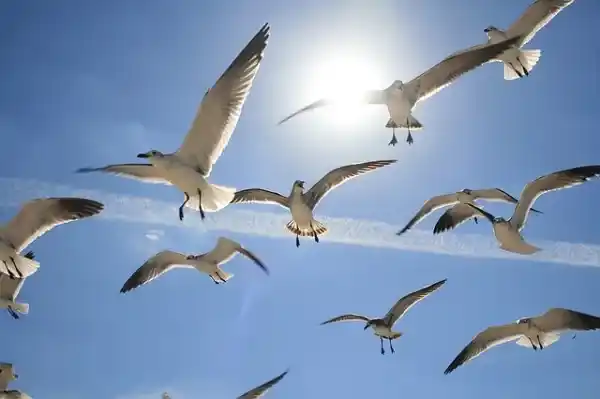
Birds are the most well-known flying animals, and their ancestors can be traced back to the age of dinosaurs. To adapt to flight, birds have the following physical characteristics:
Lightweight skeleton : The hollow skeleton greatly reduces weight.
Two pairs of limbs : the forelimbs evolved into wings, and the hindlimbs were used for walking, jumping, or grasping.
Feathers cover the whole body : Feathers are not only lightweight, but also windproof, warm, and moisture-proof, and they also help with flight.
It is important to note that not all birds can fly; for example, ostriches and penguins cannot.
Birds are oviparous animals , reproducing by laying eggs. Their dietary habits vary greatly, ranging from seeds and fruits to insects, fish, and even small mammals.
Examples of common flying birds :
Hummingbird
Parrots (such as cockatoos)
Pigeon
Canary
Goldfinch
eagle
Falcon
Toucan (Hornbill)
Flamingos

Insects: the most numerous aerial animals
Unlike birds, insects are invertebrates whose bodies are supported by a hard exoskeleton. Their typical structures include antennae, three pairs of legs, and wings .
Sensory advantage : Antennae are important sensory organs for insects, enabling them to perceive odors, vibrations, and sounds.
Wing structure : Mostly growing on the thorax, usually composed of a thin, transparent membrane, sometimes with bright colors.
Reproduction method : Most insects reproduce by laying eggs (oviparous), while some species have the ability to reproduce asexually.
Diverse diets : some feed on plants (such as pollen and leaves), some prey on other insects, and some rely on humus and human remains.
Insects use flight not only for movement and foraging, but also for courtship displays . For example, male insects flap their wings to make sounds or perform flight postures during the mating season.
Examples of common flying insects :
ladybug
bee
wasp
Golden Beetle
winged ants
Butterfly
moth
fly
mosquito
Mammals: Flying and Gliding Species
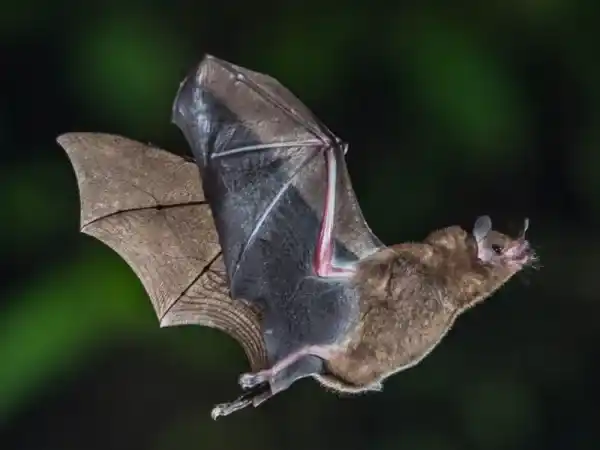
Bats are truly flying mammals.
Bats are the only mammals in the world capable of active flight. Their characteristics include:
Limb structure : The hind limbs are used for hanging upside down or attaching to trees and rocks, while the forelimbs have evolved into wings.
Wings : Composed of a thin, elastic membrane, they are more flexible than bird wings and can make precise, rapid turns.
Echolocation : Bats navigate and hunt by emitting ultrasonic waves and receiving echoes, a technique known as "echolocation."
Reproduction and Diet : Bats are viviparous, with the young fully developed inside the mother before being born. Most bats feed on fruit or insects, with only a very few species (such as vampire bats) feeding on blood.
Gliding mammals
Besides bats, there are some other mammals that, while unable to truly fly, can use gliding membranes to move short distances in the air:
Flying squirrel : The most typical gliding mammal, which uses the membranes on both sides of its body to unfold like a parachute.
Gliding lizards and gliding snakes : Although not mammals, they can also glide between trees using their body structure.
These animals are generally small and lightweight with less fat, making it easier for them to glide in the air using air currents.
Summarize
The world of aerial animals is rich and colorful:
Birds use feathers and lightweight bones to support flight;
Insects rely on their exoskeletons and membranous wings to fly flexibly;
Bats, as the only mammals capable of flight, rely on their membranous wings and echolocation to navigate through the night sky.
Gliding animals such as flying squirrels demonstrate another way of utilizing air.
Flying is not only a mode of transportation, but also a unique survival strategy that allows these animals to find food, avoid predators, and reproduce in different ecological environments.