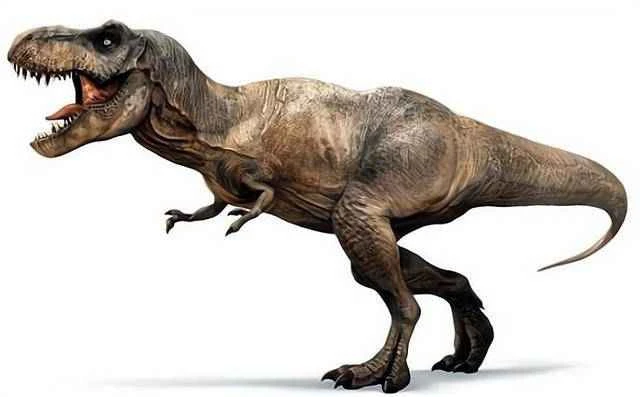
Tyrannosaurus rex was an extinct giant carnivorous dinosaur that lived approximately 68 million years ago during the Late Cretaceous period. Below is detailed information about Tyrannosaurus rex and its lifestyle:
Species classification
Scientific name: Tyrannosaurus rex
Classification: Dinosaurs
Period of existence: Tyrannosaurus Rex lived approximately 68 million years ago, during the Late Cretaceous period.
Appearance features
Size: Tyrannosaurus Rex was a huge dinosaur, with a body length of 12-13 meters, a shoulder height of about 3.9 meters, and a weight of possibly 8 to 14 tons.
Massive skull: The Tyrannosaurus Rex had a long and heavy skull with large and strong jaw bones and sharp teeth.
Short forelimbs: The forelimbs are short but strong and powerful, especially the bones of the forelegs.
Dietary habits
Carnivorous: Tyrannosaurus Rex was a carnivorous dinosaur that fed on other dinosaurs and small vertebrates.
Hunting methods: They usually attacked and preyed on other large herbivorous dinosaurs, and may also have scavenged.
Lifestyle
Solitary nature: They are generally considered to be solitary animals, although there is still debate, but they are generally considered to be solitary.
Habitat
Tyrannosaurus Rex lived in North America at that time, in what is now the United States and Canada.
Scientific research
Fossil discoveries: Numerous Tyrannosaurus rex fossils have been discovered in North America, including skulls, bones, and teeth.
Research progress: Scientists have explored the habits, ecological role, and evolutionary history of Tyrannosaurus Rex through the study of fossils.
living environment
Tyrannosaurus Rex likely lived in diverse environments, including swamps, plains, and primeval forests.
Extinction
Tyrannosaurus Rex went extinct in a mass extinction event at the end of the Cretaceous period, approximately 66 million years ago. Many hypotheses and controversies remain regarding the exact cause of its extinction.
Tyrannosaurus Rex is one of the most famous and recognizable species of dinosaurs. Its massive size, strong jaws, and short but powerful forelimbs make it a focal point in paleontological research and a common protagonist in many paleontological and archaeological exhibitions and literary works.