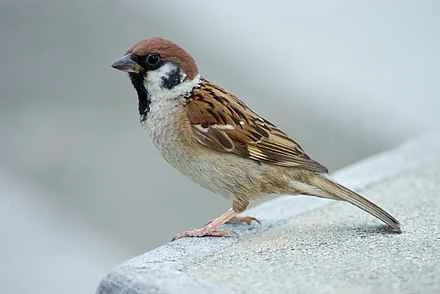
Sparrows generally refer to a group of small birds belonging to the family Finchidae in the order Passeriformes, especially the house sparrow (Passer domesticus), a species widely distributed throughout the world. Sparrows are a species closely associated with humans, known for their ubiquitous presence in human-inhabited areas.
Basic features
Size : Sparrows are generally between 14 and 18 centimeters in length, with a plump body and a short, stubby beak, the shape of which is suitable for their seed-based diet.
Weight : Approximately 24 to 39.5 grams.
Appearance : They typically have brown and black feathers. Male house sparrows have a distinct black patch on their chest, while females are more subdued, with brown and gray hues.
Lifestyle
Diet : Sparrows mainly eat grains and seeds, but they also eat insects and other small animals, especially during the breeding season, to ensure that the chicks have enough protein to grow.
Habitat : Sparrows can survive in almost any human-inhabited area, from rural farmlands to city centers. They build nests in cities and utilize building crevices and other sheltered places.
Behavior : They are very well adapted to urban life. Many sparrows are used to foraging on the ground and they will also visit bird feeders.
Reproduction
Reproduction : Sparrows are social birds and typically breed in flocks. Their breeding season varies by region, but is mostly in late spring and summer.
Nest : Sparrow nests are usually built from straw, feathers, paper and other soft materials that can be found.
Egg laying : Each egg laying usually consists of 3 to 5 eggs. The female bird will incubate the eggs for about two weeks, and the chicks can fly away from the nest about two weeks after hatching.
Ecological location and conservation status
Sparrows play several important roles in ecosystems, including controlling insect populations and dispersing plant seeds. However, some sparrow species have declined in numbers over the past few decades, partly due to habitat loss and changes in urban environments. Some countries and regions have begun implementing conservation measures to protect sparrow populations.
Relationship with humans
Sparrows have long coexisted with humans, though they are sometimes considered pests because they eat seeds and newly sprouted crops in farmland. Nevertheless, sparrows bring joy to many city dwellers, becoming part of the urban wildlife. In some cultures, sparrows are even seen as auspicious symbols.
Overall, although sparrows are generally small birds, they may face different threats in different regions, and protecting their habitat and living environment is crucial to maintaining sparrow populations.