Tigers are large felines, one of the largest living cats on Earth. Below is detailed information about tigers and their habits:
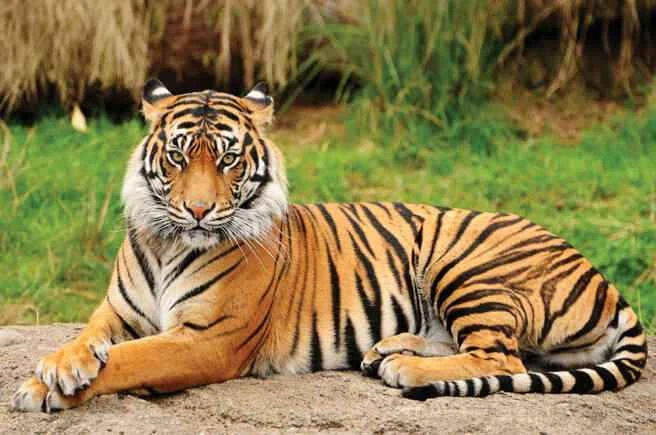
Species classification
Scientific name: Panthera tigris, there are six subspecies: Bengal tiger, Indian tiger, Sumatran tiger, Javan tiger, Siberian tiger and South China tiger.
Appearance features
Size : Tigers are huge, with a body length of 2.5-3.5 meters, a shoulder height of about 0.9-1.1 meters, and a weight of 180-300 kilograms.
Coat color : Mostly orange-yellow with black stripes. The coat color varies slightly among different subspecies.
distributed
Tigers are found in many Asian countries, such as India, Bangladesh, Nepal, Russia, and China.
Habitat
Tigers mainly inhabit various types of forests, but also appear in grasslands, swamps, and rocky areas.
Dietary habits
Carnivores : Tigers are carnivorous animals, and their main prey includes buffalo, deer, wild boar, and other small and medium-sized mammals.
Lifestyle
Nocturnal : Tigers are usually active at night and spend most of the day resting.
Solitary nature : Tigers are usually solitary animals. Except for mother tigers with cubs, adult tigers basically act alone.
Reproduction and reproductive behavior
Tigers' mating season is not limited to a specific season. The gestation period for female tigers is about 3-4 months, and each litter usually contains 3-4 cubs.
Survival threat
Tigers are listed as an endangered species due to habitat loss, hunting, reduced prey, and the impact of human activities.
Relationship with humans
In some regions, tigers are considered sacred animals and are worshipped by local peoples.
Tigers appear as symbols and totems in many cultures and are also a representative image of many wildlife conservation activities.
In general, tigers are majestic and endangered felines found in many Asian countries, but they currently face threats to their survival due to habitat loss and hunting. In many cultures, tigers are considered sacred symbols, making tiger conservation and research of great importance.