Cave bear *Ursus spelaeus* (and its ancestor *Ursus deningeri*) are iconic fossil species of Quaternary Europe and among the earliest fossil species recognized by humans. These massive bears were once widespread throughout Europe and were known for their preference for living in caves. Over a million years of evolution, cave bears engaged in numerous battles with early humans for cave space, ultimately ending in their complete extinction around 17,000 years ago. Cave bears lived in caves for generations, hibernating to survive the long, harsh winters. The renowned paleontologist Kurtén authored *The Cave Bear Story: Life and Death of a Vanished Animal*, which provides a detailed description of cave bear habits, population structure, and other information, making the cave bear one of the most well-known Quaternary animals.
Although cave bears once flourished in Europe, records of them in Asia are scarce, and those in East Asia are even rarer and questionable. Kurtén once stated that cave bears likely did not exist in East Asia. Unlike Europe, where cave bears reigned supreme, East Asia was dominated by their sibling, the brown bear. The discovery of numerous brown bear fossils at the Zhoukoudian site, the site of Peking Man, seems to support this. However, in his initial description of the carnivore fossils at Zhoukoudian, Pei Wenzhong pointed out that some larger bears resembled European cave bears, though not as typical, but could be classified as cave bears. Whether these fossils truly belong to the cave bear family has remained a subject of debate for over 80 years, and whether cave bears ever existed in East Asia remains an unresolved question.
Recently, Jiang Zuoqigao, a doctoral student at the Institute of Vertebrate Paleontology and Paleoanthropology, Chinese Academy of Sciences, along with his supervisor, Researcher Liu Jinyi, Ms. Chen Jin from the Herbarium, Dr. Jan Wanger from the Czech Academy of Sciences/Czech National Museum, and Dong Cuiping, Wei Jianhua, and Ning Juan from the Zhoukoudian Museum, conducted a systematic review of the large bear fossils housed at the Institute of Vertebrate Paleontology and Paleoanthropology, Chinese Academy of Sciences, and the Zhoukoudian Museum. They identified several specimens as undoubtedly belonging to the cave bear family.
Based on detailed comparisons with related European fossils, researchers determined that the cave bear fossils in China belong to *Ursus deningeri*. Cave bears evolved extremely rapidly; European scholars, based on different populations and their corresponding ages, can pinpoint the time resolution of cave bear evolution to 100,000-200,000 years. According to this comparison, the cave bears at Zhoukoudian Site 1 (mainly found in the lower strata) are comparable in evolutionary level to those at MIS17-13 in Europe, therefore their age is likely between 500,000 and 700,000 years. The most significant difference between the Zhoukoudian cave bears and their European counterparts of the same period is their extremely robust metacarpals. This feature typically appears in Europe only in the Late Pleistocene and is thought to be related to digging and climbing abilities. This characteristic of the Zhoukoudian cave bears suggests that there may have been differences in ecological adaptation between East Asian and European cave bears, which requires further fossil discoveries and multi-faceted research. It is noteworthy that while cave bears did indeed live in East Asia, they were not as abundant as brown bears, a situation opposite to that in Europe. The cave bears of East Asia appear to be a small group. The related research was published in Quaternary Science Reviews.
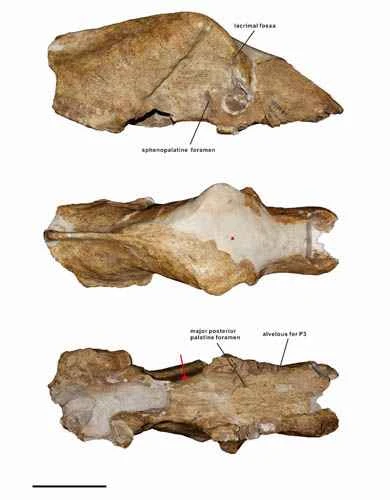
Figure 1. Skull of Ursus deningeri from Zhoukoudian (Photo provided by Jiang Zuoqigao)
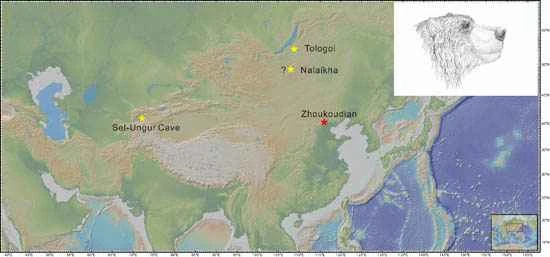
Figure 2. Fossil record site of cave bear in eastern Asia (Photo provided by Jiang Zuoqigao)
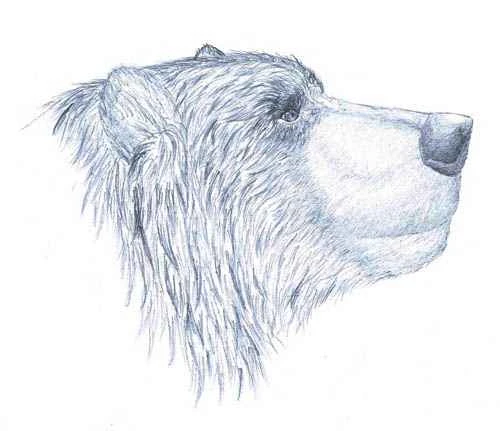
Figure 3. Reconstruction of Ursus deningeri, a bear from Zhoukoudian (drawn by Jiang Zuoqigao)