Vultures, also known as cinereous vultures, are large scavenging birds, with as many as 22 species, mainly inhabiting tropical and subtropical regions. There are 7 species of New World vultures, including the well-known eagle mentioned earlier, and 15 species of Old World vultures, including the bearded vulture and the cinereous vulture. While New World and Old World vultures look very similar and have similar habits, they are quite distantly related; some even believe that New World vultures belong to the order Ciconiiformes, while Old World vultures belong to the order Falconiformes.
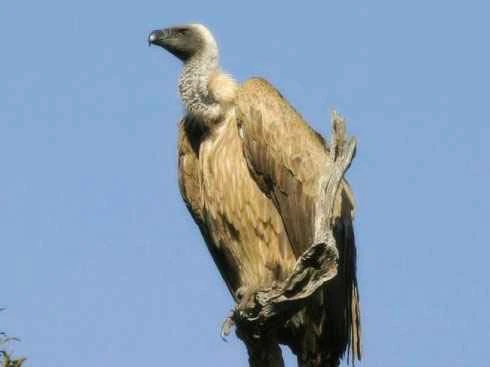
Vultures are quite well-known among the Old World species, and they are common supporting characters in the animal kingdom, especially on the African savanna. The African White-backed Vulture (see above) is almost ubiquitous, as this scavenging bird is nature's cleaner, often appearing alongside the Black-backed Jackal, hyena, and African Marabou Stork. The African savanna boasts a diverse array of vulture species, including the White-backed Vulture, Black-and-white Vulture (see above), Wigtail Vulture, and Long-billed Vulture (see below), which often congregate together to clean up animal carcasses.
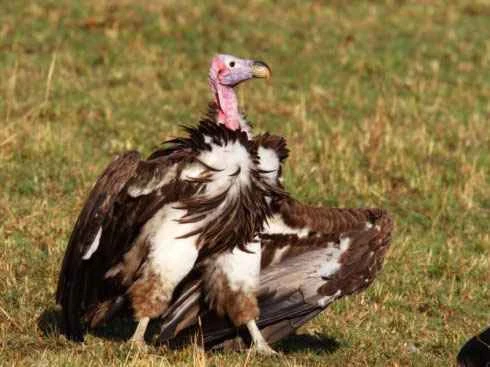
The Nubian Vulture (see above image), also known as the Nubian Vulture or Widow Vulture, is about 1 meter tall with a wingspan of 2.7 meters. It has a blackish-brown upper body, a wedge-shaped tail, and a white underparts. It has large wattles on either side of its bald head and a pink or light red face. This giant Old World vulture lives in arid regions of Africa and is dominant in feeding compared to other vultures, often stealing food from other birds of prey.
Great Vulture: Scavenger
Category: Birds of prey
Genus: Vulture, Family Accipitridae, Order Falconiformes
Origin: Eurasia
Endangered Index: Endangered
Beauty Index: ★
Uniqueness Index: ★★★
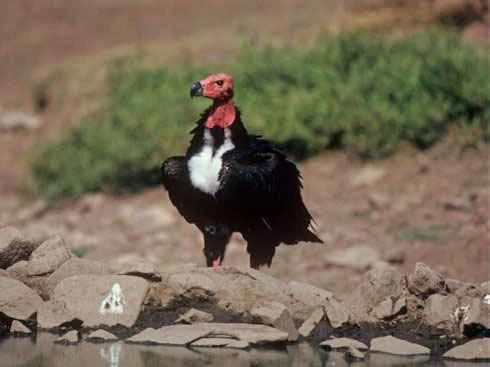
The Black Vulture (see above image), also known as the Indian Black Vulture, is distributed from Pakistan to Malaysia. It is about 75 cm long, has a wingspan of about 2.7 meters, and weighs 3.7-5.4 kg. It is black with white downy feathers on its chest, a large black bill, and wattles on both sides of its neck. It is an Old World vulture. The Indian White-backed Vulture (see above image), also known as the Indian White-backed Vulture, is distributed in South Asia, Iran, Myanmar, southern Thailand, and northern Laos. In China, it is found in western Yunnan and Xishuangbanna in southwestern Yunnan, and is a rare resident bird.
The most well-known vulture in my country is the Himalayan vulture (see above image), which is 90-120 cm long and weighs 8-12 kg. Its plumage varies considerably; adult vultures have brownish-white upperparts except for the wings and tail, brown underparts, and bare heads and sides with filamentous feathers. They are distributed from Central Asia to the Himalayas, primarily feeding on carcasses, weak or sick large animals, marmots, rodents, or livestock. The Bearded Vulture (see above image), also known as the Bearded Vulture, is 105-133 cm long and weighs 3.5-5.5 kg. Its upperparts are black with a silvery-grey sheen, with pale gray-brown downy feathers covering the forehead and crown. Its underparts are pale brown, and its tail feathers are silvery-grey tinged with black. It is distributed in southern Europe, Africa, and central and southern Asia, mostly living in flocks with other vultures. It primarily feeds on large animal carcasses, but sometimes also hunts waterfowl, injured pheasants, quails, and small animals such as hares.
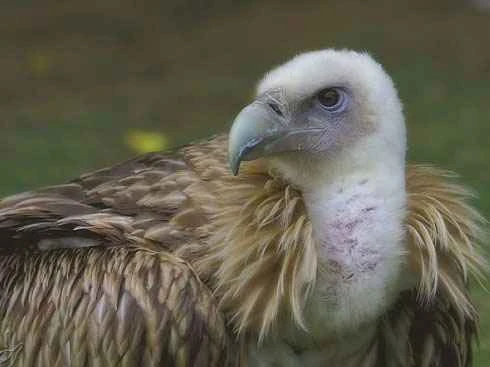
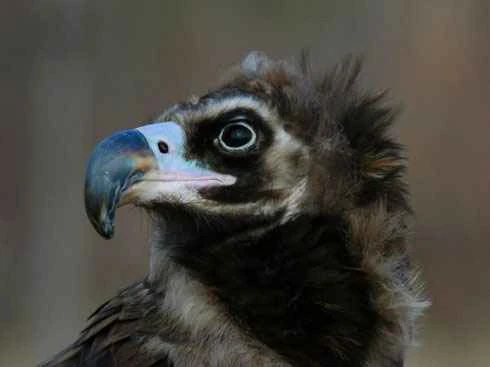
The Great Vulture, also known as the Mountain Eagle, Dog-headed Eagle, or Common Vulture, belongs to the family Accipitridae in the order Falconiformes. It measures 110 cm in length, has a wingspan exceeding 2 meters, and weighs 7-11 kg. It is one of the largest birds of prey on the plateau. Its plumage is primarily dark brown, with a lead-blue bare skin on its head and neck. It has a soft, feathered chin, and its crown is covered in dirty brown down. Its tail is short and wedge-shaped. Compared to other vultures, the Great Vulture resembles a larger version of an eagle, both in appearance and flight.
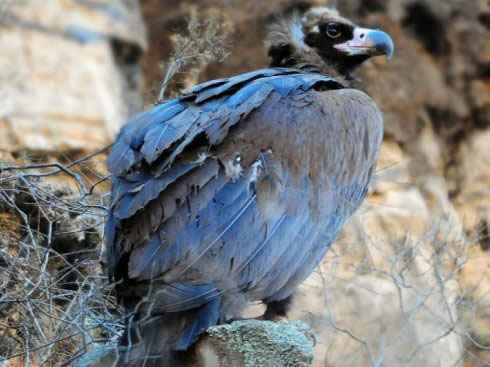
Due to their need to feed on carcasses, great vultures have very strong heads and beaks. Their hooked beaks can easily peck and tear through tough cowhide and drag out heavy entrails. Their bare heads can easily reach into the abdominal cavity of a carcass. The base of the vulture's neck has a ring of relatively long feathers, like a human napkin, which can prevent the feathers on its body from getting dirty when feeding on carcasses.
The Great Vulture is distributed in Spain, the Balkans, Turkey, Central Asia, and northern China. Occasionally, vagrants are seen wandering outside their breeding grounds. They breed in Kashgar and the Tianshan Mountains in western Xinjiang, southern and eastern Qinghai, Gansu, Ningxia, western Inner Mongolia, and northern Sichuan. Scattered sightings are also found in southern Tibet, central my country, eastern China, southeastern China, and Taiwan.
Great vultures primarily feed on the carcasses of large animals, but also prey on live small mammals, amphibians, and livestock. They prioritize carcasses over other vultures. Sometimes, great vultures also compete with other birds of prey for food, even stealing prey from larger birds of prey such as golden eagles.
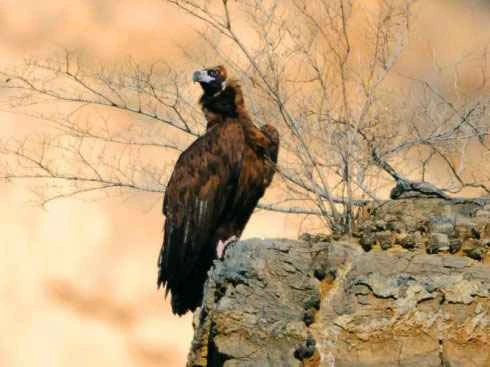
Great vultures inhabit plateaus and foothills, often solitary, soaring high above grasslands and mountains to hunt for carcasses. During migration, they travel in family units or several families together. A alpha male exists within the group, and all actions are obeyed by the lead vulture. They also bathe in hot weather.
Great vultures often flock with Himalayan vultures, gliding at high altitudes for hours without flapping their wings; they are the birds with the slowest wingbeats. When flying, their wings are outstretched in a straight line, frequently flapping or soaring in the sky, and then suddenly descending when they spot food. Sometimes they gather in groups of four or five, and when there is a large carcass of a mammal, they will gather in the air in large flocks, sometimes as many as dozens, to feed.
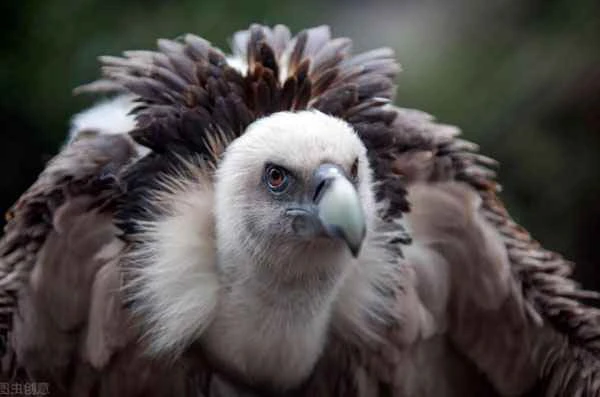
Great vultures, both male and female, build saucer-shaped nests in tall trees, with a few nesting on rocks. They lay eggs in early March, with each clutch containing 1-2 eggs. Both parents take turns incubating the chicks, with an incubation period of 55 days.
They mostly nest in tall trees, laying eggs in spring, 1-2 eggs at a time. The eggs are dirty white with spots. Both parents incubate the eggs, which take 55 days to hatch.
The Great Vulture has a distinctive appearance, making it a popular ornamental animal. However, it has also been hunted by humans, and its low reproductive rate has led to a decline in its population, placing it at near-threatened globally and making it rare, although it is more common in the northern part of its distribution area. The Great Vulture is a Class II protected animal in China.