Musk oxen (scientific name: *Ovibos moschatus*), also known as musk oxen, are one of the most representative animals of the polar tundra. They closely resemble cattle or buffalo in appearance, but are actually more closely related to goats, and are among the most adapted members of the Bovidae family to extreme cold environments. This article will provide a comprehensive overview of the musk ox's main characteristics, distribution, diet, behavioral patterns, and reproductive methods, helping you gain a deeper understanding of this "Arctic giant."
I. Physical and Physiological Characteristics of Musk Ox
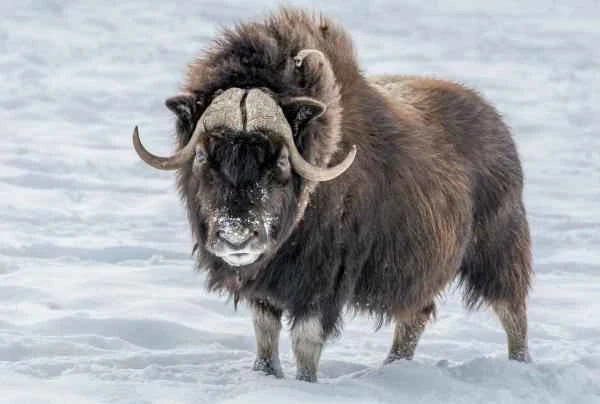
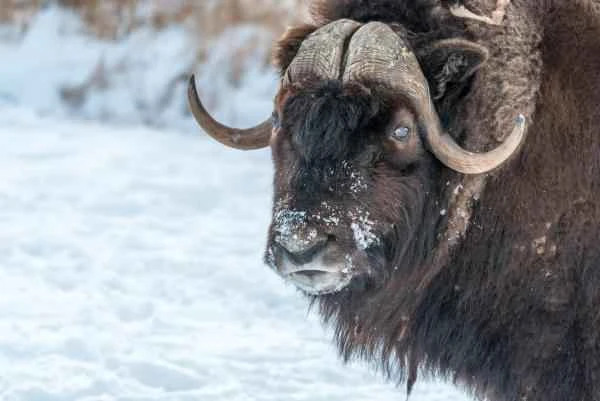
Robust build : Adult musk oxen can reach a shoulder height of 1.2 meters, with a broad head and curved horns. Both males and females have horns, with the male's horns being thicker at the base and having a distinct ring structure.
Polar adaptations : Musk oxen are covered with long and dense hair, especially the qiviut layer, which is one of the most insulating mammals known, effectively resisting extreme cold of -40°C.
Distinctive scent : During the breeding season, male musk oxen release a distinctive musky scent in their urine to attract females. This is the origin of their name, "musk ox".
Physical characteristics : Barrel-shaped body, short legs, short tail, broad back, giving it a very strong and powerful appearance.
II. Habitat and Distribution of Musk Oxen
Musk oxen are mainly distributed in the polar tundra of the Northern Hemisphere, including Greenland, northern Canada, and Alaska. In the 20th century, humans also introduced them to parts of Siberia, Russia, and Norway.
Typical habitat : polar tundra, with low vegetation consisting mainly of mosses, lichens, and shrubs.
Environmental adaptability : Musk oxen maintain their body temperature through thick fur and efficient metabolism, allowing them to move freely even in snow-covered tundra. Their large feet distribute their weight, preventing them from sinking into the snow and preventing heat loss that melts the snow beneath their feet.
III. What do musk oxen eat? Detailed explanation of their diet.
Musk oxen are ruminants with a four-cavity stomach, making them adept at digesting highly fibrous polar plants. Their main diet includes:
Main ingredients : grasses, sedges, mosses, lichens, willows (such as Richardson willow Salix richardsonii), oxalis (Oxytropis spp.), etc.
Feeding behavior : Consumes approximately 5 kg of herbs daily. Increases food intake during summer and autumn to store fat for winter. Can ruminate multiple times, maximizing plant utilization.
Seasonal changes : When food is scarce in winter, they mainly eat moss and shrub branches, and even dig through the snow to find food when necessary.
IV. Musk Ox Behavior and Survival Strategies
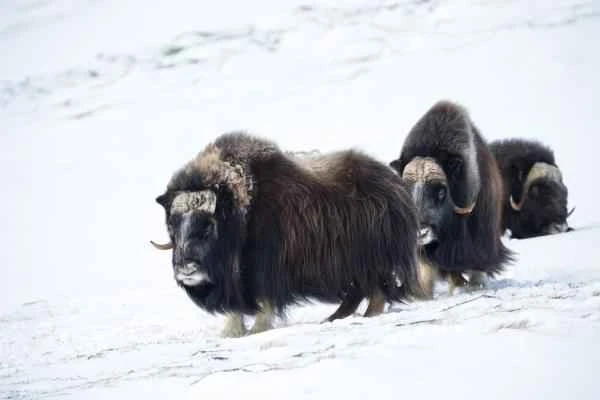
Collective defense : When encountering predators such as wolves, musk ox herds will form a "defensive circle" with adult individuals facing outwards and calves in the middle to defend against intruders.
"Standing hibernation" : In extremely cold weather, musk oxen conserve energy by reducing activity and resting standing up, a practice vividly described as "standing hibernation".
Migration and foraging : In winter, in search of food, they will cross the snow in a single file, with the individual in front leading the way and the one behind following to conserve energy.
Wind protection behavior : When faced with polar storms, musk ox herds will lie down with their backs to the wind to reduce the impact of wind and cold, and the males usually stand at the front to protect the group.
V. Reproduction and Life Cycle of Musk Oxen
Sexual maturity : They reach sexual maturity at 8 months of age, but most of them actually participate in reproduction after 2-3 years of age.
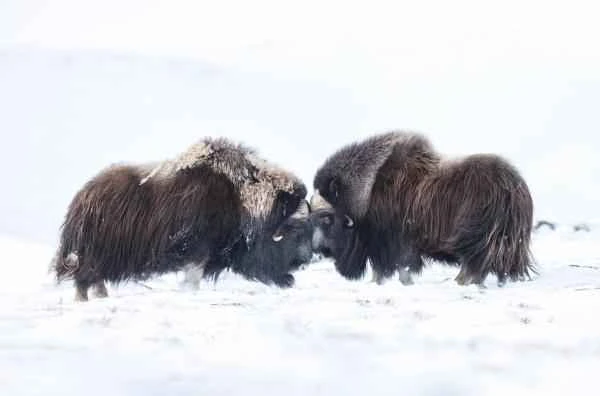
Breeding season : Late summer to early autumn is the mating season. Males engage in fierce battles, with collisions reaching speeds of up to 30 km/h. The ultimate victor forms a "harem" and mates with several females.
Pregnancy and offspring : The gestation period is about 8 months, with births occurring in the spring, and each litter consists of one offspring. Newborn offspring are wrapped in lanugo at birth, which effectively keeps them warm.
Mother-child relationship : The young cubs are attached to their mothers for a long time, and often burrow under the mother's long hair for warmth when it is cold. They become independent at around one year old.
Lifespan : Wild musk oxen have an average lifespan of 15-20 years. Early death is mostly due to predation by natural enemies or accidents (such as falling into an ice cave).
VI. Ecological significance and current conservation status of musk oxen
Musk oxen are important large herbivores in the polar tundra ecosystem and play a vital role in maintaining the ecological balance of the Arctic. Although their numbers declined historically due to overhunting, they have now been restored and protected in many areas.
Conclusion :
Musk oxen, these polar "hairy warriors," have become one of the most representative species of the Arctic tundra with their strong bodies and unique survival strategies. Understanding the musk oxen's habitat, diet, and reproductive secrets will help us better understand and protect this rare animal.
bibliography
Elder, S. (2005) “Ovibos moschatus” is available at: https://animaldiversity.org/accounts/Ovibos_moschatus/
Lopez, B. (2020) *Arctic Dreams*. Madrid: Capital Swing Publishing House.