The ocean world is home to many amazing creatures, and the sea hare (Jorunna parva) is one of them. With its fluffy and adorable appearance, the sea hare once became an internet sensation. However, they are neither rabbits nor mammals, but rather a very special type of venomous marine mollusc. This article will give you a comprehensive understanding of what sea hares are, their physical and behavioral characteristics, their main distribution areas, their diet, and their unique reproductive methods.
What kind of animal is a sea hare?
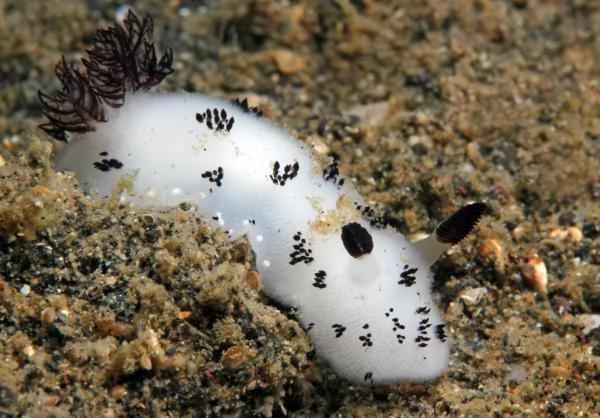
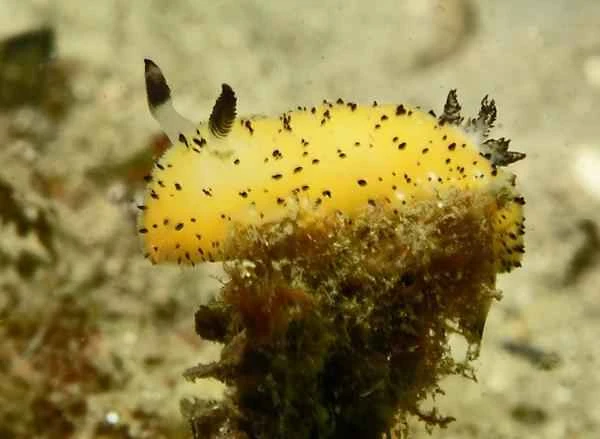
The sea hare (Jorunna parva) is actually a marine mollusc, belonging to the suborder Nudibranchs. It is related to common oysters and snails, but lacks a shell. The sea hare gets its name from its round body and short "ears," resembling a cartoon rabbit. It first gained popularity in Japan due to its cute appearance, but is actually a highly predatory and venomous creature.
Physical characteristics of sea hares
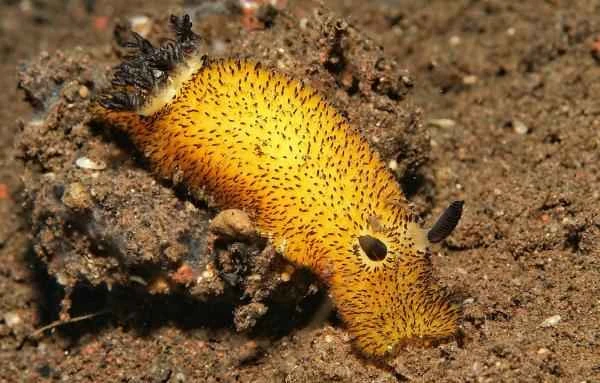
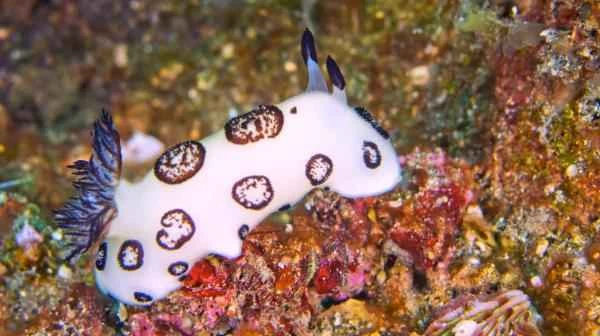
Varying body colors : Sea hares commonly come in white, yellow, orange, or brown, with yellow being the most common. These bright colors also serve to warn predators.
Small size : The body length is usually only about 1 cm, and the maximum is no more than 2.5 cm.
Fake "rabbit ears" : The two black protrusions on the head are actually "sniffing horns," used to sense chemical signals in the water to help locate food or detect danger.
Hairy appearance : The back is covered with small black protrusions (caryophyllidia), which look hairy but are actually sensory organs that can sense water flow and particles.
Nude gill structure : There is no shell on the body surface, the gills are exposed outside the body, located at the rear of the body, and breathe oxygen directly from the water.
Highly venomous creatures : Sea hares contain potent toxins that come from the sponges they feed on, not from their own synthesis, which effectively defends them against predators.
Where do sea hares live?
Distribution area : Sea hares are mainly distributed in the Indo-Pacific waters, such as Tanzania, Seychelles, Kii Peninsula and Okinawa of Japan, Papua New Guinea, and the Philippines.
Ecological habits : Prefers warm tropical waters and is often found on seabed rocks or aquatic plants. It is a typical benthic organism.
Locomotion : It crawls slowly using its muscular "feet", similar to a land snail.
Habitat : They often choose areas with abundant food such as sponges.
What do sea hares eat? Dietary analysis
Main food : Sponges are their main food source; they are active predators.
Feeding method : It has a special "radula" in its mouth that can scrape the surface of the sponge like a file, and it also has mouth tentacles to assist in feeding.
Source of toxins : Sea hares can convert and accumulate toxic components from the sponges they feed on, turning them into their own defense weapons, which is why few natural enemies dare to prey on them.
Sea hare breeding methods
Hermaphroditic : Sea hares are hermaphroditic animals, possessing both male and female reproductive organs.
Mating behavior : Reproduction requires two individuals to mate in order to ensure genetic diversity and offspring survival rate. During mating, the two individuals will "dance" in a spiral shape, exchanging sperm.
Egg-laying method : After fertilization, the larva lays a tape-like egg band containing multiple fertilized eggs. After the larvae have developed, they hatch and emerge from the shell. During the growth process, they gradually lose the shell and become mature nudibranchs.
Life cycle : Lifespan is approximately one year; highly reproductive.
Summarize
Sea hares are miniature and highly distinctive marine mollusks, renowned for their adorable appearance and remarkable physiological structure, yet they are essentially apex venomous predators. Not only are they unique in appearance, but they also possess exceptional ecological adaptability, representing a significant aspect of marine biodiversity. Understanding sea hares helps us appreciate the complexity and wonder of marine ecosystems.
References
Global Biodiversity Information Agency (2022) Jorunna parva Baba, 1938. Accessible at: https://www.gbif.org/species/165518764
Camacho-García, YE and Gosliner, TM (2008). Phylogenetic revision and morphological phylogenetic analysis of Jorunna Bergh, 1876 (Nucleate gills: Discobranchia). Journal of Mollusc Research, 74(2), 143-181.