No reptile is more captivating than the chameleon. Its stunning appearance evokes images of ancient dragons. In fact, these fascinating creatures have thrived on Earth for 60 to 100 million years. They attract attention and almost disappear into their surroundings through camouflage, making them exceptionally unique in any glass container. Chameleons belong to the class Reptilia, order Squamata, and family Chameleonidae. They are a group of small, scale-covered reptiles. The Chameleonidae family is further divided into two subfamilies: Chameleoninae and Chameleoneinae.
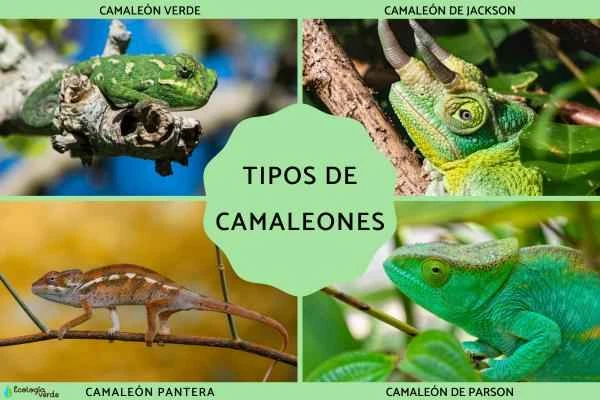
There are approximately 161 species of chameleons, most of which are found in sub-Saharan Africa. Chameleons can change their body color to blend into their surroundings and avoid nearby predators.
Table of contents
A branch of the chameleon family
Green Chameleon
Yemeni Chameleon
Jackson Chameleon
Leopard Chameleon
Nana Chameleon
Tiger Chameleon
Parsons Chameleon
Smith's dwarf chameleon
1. A branch of the chameleon family
Chameleons belong to the class Reptilia, order Lepidosauria, and family Chamaeleonidae. The family is divided into two subfamilies: Chamaleoninae and Brookesiinae, comprising approximately 161 species. The vast majority are distributed in sub-Saharan Africa, Madagascar, and parts of Asia and Europe. Chameleons are highly captivating in the wild and among reptiles due to their ability to change color and their unique appearance.
The subfamily Chamaleoninae includes eight genera: Archaius (Seychelles), Bradypodion (Southeast Africa), Calumma (Madagascar), Chamaeleo (Eurasia and Africa), Furcifer (Madagascar and Comoros), Kinyongia, Nadzikambia, and Trioceros.
Brookesiinae subfamily : includes 3 genera: Brookesia (Madagascar), Rieppeleon, and Rhampholeon (East Africa).
2. Green Chameleon (Chamaeleo chamaeleon)
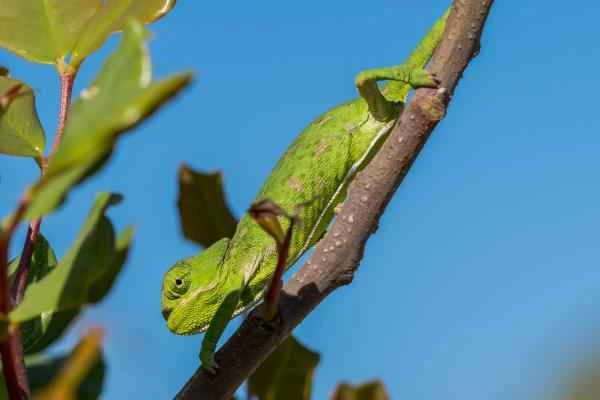
The chameleon is widely distributed, especially common in southern Spain and along the Mediterranean coast. It measures about 30 cm in length and is adapted to pine forests and Mediterranean scrubland. It has opposite fingers and a curled tail. Its color is mostly green, providing excellent camouflage.
3. Yemeni Chameleon (Chamaeleo calyptratus)
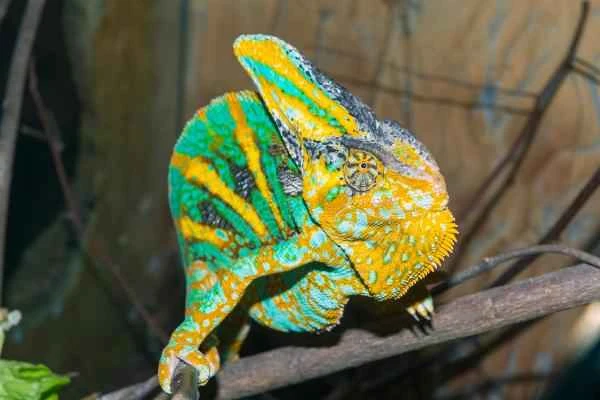
Also known as the helmeted chameleon, it originates from the mountainous regions of Yemen and Saudi Arabia. It is relatively large, with males possessing a prominent helmet-like protrusion. Its diet consists mainly of insects, occasionally supplemented with plant leaves, flowers, and fruits for hydration. With a lively personality, it is one of the most popular pet chameleons.
4. Jackson Chameleon (Trioceros jacksonii)
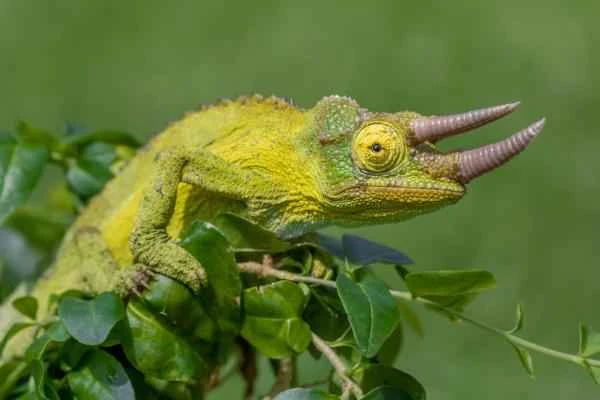
Native to East Africa, its most distinctive feature is the three horns on the male's head, resembling a Triceratops. Adapted to the cold, humid highland environment of Kenya and Tanzania, it was introduced to Hawaii in the 1970s. Females have a gestation period of 5-6 months and can give birth to 8-30 offspring at a time.
5. Leopard Chameleon (Furcifer pardalis)
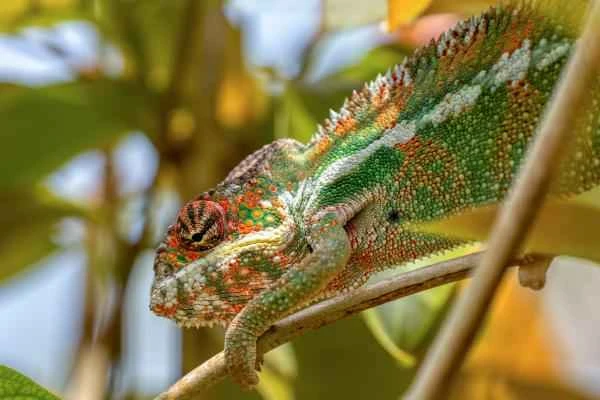
This species is found in Madagascar and exhibits an extremely rich variety of body colors. Different regions display vibrant combinations of blue-green, red and white, deep red, and pink. Reaching up to 50 centimeters in length, it is one of the largest and most colorful chameleons, making it a favorite among chameleon enthusiasts.
6. Nana Chameleon (Brookesia nana)
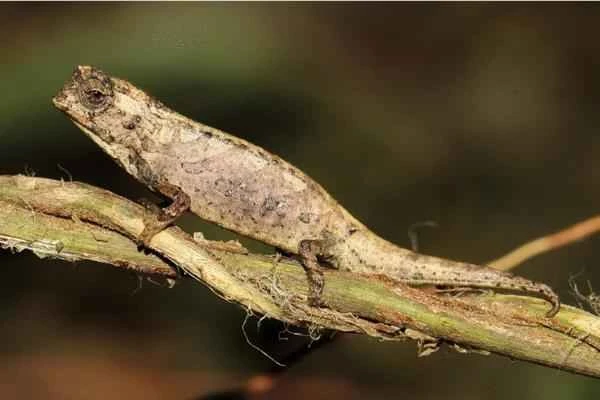
One of the world's smallest chameleons, found only in the rainforests of northern Madagascar. They typically do not exceed 2.5 centimeters in length, with females slightly larger than males. Scientifically described only in 2021, they are reddish-brown in color and live in leaf litter and humus.
7. Tiger Chameleon (Archaius tigris)
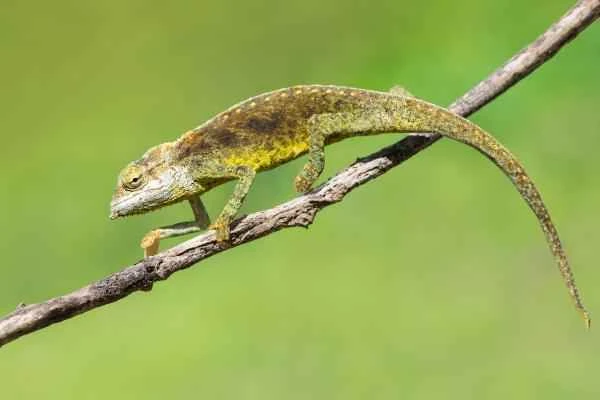
Endemic to the Seychelles Islands, this is the only species in the genus *Archaius*. Reaching up to 16 cm in length, it prefers to inhabit primary and secondary forests, where diverse vegetation provides ample opportunities for camouflage. Its distinctive tiger-stripe pattern makes it highly recognizable.
8. Parsonian Chameleon (Calumma parsonii)
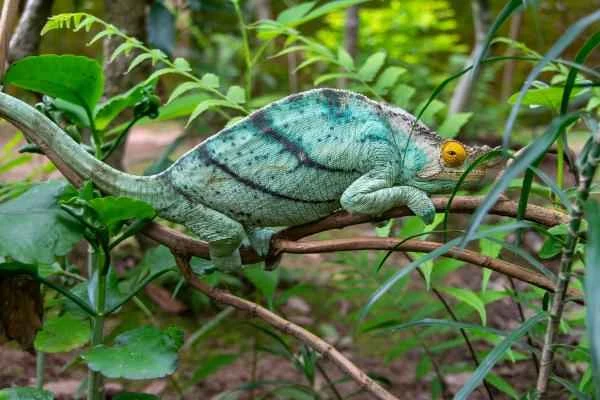
One of the largest and most iconic chameleons in the forests of Madagascar. Reaching up to 80 centimeters in length, it is a massive chameleon and the largest of its kind. Its colors are highly variable, often displaying green, blue, and yellow hues.
9. Bradypodion taeniabronchum (Smith's dwarf chameleon)
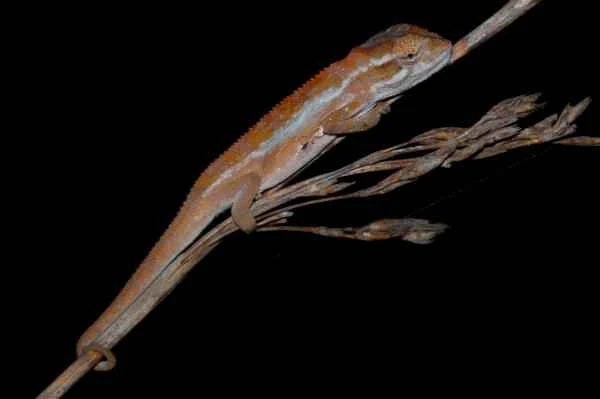
A small chameleon endemic to South Africa, with a relatively short body length. It is endangered due to habitat loss. It is one of the few dwarf chameleons with exceptional color-changing abilities, capable of camouflaging its surroundings with remarkable skill.
Summarize
Chameleons are not only unique in appearance, but also renowned for their color-changing abilities, curled tails, distinctive eyesight, and hunting methods. Protecting chameleon diversity is of great significance for maintaining ecosystems and rare reptile resources.