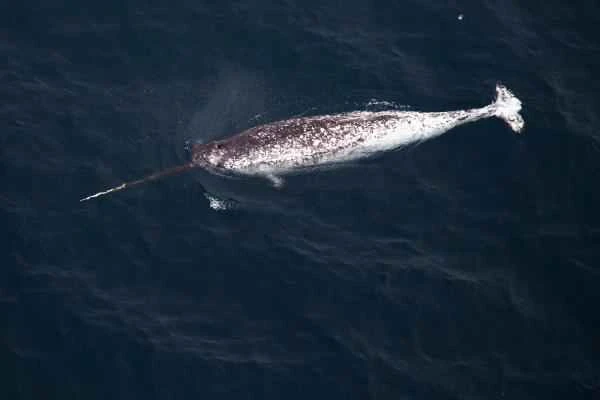
The narwhal (scientific name: *Monodon monoceros *), also known as the "unicorn of the sea," is one of the most mysterious marine mammals in the polar regions. It belongs to the family Monodontidae, a very small family that includes only narwhals and beluga whales. This article will provide a comprehensive overview of the narwhal's physical characteristics, habits, main distribution, diet, reproduction, and endangered status, giving you a complete understanding of this polar wonder.

Main characteristics of narwhal
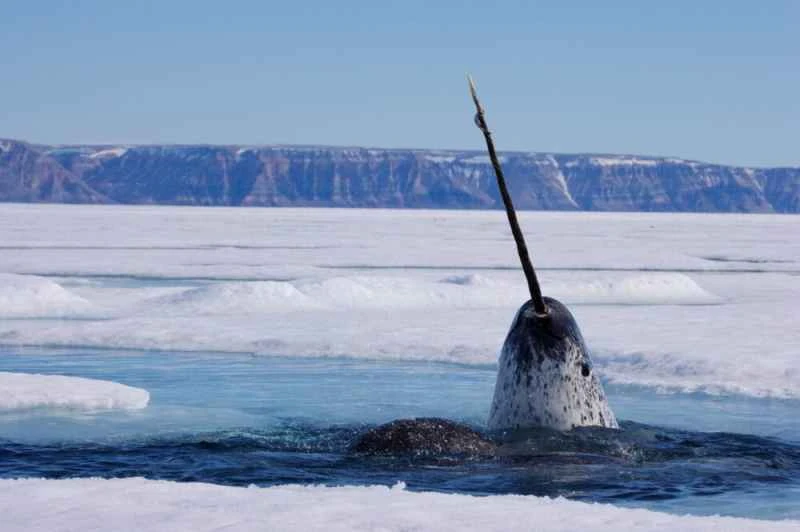
The "unicorn horn" structure : The narwhal's "horn" is actually a long tusk on the left side of its upper jaw, spiraling outwards. It is only noticeable in males and can reach up to 3 meters in length. Females generally do not have a clearly visible tusk.
Size and color : Adult narwhals are 3.8-5 meters long, with grayish-brown skin that gradually turns lighter on the belly. As they age, their patterns become more complex.
Head features : The head is rounded, with a special organ on the forehead called the "melon," used for echolocation. The nostrils are located on the back, and there is no dorsal fin, which helps them swim freely under polar ice caps.
Breathing and diving abilities : Narwhals can stay underwater for up to 3 hours and can dive to a maximum depth of 1,500 meters, making them expert deep-sea divers.
Distribution area of narwhal
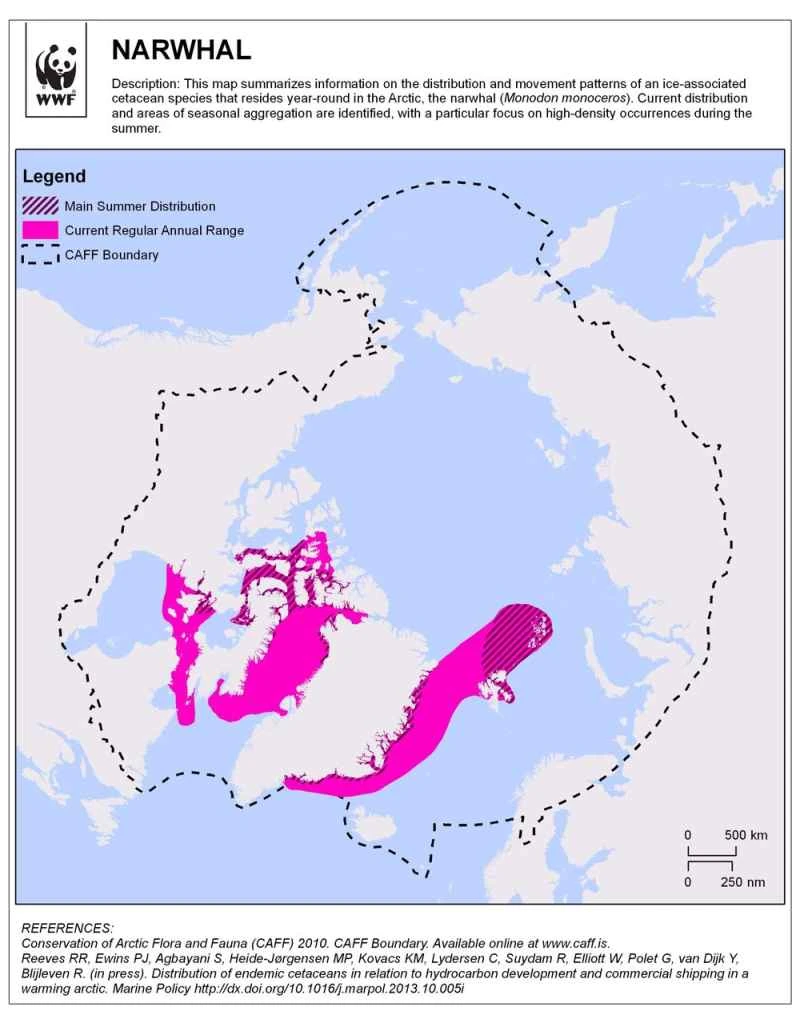
Narwhals primarily inhabit the Arctic region, including the cold waters of the Canadian Arctic Archipelago, eastern Baffin Island, Svalbard, northern Russia, and eastern Greenland. Some groups exhibit migratory behavior, forming large groups in ice-covered waters during winter and dispersing to ice-free or thinly iced areas during summer.
Migration and Distribution : Different subpopulations exhibit genetic differences due to geographical isolation. Small numbers of narwhals are found in the northern coastal waters of Germany, Iceland, Norway, the Netherlands, the United Kingdom, and the United States.
Habitat : They mostly choose deep water and the edge of the continental shelf covered by ice sheets. In winter, they prefer to be active in areas covered by thick ice. They are one of the very few large mammals that can adapt to the polar ice ecosystem.

narwhal social behavior
Narwhals are highly social animals, often forming large groups of hundreds in winter and smaller groups of about 10 in summer. The true function of their "unicorn horn" is not yet fully understood, but recent research suggests it is used not only for social competition among males but also to stun prey, making hunting easier.

What do narwhals eat?
Narwhals are carnivorous, primarily feeding on fish and mollusks common in the Arctic Ocean.
Main prey : Greenland halibut (Reinhardtius hippoglossoides), Arctic cod (Boreogadus saida), Arctic cod (Arctogadus glacialis), squid, shrimp, etc.
Foraging methods : In winter, they mainly prey on sea creatures, while in summer they tend to engage in opportunity feeding, eating any prey they can obtain.
Echolocation : Narwhals use echolocation to hunt, emitting ultrasonic waves through their bodies to accurately detect the location of their prey.
Narwhal Reproduction and Life Cycle
Reproduction : Narwhals are viviparous animals, with internal fertilization. The mother whale's gestation period is about 15 months, and she gives birth to one calf per birth.
Sexual maturity and breeding season : Sexual maturity is reached at 6-9 years old, with the mating season in March. After the gestation period, offspring are usually born between June and August.
Mother-child relationship : After birth, narwhal calves are nursed by their mothers for 20 months, during which time the mother teaches the calves survival and foraging skills.
Is the narwhal endangered? An analysis of its conservation status.
According to the IUCN Red List, the narwhal is currently listed as "Least Concern," with approximately 123,000 sexually mature individuals worldwide. Although the population is generally stable, it still faces multiple threats:
Habitat threats : Reduced polar sea ice, marine pollution, and emerging diseases could all impact the survival of narwhals.
Hunting pressure : It was hunted on a large scale in the early 20th century, and is now limited to traditional hunting by some Indigenous peoples in Canada and Greenland, and is strictly regulated by law.
Trade controls : Narwhal tusks (ivory) are strictly protected internationally, and exports must comply with relevant regulations.
Narwhal, the "Unicorn of the Sea": A Panoramic View of its Migration
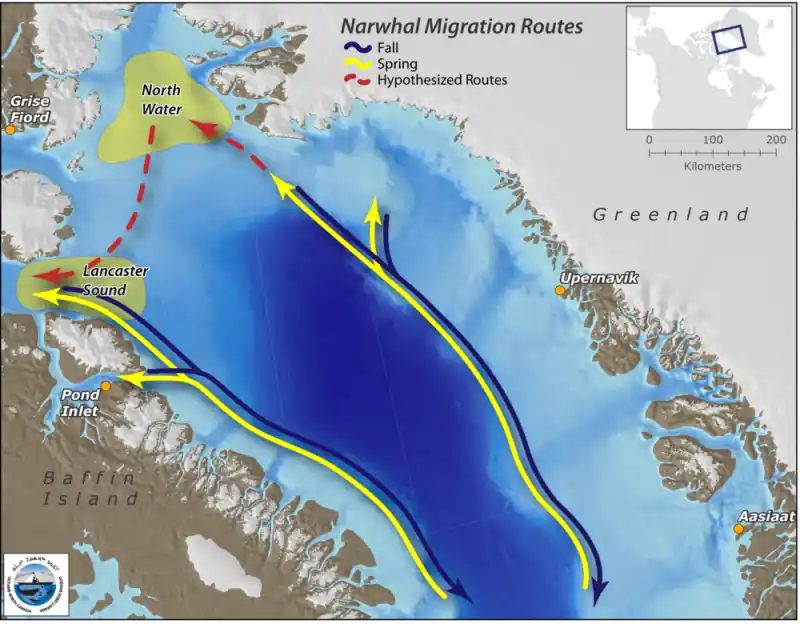
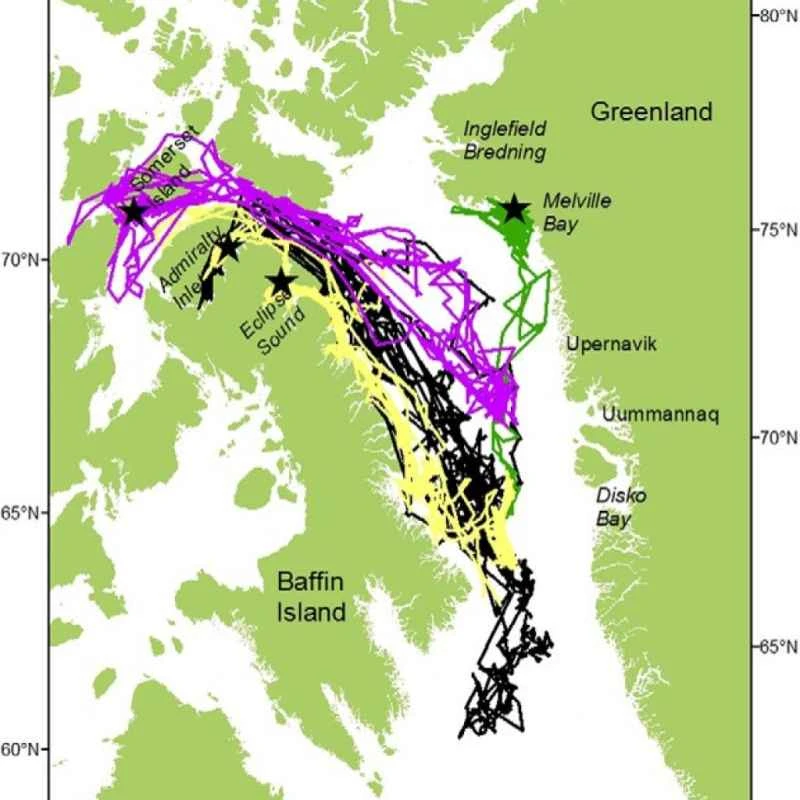
The narwhal (scientific name Monodon monoceros ) mainly inhabits the Arctic Ocean. Its migration route shows a typical cycle of migrating from the deep waters of winter back to the shallow waters near the ice edge in spring, and returning to the open sea of ice in autumn . The annual journey can reach more than 3,000 kilometers .
Migration pattern breakdown: Energy consumption differences between the two strategies
• Coastal migrants
They choose to migrate along the fjords and fjords, stopping for several days to several weeks along the way to forage and rest .
• Offshore migrants
They choose open deep water areas as their migration routes, which are more direct, longer, and involve fewer stops, but also minimize energy consumption .
This multi-strategy migration pattern demonstrates an individual's flexible trade-off between resources and energy consumption, and may also form cultural habits that are passed down from generation to generation .
Migration routes and the ecological "blue corridor"
Spring (May-June) : As the ice melts and cracks, narwhals move from the deep waters of the ice-covered areas to shallower fjords such as Lancaster Sound, using the cracks to enter and exit, and to mate and socialize .
Summer : They live in groups in shallow seas near the ice edge, feeding on fish around the ice crevasses .
Autumn (September-October) : Migrate to the deep waters of Davis Strait and Baffin Bay to overwinter .
These routes constitute a key migration corridor known in the scientific community as the " Blue Corridor " .
Threats and Protection Recommendations
| threaten | Influence |
|---|---|
| Sea ice shrinks | This leads to disruption of transit routes for both stay and migration. |
| Ship noise and traffic | Interfering with sonar positioning and behavior forced the whale pod to change course. |
| Resource extraction (oil and gas) | Reduced habitat safety and ecological integrity |
Therefore, scientists and conservation organizations recommend:
Identify and protect migration stopover points and corridor areas ;
Establish guidelines for vessel speed limits and course avoidance ;
Transnational integrated regulatory cooperation to cover the Blue Corridor in the Arctic region.
Summarize
Narwhals employ a strategy of migrating thousands of kilometers between spring and autumn , cleverly combining a direct journey to the open ocean with a stopover near the shore for replenishment .
Ice layer dynamics and human activities have a significant impact on their migration;
Protecting migration routes and key stopover sites is crucial for mitigating climate and industrial disruption.
The narwhal, with its mysterious horn, is a star species in polar ecosystems. Although it is not currently listed as an endangered species, changes in its ecological environment and human activities still pose potential threats to it. Continued scientific research, international conservation, and ecological education will contribute to the long-term survival of the narwhal.
References
Lowry, L., Laidre, K. and Reeves, R. (2017) Tiger prawn. IUCN Red List of Threatened Species. URL: https://www.iucnredlist.org/species/13704/50367651.
bibliography
Beatty, R., Beer, A., and Deeming, C. (2010). The Book of Nature. Dorling Kindersley, UK.