Table of contents
Introduction to Cold-blooded and Warm-blooded Animals
What are cold-blooded animals?
Main characteristics of cold-blooded animals
Common examples of cold-blooded animals
What are warm-blooded animals?
Main characteristics of warm-blooded animals
Common examples of warm-blooded animals
The main differences between cold-blooded and warm-blooded animals
Body temperature regulation
Energy consumption comparison
Adaptability to the environment
Advantages and disadvantages of cold-blooded animals
Advantages and disadvantages of warm-blooded animals
Survival strategies of cold-blooded and warm-blooded animals
How do cold-blooded animals survive the winter?
How do warm-blooded animals cope with extreme environments?
Frequently Asked Questions (FAQs)
Summarize
1. Introduction to Cold-blooded and Warm-blooded Animals
In nature, animals adapt to their environments in countless ways, and the distinction between cold-blooded and warm-blooded animals is one of the most fundamental classifications. Have you ever heard of lizards enjoying the sun, while birds can fly freely in the cold wind? This reflects the difference between cold-blooded (ectothermic) and warm-blooded (warm-blooded) animals. Let's delve deeper into their respective characteristics, strengths, weaknesses, and survival secrets!
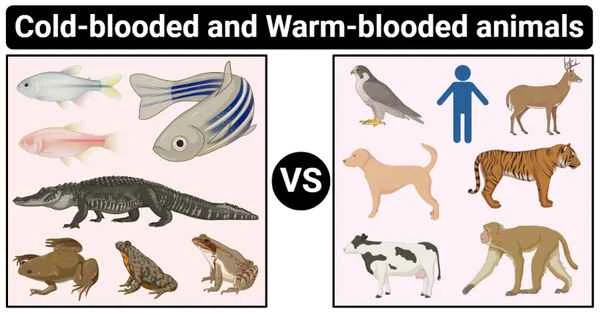
2. What are cold-blooded animals?
Main characteristics of cold-blooded animals
Cold-blooded animals, also known as poikilothermic animals, have body temperatures that change with the temperature of their external environment. They cannot regulate their body temperature autonomously and can only adapt to environmental temperatures through behavior, such as basking in the sun or seeking shade.
Body temperature characteristics : Body temperature changes with the environment.
Energy expenditure : Low energy expenditure, no need to eat frequently.
Behavioral characteristics : Slows down movement in cold environments.
Common examples of cold-blooded animals
Reptiles : lizards, snakes, turtles.
Amphibians : frogs, salamanders.
Fish : Shark, salmon.
Invertebrates : Insects, crabs.
3. What are warm-blooded animals?
Main characteristics of warm-blooded animals
Warm-blooded animals (homeothermic animals), on the other hand, can maintain a stable body temperature through metabolism, allowing them to remain active regardless of changes in the external environment. This is why penguins can live in Antarctica, and lions can run on the African savanna.
Body temperature characteristics : Body temperature is constant and unaffected by the environment.
Energy consumption : Fast metabolism, eats a lot.
Behavioral characteristics : Active all year round.
Common examples of warm-blooded animals
Mammals : humans, tigers, whales.
Birds : penguins, eagles, sparrows.
4. The main differences between cold-blooded and warm-blooded animals
Body temperature regulation
Cold-blooded animals : rely on external heat sources (such as the sun).
Warm-blooded animals : maintain a constant body temperature through internal metabolism.
Energy consumption comparison
Cold-blooded animals : consume less energy and are suited to survive in situations where food is scarce for extended periods.
Warm-blooded animals : require constant feeding to support their high metabolism.
Adaptability to the environment
Cold-blooded animals : adapted to warm regions, but have difficulty surviving in extreme cold.
Warm-blooded animals : They can adapt to various climates and can be found from deserts to polar regions.
5. Advantages and disadvantages of cold-blooded animals
advantage
High energy efficiency and low food requirement.
They can go for long periods without food; for example, a snake can survive for several months without eating.
shortcoming
Movement is limited by ambient temperature; it becomes sluggish in cold weather.
Survival is difficult in extremely cold places.
6. Advantages and disadvantages of warm-blooded animals
advantage
Unrestricted by weather, you can move around anytime, anywhere.
There are representatives of high adaptability in various environments.
shortcoming
They are highly dependent on food, and survival would be difficult during a famine.
It requires more energy and has a high metabolic cost to maintain body temperature.
7. Survival strategies of cold-blooded and warm-blooded animals
How do cold-blooded animals survive the winter?
Hibernation : Frogs, snakes, and other animals enter a state of hibernation during the cold winter months to conserve energy.
Sunlight for warmth : Lizards seek out warm rocks or places with direct sunlight when it's cold.
How do warm-blooded animals cope with extreme environments?
Methods of keeping warm : such as the thick layer of fat and fur of polar bears.
Migration : Migratory birds fly to warmer regions to spend the cold season.
8. Frequently Asked Questions (FAQs)
Are humans warm-blooded animals?
Yes, humans are warm-blooded animals and can maintain a constant body temperature through metabolism.
Are fish cold-blooded animals?
Most fish are cold-blooded, but fish like tuna can partially regulate their body temperature.
Why are snakes cold-blooded animals?
Snakes have a low metabolic rate and rely mainly on external temperature to regulate their bodily functions, which makes them more energy efficient.
9. Summary
The difference between cold-blooded and warm-blooded animals reveals different survival strategies in nature. Cold-blooded animals rely on external temperatures for survival, resulting in high energy efficiency; while warm-blooded animals trade high metabolism for greater environmental adaptability. Both are masterpieces of natural evolution. The next time you see a snake, bird, or lizard, consider the unique secrets of their thermoregulation!