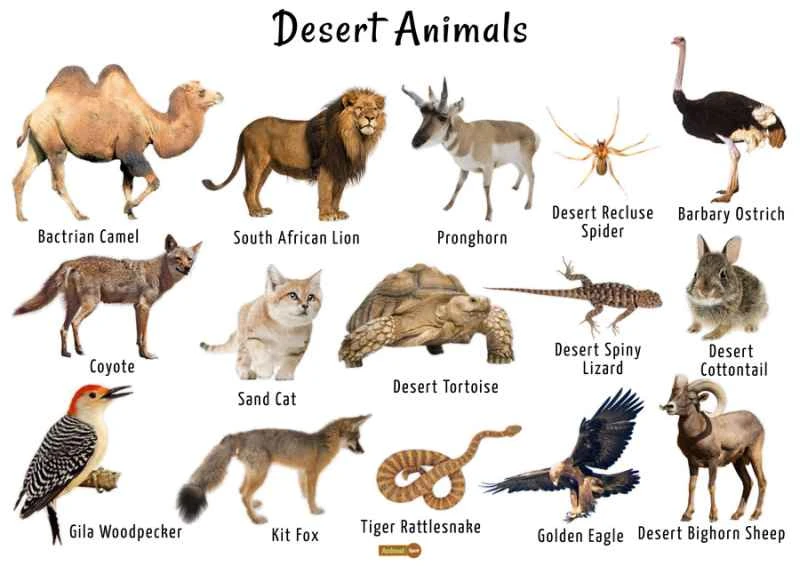
Deserts, with their vast and arid landscapes, are among the harshest environments on Earth. Despite extreme temperatures, scarce water resources, and sparse vegetation, a wide variety of animals have adapted to thrive in these seemingly inhospitable regions. In this article, we will explore the animals that live in the desert , their unique adaptations, and how they survive in one of the most challenging ecosystems on Earth.
Introduction to Desert Ecosystems
Understanding the desert environment
Before delving into the animals that inhabit deserts , understanding desert ecosystems is crucial. Deserts are characterized by low rainfall (less than 250 mm per year), high daytime temperatures, and low nighttime temperatures. There are two main types of deserts:
Hot deserts : These deserts, such as the Sahara and Sonoran, experience extremely high temperatures and arid environments.
Cold deserts : These deserts, such as the Gobi Desert and the Great Basin Desert, have cold winters with ice and snow, but annual rainfall remains very low.
Life is scarce in both types of deserts, but the animals that inhabit these areas exhibit fascinating survival strategies.
Which animals live in the desert?
Adapting to desert life
Animals living in the desert have adapted to conserve water, regulate their body temperature, and find food in environments with little moisture. The following animals, renowned for their incredible survival skills, can be found in a variety of desert ecosystems around the world.
1. Camel
Camels are perhaps the most iconic desert animals, renowned for their remarkable ability to survive in hot, dry environments. So, what animals live in the desert ? Camels are a prime example.
Adaptability : Camels can go for days without water, and their humps can store up to 40 gallons of water. Their thick fur also protects them from the sun's heat while keeping them warm on cold desert nights.
Diet : Camels are herbivores that feed on desert vegetation, which is usually sparse and thorny.
Behavior : They have large, fleshy feet that allow them to walk easily on sand without sinking.
2. Fennec fox
The fennec fox is a small desert mammal native to the Sahara Desert. It is a prime example of an animal adapted to desert life. So, what animals live in the desert ? The fennec fox stands out.
Physical characteristics : Fennec foxes have large ears, which help dissipate heat and keep them cool. Their light-colored fur reflects the blazing desert sun.
Behavior : They are nocturnal animals that forage for food at night when temperatures are low.
Diet : They feed on small mammals, insects, and plants, relying on the limited resources in the desert.
3. Desert Tortoise
Desert tortoises are typical desert reptiles, adapted to living in arid environments such as the Mojave and Sonoran deserts.
Adaptations : They have thick, tough shells to protect themselves from predators and extreme temperatures. Their burrows provide them with shelter from the desert heat.
Diet : They mainly feed on grass, weeds and cacti, which provide them with water, enabling them to survive for long periods without drinking water.
Lifespan : Desert tortoises can live up to 80 years, making them one of the longest-living animals in the desert.
4. Rattlesnake
One of the most fascinating reptiles is the rattlesnake, which lives in the deserts of southwestern North America.
Adaptability : Rattlesnakes have a unique way of moving, allowing them to move laterally to minimize contact with the hot desert sand.
Diet : They prey on small mammals, lizards, and birds, using venom to immobilize their prey.
Behavior : Rattlesnakes are most active at night to avoid the intense daytime heat of the desert.
5. Kangaroo
Kangaroos are small, nocturnal rodents perfectly suited to desert life. So, what animals live in the desert ? Kangaroos are a perfect example.
Adaptability : Kangaroos have specialized kidneys that allow them to conserve water and survive for months without drinking water.
Diet : They mainly eat seeds and plants, which provide them with all the water they need.
Behavior : They spend most of their time in burrows to stay cool and avoid being harmed by predators.
6. Jumping Mouse
The jerboa is another remarkable desert animal, known for its powerful hind legs, which enable it to leap great distances in search of food.
Adaptations : Jerboas have large feet that help them leap over sand dunes without sinking. Their long tails help them maintain balance.
Diet : They feed on seeds, plants, and insects found in the desert.
Behavior : Like many desert animals, jerboas are nocturnal, avoiding the heat of the day.
7. Desert Hedgehog
Desert hedgehogs live in the deserts of North Africa and the Middle East. They are small, spiny mammals that have adapted to life in arid regions.
Adaptations : Hedgehogs' spines protect them from predators. They are also nocturnal, coming out at night to forage for insects, plants, and small animals.
Diet : Insects and small invertebrates are their main food source, providing them with the necessary water.
Behavior : Desert hedgehogs are solitary animals that spend most of their lives in burrows to escape the heat.
8. Scorpion
Scorpions are perhaps one of the most famous desert creatures, known for their venomous stingers and bodies covered by a tough exoskeleton.
Adaptation : Scorpions are able to survive for months without food, and their exoskeleton helps them retain moisture.
Diet : They mainly prey on insects, small reptiles, and even other scorpions.
Behavior : Scorpions are nocturnal animals, hunting at night to avoid the heat of the day.
9. Horned Lizard
Horned lizards are a group of reptiles that have evolved to blend into their desert environment, making them difficult for predators to spot.
Adaptations : These lizards have flat bodies and rough, spiny skin, which helps them blend into the desert environment. Some species can also puff up their bodies to appear larger and more intimidating.
Diet : Horned lizards feed on ants and other insects in the desert.
Behavior : They rely on camouflage to avoid predators and remain still when threatened.
Why do animals live in the desert?
The question of which animals live in the desert is closely related to the unique adaptations that desert animals have developed over millions of years. These adaptations allow them to thrive in environments where food and water are scarce and temperatures fluctuate drastically. Some of the main reasons why animals live in the desert include:
1. Conserve water
Many desert animals, such as camels and kangaroos, have evolved mechanisms to conserve water. Some animals, like desert tortoises, can go for long periods without drinking water, while others, such as fennec foxes and rattlesnakes, are nocturnal and can avoid the high temperatures of the day.
2. Temperature regulation
Desert animals often possess physical adaptations that help them regulate their body temperature. For example, camels can withstand extreme heat thanks to their thick fur and the fat stored in their humps. Other animals, such as horned lizards, use camouflage to avoid heat and predators.
3. Food supply
Despite the sparse vegetation in the desert, many animals have adapted to feeding on existing resources. For example, desert hedgehogs feed on insects, while desert tortoises feed on cacti. Some animals, such as jerboas and fennec foxes, feed on seeds, plants, and small animals.
4. Protect yourself from predators
Desert animals also rely on physical defenses, such as camouflage, stings, or venom, to protect themselves from predators. Horned lizards blend into their environment, while scorpions use their stingers for protection.
in conclusion
In exploring the animals that inhabit the desert , we discovered a diverse array of species that have evolved remarkable adaptations to survive in some of the harshest environments on Earth. From camels and fennec foxes to scorpions and desert tortoises, these animals have evolved unique methods for conserving water, regulating body temperature, and finding food. Their ability to survive in such extreme environments demonstrates the resilience of life on Earth.
Whether you're fascinated by the camouflage of desert creatures or the nocturnal behavior of desert mammals, it's clear that life in the desert is full of wonders and survival strategies that truly set these animals apart.