Spiders were anciently called "蝳蝥" (pronounced like "du yu"), and in Cantonese they are called "蠄蟧". The order Araneae is the most numerous order within the class Arachnida, comprising 132 families, 4325 genera, and 51164 species. They are widely distributed throughout the world, with diverse species and habits. Some are tiny and inconspicuous, while others are enormous and highly venomous. Most known spiders are primarily carnivorous predators, using venom to protect themselves or kill prey. However, only about 200 species bite humans, potentially causing health problems.

Internal anatomical diagram of a female double-lung spider
Spiders can be broadly divided into web-building spiders and hunting spiders based on their lifestyle and hunting methods. The most prominent characteristic of web-building spiders is their web-building behavior, which is their primary means of predation. Hunting spiders, on the other hand, do not build webs but instead roam around or camouflage themselves to hunt prey. Spiders are not typically eaten by humans, and many even avoid them. Most spiders are harmless and, as beneficial insects, prey on and damage crop pests in farmland. Scientists are currently researching the medical uses of spider venom and its potential as an insecticide. Today, we'll introduce you to the world's ten most venomous spiders. Let's learn about them together.
1. Sydney funnel-web spider
The Sydney funnel-web spider, belonging to the family Hexavaridae within the superfamily Hexavaroidea, is found only within a 100-kilometer radius of Sydney and is one of the world's most venomous spiders. Its venom is enough to kill 5 to 8 people; a bite can result in death within 15 minutes. Large funnel-web spiders can reach the size of a hand, with fangs up to 1 centimeter long, capable of easily piercing a human toenail. Although male funnel-web spiders are much smaller than females, their venom is more than five times more potent.
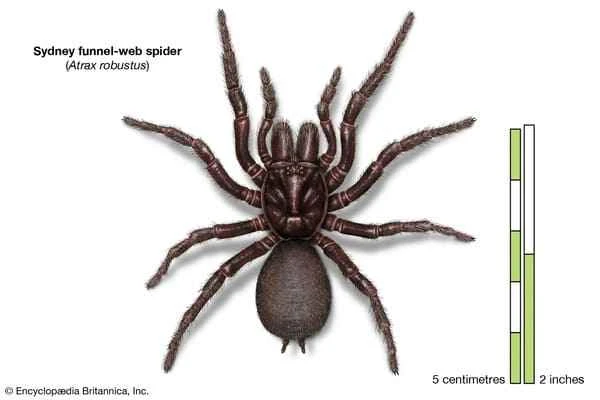
The Sydney funnel-web spider is a terrestrial spider that prefers damp environments. They build tubular nests with interconnected silk threads, and the entrance to the nest is typically woven into a funnel-shaped web. When animals step onto the web at the entrance, the Sydney funnel-web spider captures them and injects venom. Females usually remain in their nests, and their diet includes insects, lizards, or frogs. Males generally only emerge during the warmer seasons to find suitable females for mating. Therefore, humans are more likely to encounter male Sydney funnel-web spiders.
2. Brazilian wandering spider
The Brazilian wandering spider, also known as the banana spider, is so named because it is often found hiding in banana trees. It measures 5-8 cm in length and is mainly distributed in Brazil, Uruguay, Paraguay, and Argentina in Central and South America. Its venom is neurotoxic, making it one of the most venomous spiders in the world; its venom is enough to kill a mouse. It can cause loss of nerve control, difficulty breathing, and in severe cases, death. When threatened, this spider will perform a dance-like warning. It has a maximum body length of about 5 cm, with its legs reaching up to 15 cm in total length.
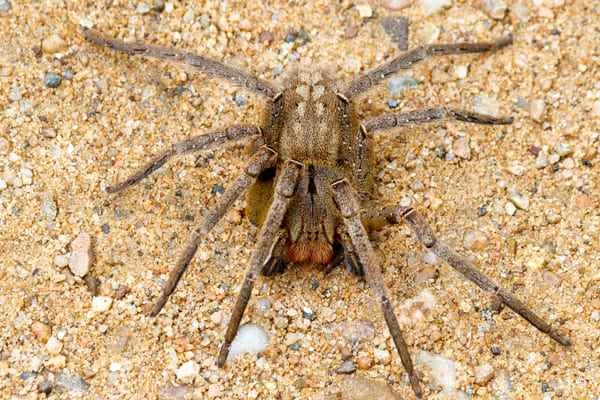
The venom secreted from the 10-millimeter venom glands of the Brazilian wandering spider is enough to kill 225 mice. If a human is bitten, symptoms may include irregular heartbeat, high blood pressure, and vomiting. Without timely treatment, it can be fatal. Since 1926, 14 people have died from bites by this spider. It is considered one of the world's most venomous and deadliest spiders, second only to the Sydney funnel-web spider, and was even awarded the title of "most venomous spider" by the Guinness World Records in 2007.
3. Six-eyed Sand Spider
The six-eyed sand spider is a medium-sized spider, measuring approximately 8 to 15 millimeters in body length and up to 50 millimeters in leg length. It has six eyes arranged in three groups of two (called "binary" eyes). In appearance, they resemble crab spiders and other members of the genus *Crabtra*. Six-eyed sand spiders inhabit the desert regions of South Africa and can survive for extended periods without food or water. Some can live up to fifteen years, making them among the longest-lived spiders, second only to trapdoor spiders and wolf spiders. Many of these spiders live to be twenty to thirty years old. The oldest recorded spider is spider number 16, a trapdoor spider that was killed by a parasitic wasp at the age of forty-three.

The venom of the six-eyed sand spider is considered one of the deadliest in the world. Experiments have shown that its bite can kill rabbits within 5 to 12 hours due to the toxins. Toxicological studies have demonstrated that its venom has a powerful hemolytic effect, potentially causing extremely serious harm to humans. Once the venom enters the bloodstream, it can cause blood vessel rupture, leading to organ failure. As of 2018, there is no available antivenom for its venom; therefore, a bite can result in amputation or death.
4. Black Widow Spider
The black widow spider is a spider with a potent neurotoxin. A bite to a human can cause intense muscle pain. It gets its name from its habit of eating its mate after mating. Its scientific name is *Sphaeromorpha scabra*, belonging to the family Globosaridae and the genus *Sphaeromorpha*. Its venom is extremely toxic, making it one of the world's most notorious venomous spiders. Abroad, black widow spiders are mainly distributed in European countries along the Mediterranean coast, and there have been numerous reports of injuries and even deaths to humans and livestock. In China, their distribution is mainly concentrated in Xinjiang and Yunnan provinces. In recent years, with the expansion of human settlements, there have been several incidents of people and livestock being bitten or even killed by black widow spiders in China.
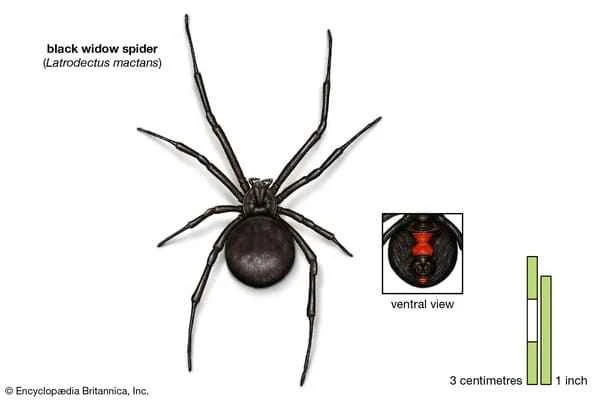
Despite its potent venom, the injection dose is very small, and deaths caused by widow spider bites are extremely rare. Only 63 cases were reported in the United States between 1950 and 1959. Black widow spider venom promotes the release of the neurotransmitter acetylcholine. Acetylcholine acts on muscles, causing them to contract. Generally, black widow spider venom poses a greater threat to children and the vulnerable.
5. Brown Recluse Spider
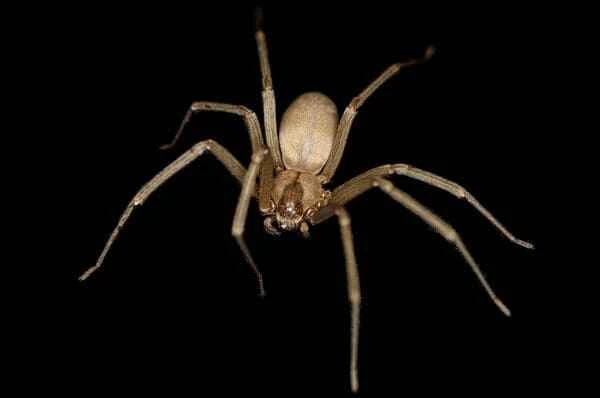
The brown recluse spider, also known as the brown fiddler, violin spider, or the reclusive brown spider (though the name "violin spider" can be used for other members of the same genus), belongs to the genus *Pteranophora* and is a well-known venomous spider found in southern North America. They typically range in length from 6 to 20 millimeters, though some individuals can be larger. This spider's venom is highly potent; bites quickly cause symptoms such as erythema, ulceration, and nausea, with children experiencing particularly severe reactions. In 2014, a five-year-old American boy reportedly died within a day of being bitten.
6. Mouse spider
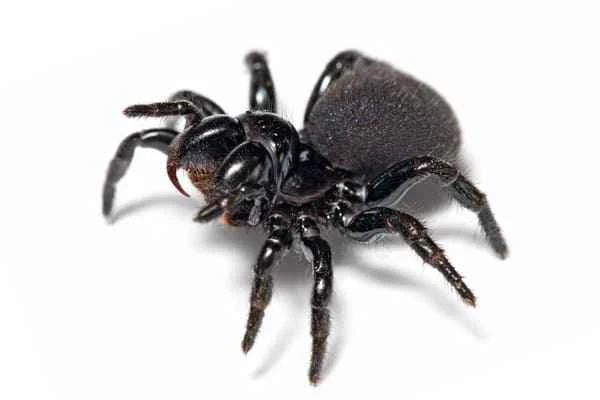
Mouse spiders belong to the class Arachnida, suborder Orthognathia, and genus *M. tussulena* within the phylum Arthropoda. Eleven subspecies are currently known, ten of which are mainly distributed in Australia, with only one species, *M. tussulena*, found in Chile. Previously, this spider was thought to live in burrows like a mouse, hence its name, but this has since been discovered. Unlike the Sydney funnel-web spider, mouse spiders are not highly aggressive and do not even use venom when attacking, making them pose no threat to humans.
7. Redback Spider
The redback spider, also known as the red-backed widow spider, is mainly found in Australia. This spider is between 2 and 8 millimeters long, with a distinctive red stripe along its back. It is one of the most venomous spiders, extremely aggressive; the venom of a single redback spider can kill three adults. Once bitten, the wound will begin to burn and become painful within five minutes, and without antivenom treatment, death can occur within hours. However, since 1955, only one case of death due to a redback spider bite has been recorded, occurring in April 2016.
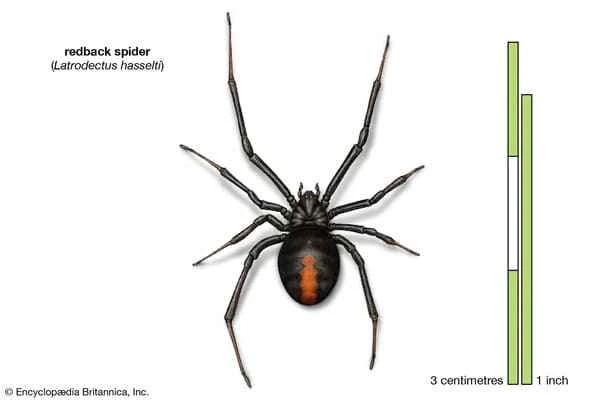
Redback spiders prefer to inhabit dark, dry places. After mating, the female redback spider injects digestive fluids into the male's body and then eats him. Studies have found that female redback spiders live for 2-3 years, while males only live for 6-7 months, and 83% of male redback spiders die before mating.
8. Indian Rainforest Spider

The Indian Ornate Rainforest Spider is an arboreal tarantula native to India. It is predominantly gray and white. Arboreal spiders are known for their aggressive nature, typically weaving webs and dwelling in tree cavities. These spiders are agile, highly aggressive, and often bite without warning. Their venom is also more potent than that of common tarantulas, making them unsuitable for handling or petting. There have been cases of owners experiencing severe consequences after being bitten, including intense pain lasting for several days and convulsions in the bitten arm, possibly indicating the presence of neurotoxins.
9. Jingzhao's hairy spider
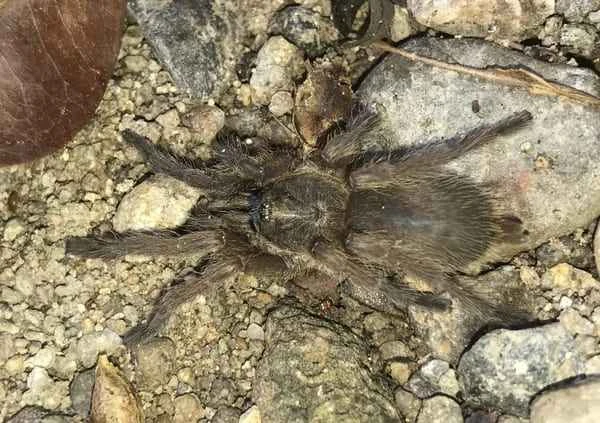
The Jingzhao takin spider is a burrowing tarantula endemic to my country, a new species discovered in recent years by Zhao Jingzhao of Hubei University. Its morphology is very similar to the Hainan tarantula and the tiger tarantula, but it is smaller than the Hainan tarantula, with a yellowish-brown body color and no tiger stripes on the dorsal abdomen. Its body length is approximately 55 to 61 millimeters. This spider is aggressive and highly venomous. In recent years, domestic scientists have begun to study the pharmaceutical potential of this species' venom, and it is reported that large-scale breeding farms in Guangxi are already raising it for research purposes in order to extract the toxin.
10. Yellow-sac spider
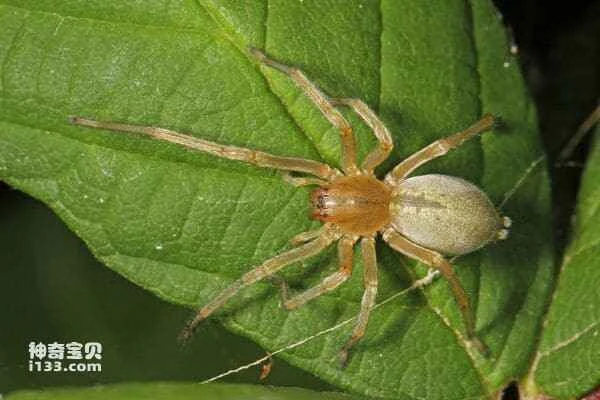
The yellow-sac spider is a venomous spider that is typically light-colored, with an abdomen ranging from yellow to light brown. Both males and females range in size from 5 to 10 mm. They are unique among common house spiders, and despite their relatively mild venom, yellow-sac spiders rarely approach humans and bite. One of the dangers of a yellow-sac spider bite is its close association with methicillin-resistant Staphylococcus aureus (MRSA) infection, which can be very serious and lead to osteomyelitis or tissue necrosis. However, the degree of venom from the yellow-sac spider remains somewhat controversial.
The list of the world's top ten most venomous spiders was compiled by searching relevant online platforms, collecting information on highly venomous spiders worldwide, and taking into account their notoriety and influence. Any questions, comments, criticisms, and corrections are welcome.