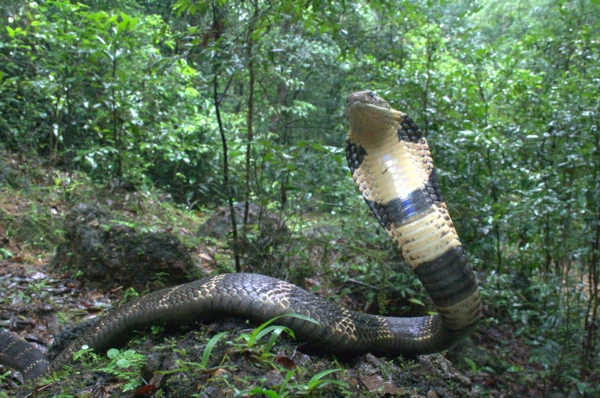
Pythons are a type of non-venomous snake native to Africa, Asia, and Australia, with 26 known species belonging to 8 genera. Their Latin name comes from the giant python of Greek mythology. Pythons are kept as pets in many countries around the world. Although their teeth are not venomous, their large size, capable of swallowing medium to large animals (such as pigs or sheep), poses a certain degree of danger to humans. Generally, keeping them as pets is not permitted without relevant experience. The following will introduce a ranking of the world's most famous pythons, allowing you to learn about common python species.
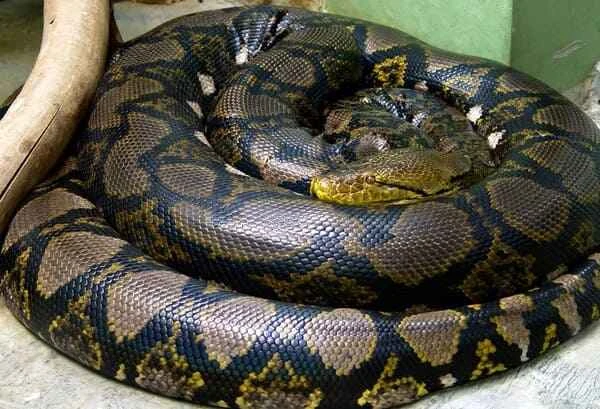
1. Reticulated python
The reticulated python gets its name from its eyes extending to the corners of its mouth, its grayish-brown or yellowish-brown back, and its complex diamond-shaped reticulated patterns of dark brown, yellow, or light gray. Also known as the king python or net python, it is a non-venomous large python belonging to the order Squamata, suborder Serpentes, and genus Python. It is considered the second largest snake in the world after the Amazonian anaconda, typically measuring 8-9 meters in length, with some reaching up to 12 meters. With its slender body, incredibly powerful constricting ability, and strong aggressive nature, it is a fearsome predator in the tropical rainforests of Southeast Asia.
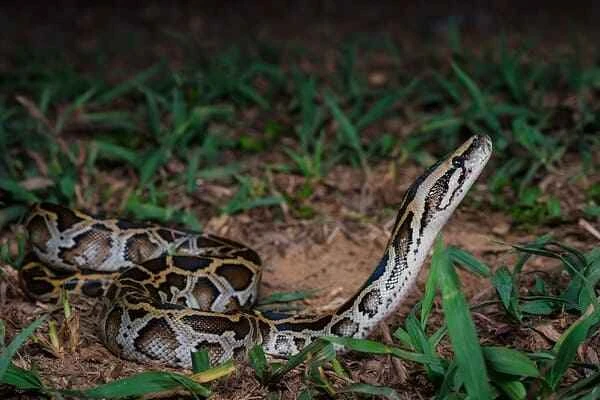
2. Burmese python
The Burmese python (scientific name: *Python bivittatus*), also known as the Burmese rock python, southern snake, lyre snake, or double-banded boa, is a subspecies of the Asian rock python belonging to the genus *Python* in the family Pythonidae. It is one of the six largest snake species in the world and is considered the second largest snake in Asia. According to the Guinness World Records, the longest Burmese python reached 9.75 meters, but most individuals are under five meters long and can weigh up to 91 kilograms. Native to Southeast Asia, the Burmese python primarily inhabits tropical rainforests. They are often found near water sources and sometimes also active in trees.
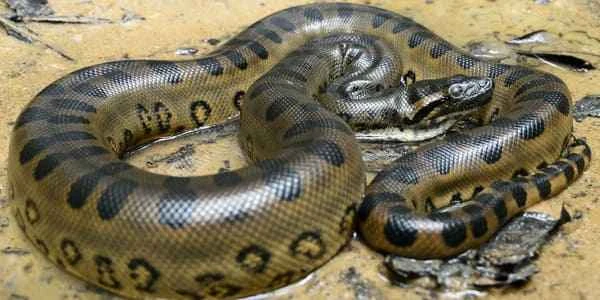
3. Water python
Anacondas, also known as green anacondas or green slugs, are among the largest known snakes. Adult anacondas typically range in length from 5 to 10 meters and can weigh up to 220 kilograms. They habitually inhabit rivers and can remain submerged for extended periods, sometimes only surfacing to breathe. Anacondas primarily prey on terrestrial animals, such as mammals and birds; in some areas, they even prey on alligators. Anacondas are ovoviviparous and also engage in aestivation, possibly related to the drying out of their habitat. They sometimes bury themselves in mud to reduce water loss through evaporation.
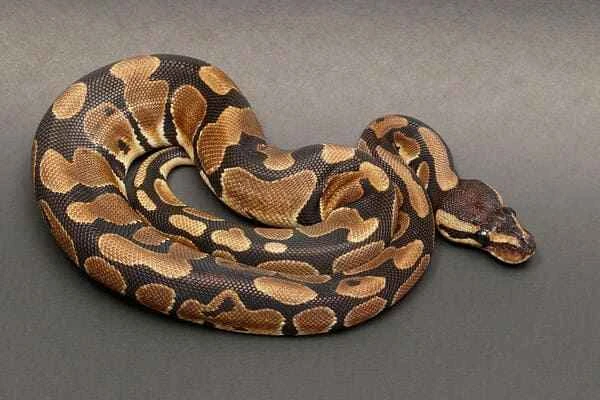
4. Ball Python
Ball pythons have different names in different countries. In Europe, they are called "royal pythons," while in the United States they are simply called "ball pythons." This name comes from the fact that when ball pythons are stressed or threatened, they curl their bodies into a tight ball, hiding their heads in the center. Similar to other pythons, ball pythons are gentle in nature, of medium size, and have beautiful markings. This docile and timid snake is a common choice for pet pythons. Ball pythons are non-venomous snakes, and their wild habitats include grasslands, forests, and farmlands. They feed on small mammals.
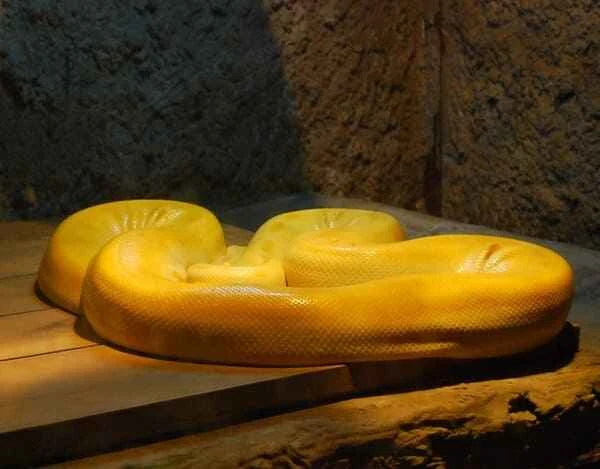
5. Golden Python
The golden python is a species of python belonging to the genus *Boracea* in the family Pythonidae of the phylum Chordata. It is a Class I protected animal in China. It is an albino mutant of the Burmese python, and a very rare variant. The golden python is non-venomous, with a golden-yellow body and irregular white markings. Adult individuals can reach approximately 7 meters in length. In the wild, if it has the opportunity to mate with another golden python, it will pass on its unique genes to its offspring. However, this is extremely rare, making the golden python very precious. It is mainly distributed in India, Sri Lanka, Myanmar, and northern Thailand.
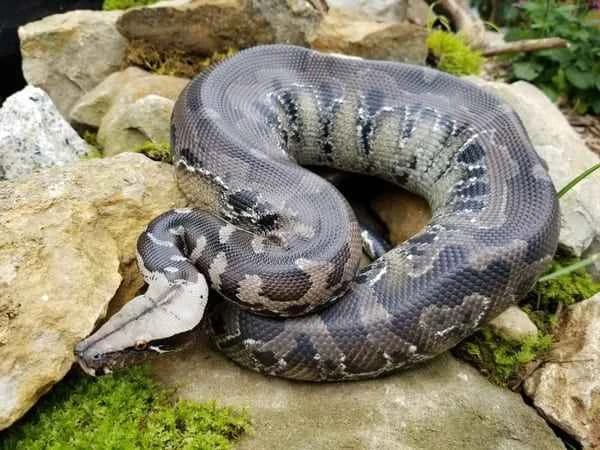
6. Blood python
The blood python (scientific name: *Python curtus*) is a non-venomous snake belonging to the genus *Python* in the family Pythonidae. It is mainly distributed in Southeast Asia and currently has three subspecies. This python is considered a small to medium-sized python, generally not exceeding two meters in length. Due to differences in their origin, different species of blood pythons exhibit some variations in body patterns and colors. For example, blood pythons from Borneo are primarily black, while those from the Malay Peninsula are predominantly reddish-brown. In their native habitats, most blood pythons are used as raw materials for leather goods; however, due to the development of the pet market, some exceptional individuals are selected as pets.
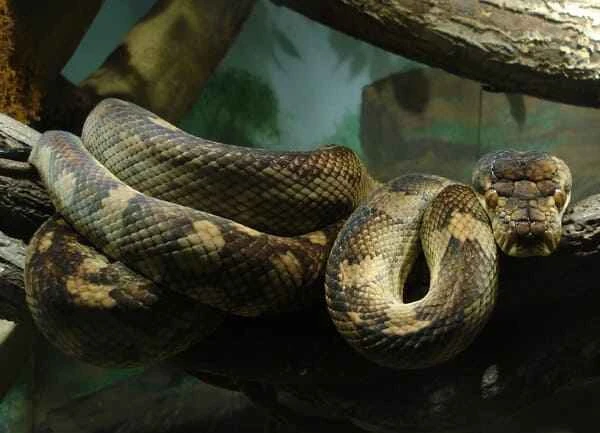
7. Amethyst Python
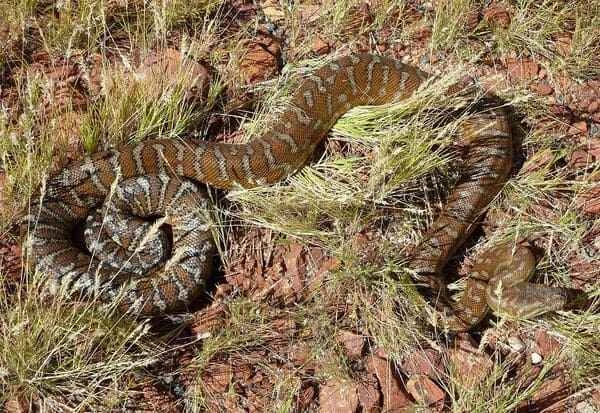
The amethyst python is Australia's largest snake, known for hunting large mammals such as kangaroos. Resembling a massive carpet python, it typically ranges in length from 3.5 to 5 meters, with some reaching up to 8.5 meters. This snake primarily inhabits shady areas of rainforests, bushlands, and exposed rocks. Its prey includes bats, opossums, rodents, wallabies, kangaroos, freshwater crocodiles, and some birds. When hunting, the amethyst python suffocates its prey by constricting and compressing it. It is mainly found in North Queensland, Australia. While not venomous, its enormous size can pose a threat to children.
8. Carpet python
The carpet python gets its name from its distinctive carpet-like markings. It is one of the most common species in the genus *Morelia*, found in Australia, New Guinea, and parts of Indonesia. This snake is divided into six subspecies. Carpet pythons range in length from 120 to 250 centimeters, with the longest recorded at 4 meters. Their body color varies depending on geographical environment, but they typically have a yellow or light brown base with large dark brown markings. Except for the mouth, their scales are relatively small, and heat receptors are located on the rostral scales, in front of the upper labial scales, and behind the lower labial scales.
9. Mexican Rose Python
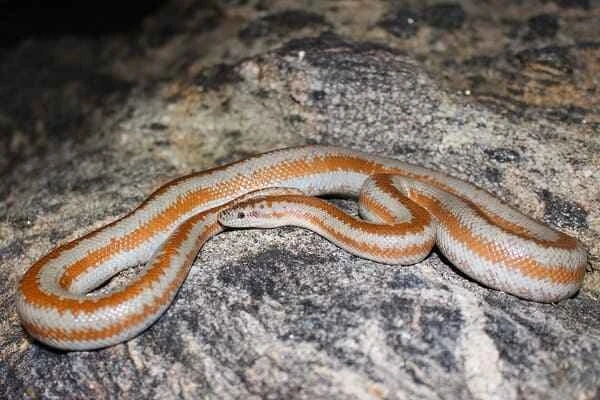
The Mexican rose python is a robust python with a narrow head and a blunt tail. Its body is light gray and pale yellow, covered with broad, dark brown stripes that extend from its head to its tail. These stripes may be very defined or rather coarse. The Mexican rose python is mainly distributed in northwestern Mexico, is an adept climber, and is commonly found in shrublands and semi-desert areas. It feeds on small birds and mammals.
10. Asian Rock Python
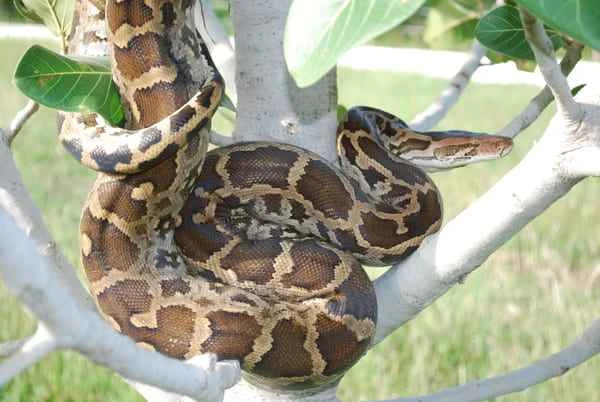
The Asian rock python (Python molurus), also known as the Indian python or black-tailed python, is a non-venomous snake belonging to the genus Python in the family Pythonidae. It is mainly distributed in South Asia and is one of the largest snakes in the region. In 2009, the subspecies Burmese python was recognized as a separate species. Adult Asian rock pythons can reach an average length of 4 meters and weigh approximately 30-60 kilograms or more, with a body girth unmatched by other snakes. The longest recorded Indian python is 5.85 meters (recorded by Cooch-Behar in West Bengal, India). The Indian python has smooth, glossy scales, a relatively flat head, and a broad, upturned snout. Its eyes are small with straight pupils and distinct golden spots on the iris.