Lizards, also known as "four-legged snakes" or "snake's aunt," are a collective term for a large group of squamomorphs. They are distributed worldwide, with approximately 7,000 known species, ranging in size from geckos a few centimeters long to Komodo dragons three meters long. Among lizard species, some are particularly enormous. Here we present the ten largest lizards in the world: Komodo dragon, water monitor, Sasser's monitor, spotted monitor, magnificent monitor, Nile monitor, Goth's monitor, white-throated monitor, Timothy monitor, and Bengal monitor. By learning about these giant lizards, you will gain a deeper understanding of their immense size.
Two male jaguars fighting
1. Komodo dragon (68-91 kg)
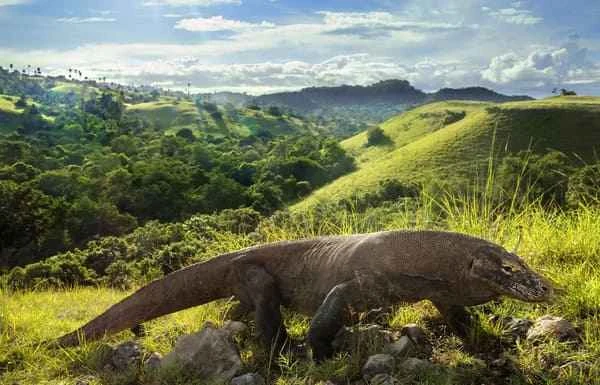
The Komodo dragon, also known as the Komodo monitor lizard, is one of the largest known lizard species, averaging 2-3 meters in length in the wild. Males weigh an average of 79-91 kg, while females weigh 68-73 kg. The longest Komodo dragons have reached 3.13 meters in length and weigh up to 166 kg (including undigested food). In captivity, they are typically heavier than their wild counterparts. These monitor lizards have tails and limbs almost as long as their bodies, with limbs nearly as thick as an adult's arm, and heads the size of a volleyball.
Komodo dragons are extremely aggressive; adults will prey on young members of their own species and sometimes even attack other adults. They are incredibly fast and will occasionally attack humans.
2. Water monitor lizard (30 kg)
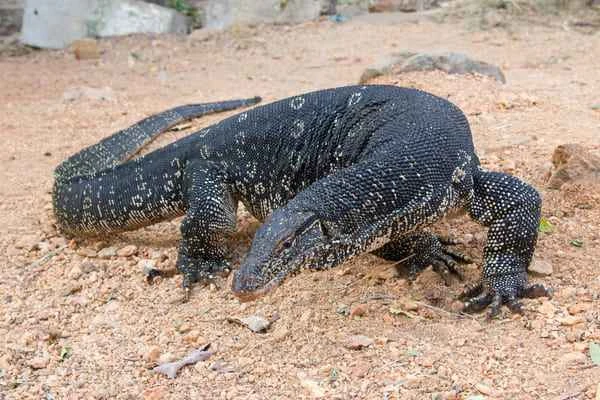
The water monitor lizard, also known as the five-clawed golden dragon or water gecko, is a Class I protected wild animal in China. Among lizard species in China, the water monitor lizard is the largest, and it is the second largest lizard in the world after the Komodo dragon. It can exceed 2 meters in length, with a record of 2.7 meters in Malaysia, and can weigh up to 30 kilograms.
Despite their impressive size, water monitor lizards can grow up to 2 meters long. They are remarkably docile towards humans, especially children, and exhibit absolutely no aggression. To date, there has never been a recorded instance worldwide of a water monitor lizard causing harm to humans, whether wild animals or domestic pets.
3. Sasser's monitor lizard (30 kg)
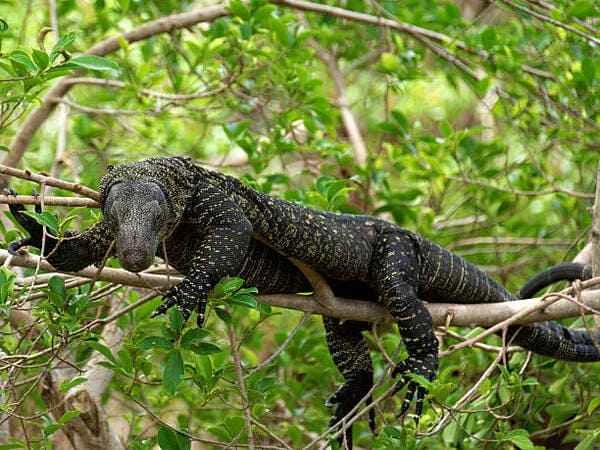
The Sarcopter's monitor lizard, also known as the crocodile monitor lizard, is considered one of the longest lizards in the world, averaging about 2.5 meters in length. Its tail is approximately twice the length of its torso, and it can weigh up to 30 kilograms. This monitor lizard is adept at climbing rocks and trees, but its bite force and strength are relatively weak compared to other monitor lizards. Despite its considerable size, the Sarcopter's monitor lizard is one of the most timid of the monitor lizards, typically staying in trees or rock crevices.
Rumors about the Saarsevier monitor lizard are widespread, with some claiming they can grow to 5-6 meters long, but this is completely unfounded. In fact, there are two Guinness World Records for the longest Saarsevier monitor lizard, one measuring 2.8 meters and the other 2.65 meters.
4. Spotted Monitor Lizard (20 kg)
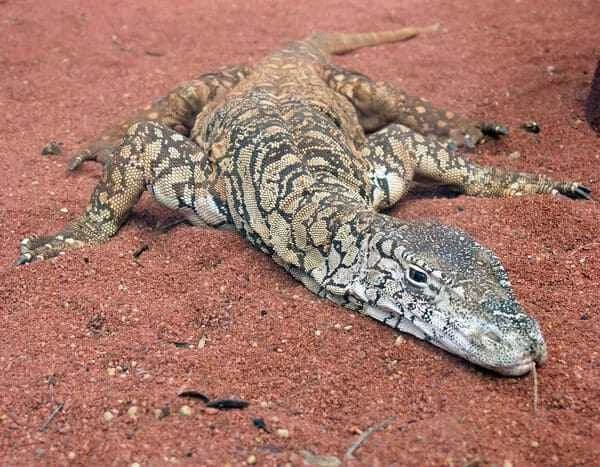
The Ophthalmos monitor is a top predator in the Australian desert, primarily found in the arid savannahs of Queensland and other parts of Australia. This monitor can grow up to 2.5 meters long and weigh up to 25 kilograms, with an average length of 2 meters and a weight of about 20 kilograms. Although relatively short in stature, their weight and build surpass that of the Komodo dragon, but compared to the Komodo dragon or the Sasser's monitor, the Ophthalmos monitor appears more slender.
The spotted monitor lizard is very rare in Australia and sometimes even avoids humans. They are extremely fast runners, capable of running quickly using all four limbs or just their hind legs.
5. Magnificent Monitor Lizard (15-20 kg)
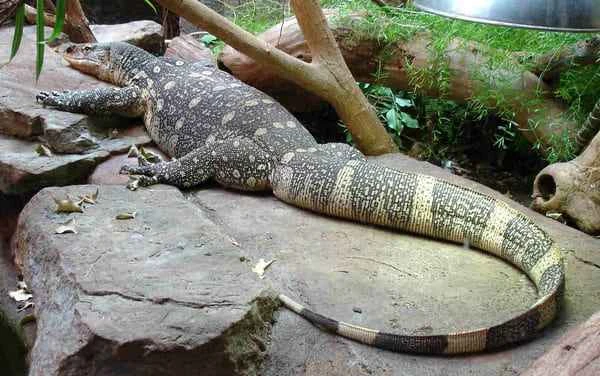
The magnificent monitor lizard, also known as the West African forest monitor lizard, is the largest lizard in Africa and one of the largest members of the subgenus *Variegata*. Adult male magnificent monitor lizards can reach lengths of over 2 meters and weigh between 15 and 20 kilograms, although the academic consensus is that the largest magnificent monitor lizard reached 1.9 meters in length. Compared to the Nile monitor lizard, the magnificent monitor lizard is more robust, no longer exhibiting a slender appearance, and appears quite imposing.
The magnificent monitor lizard has a broad head with a high, thick upper jaw. Its overall color scheme is mainly gray-black and creamy white. Although there may be some differences between individuals, it generally has only 4 to 5 rows of horizontal stripes from the shoulders to the thighs.
6. White-throated monitor lizard (15-17 kg)
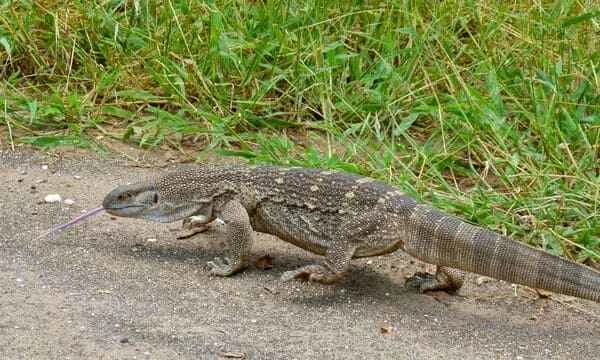
The white-throated monitor lizard, also known as the African monitor lizard, measures approximately 1.40 to 2 meters in length, with larger individuals weighing about 15 to 17 kilograms. Initially classified as a subspecies of the steppe monitor lizard, it is now recognized as a separate species. There are four subspecies of the white-throated monitor lizard: the white-throated monitor lizard, the Angolan white-throated monitor lizard, the East African white-throated monitor lizard, and the black-throated monitor lizard. The white-throated monitor lizard and the black-throated monitor lizard are the two most common subspecies. The South African white-throated monitor lizard is known as the spotted white-throated monitor lizard due to its black markings on its back; its coloration is relatively more striking among the four subspecies. The black-throated monitor lizard is distinguished from the other three subspecies by its dark black throat. Generally speaking, their habits are largely similar.
7. Bengal monitor lizard (10.2 kg)
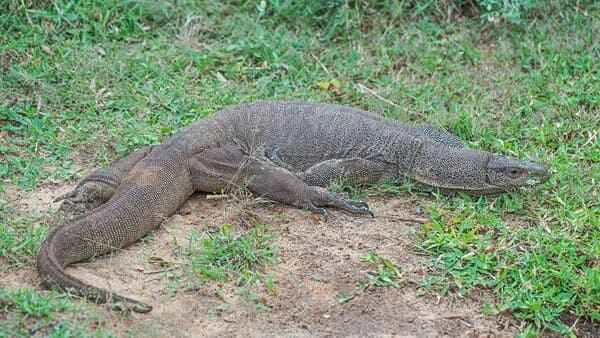
The Bengal monitor lizard is a distinctive lizard, covered in yellow spots, with a triangular head. It can reach over 90 centimeters in length, with its tail alone reaching 50 centimeters, and can weigh up to 10.2 kilograms. Adult Bengal monitor lizards are generally gray or grayish-green, with grayish-black markings running from their chin to their abdomen and tail. These markings vary by region; those in the west are darker, while those in the east are lighter. Bengal monitor lizards are extremely resilient, adapting to a wide range of environments, from deserts to rainforests, and even surviving and reproducing during seasonally snowy winters.
8. Gurney's monitor lizard (9 kg)
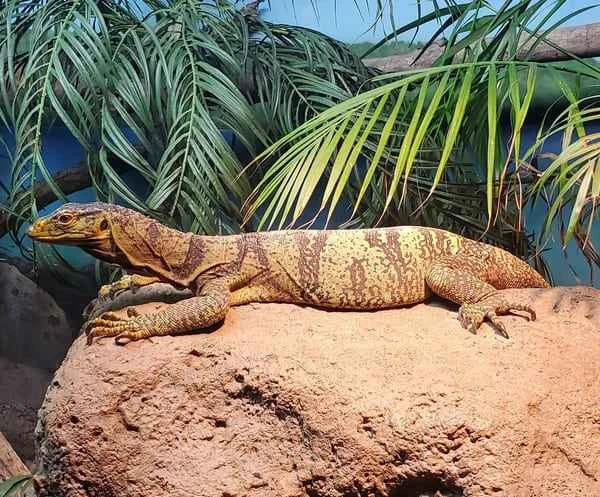
The Gouldian monitor (Gallblad's monitor) is a large lizard, measuring approximately 1.75 to 2 meters in length and weighing over 9 kilograms. Their coat is typically grey, yellowish-green, or yellowish-brown, with black ring-like stripes extending from the neck to the tip of the tail. Their lips are pale yellow, and their nostrils are small and slit-like. Belonging to the family Megalocerosidae, the Gouldian monitor is primarily found on the islands of Luzon, Poliro, and Catanduanes in the Philippines. Despite their large size, the Gouldian monitor possesses remarkable speed, allowing them to escape quickly when threatened. This monitor lizard is quite common in the region.
9. Nile Monitor Lizard
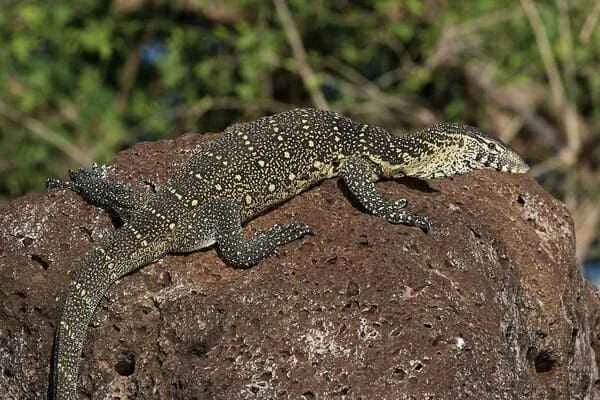
The Nile monitor lizard is a species of monitor lizard found throughout the African continent, reaching lengths of up to 2 meters. As one of the largest lizards in Africa, the Nile monitor lizard is found in almost every corner of the continent, except for deserts, making it one of the most widely distributed lizards in Africa. Nile monitor lizards are known for their aggressive and nervous temperament, possessing strong teeth and a diet similar to that of the common water monitor lizard. Adults also reach a considerable size.
10. Dimore Spotted Monitor Lizard

The Timur monitor lizard, also known as the ornamented monitor lizard, is the second largest monitor lizard after the iris monitor lizard, reaching up to 2.1 meters in length, but typically averaging between 1.5 and 1.7 meters. It prefers damp environments and usually inhabits waterside or wooded areas, sometimes even appearing in the suburbs of cities. The Timur monitor lizard feeds on fish, reptiles, snails, small mammals, carrion, and even the eggs of other animals or frogs; it will sometimes even prey on young of its own species.
The list of the world's ten largest lizards is compiled primarily from online sources, including information on their body length, weight, and habits. The list is ranked and recommended based on a combination of weight and body length. This ranking is for reference only; please feel free to comment or offer corrections at the end.