Anteaters might sound like something out of a horror movie, but they're real and fascinating. These ants sometimes eat members of their own colony for a variety of reasons, from survival strategies during difficult times to maintaining colony health. While this behavior seems cruel, it actually helps the ants survive in harsh environments. This article will introduce you to the shocking facts about anteaters that will both amaze and perhaps send chills down your spine. Ready to enter the world of these tiny yet incredibly powerful creatures? Let's begin!
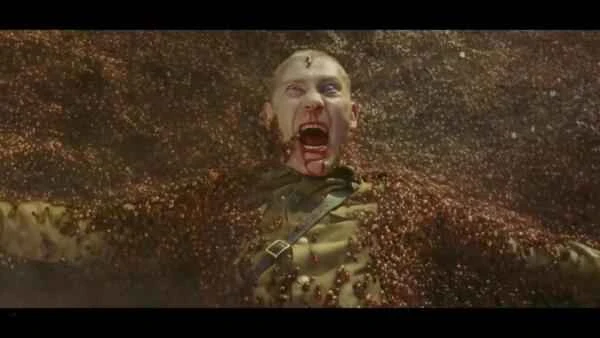
Anteaters: Dark Survivors in Nature
Ant predators are incredibly intelligent and agile; although their behavior may seem sinister, it's entirely for survival. Here are some interesting facts about how these ants save themselves by cannibalism:
Cannibalistic behavior for survival: When food is scarce, some ants will eat other members of the colony to survive.
Larvae as a food source: In extreme cases, worker ants may eat larvae and pupae (baby ants) to prolong the survival time of the colony.
Self-sacrificing worker ants: Some worker ants will even voluntarily sacrifice themselves to be eaten by other ants in order to ensure the survival of the queen and larvae.
Ant Wars: When ants fight for territory, the victors sometimes eat the losers to ensure that resources are not wasted.
Nutritional recycling: Cannibalism helps the group recycle nutrients, ensuring that all resources are reused rather than wasted.
Ant species known for eating people
Not all ants are man-eating, but some species are more prone to this behavior. Let's take a look at some of the most representative ant-eating species:
Army ants: These ants, known for their aggressiveness, often eat injured or dead members of their colony, especially during long migrations.
Fire ants: Known for their painful stings, fire ants will turn to cannibalism when food is scarce, eating weaker members to maintain the survival of the colony.
Carpenter ants: If trapped or isolated, carpenter ants sometimes survive by eating their own kind.
Weaver ants: These ants are known for building complex nests and sometimes eat weak members to keep the colony healthy.
Leafcutter ants are known for cultivating fungi by cutting leaves, but under extreme conditions, they may eat their own larvae to survive.
Cannibalism within a group
In ant colonies, cannibalism is not only for survival, but also for maintaining colony health and efficient operation:
Disease control: Ants prevent the spread of disease within the colony by eating sick or dead members.
Population control: Cannibalism helps control the size of the population and prevent overbreeding.
Energy saving: By consuming other members of the colony, ants can save the energy that would otherwise be used to find food.
The survival of the queen ant: The queen ant is the most important member of the colony, and cannibalism ensures that she obtains enough nutrition to survive.
Colony migration: When ants need to migrate to a new home, they may eat weaker members to reduce the burden on the colony.
The impact of cannibalism on ant behavior
Cannibalism has profoundly influenced the behavior of ants, altering how they search for food and how their colonies operate:
Feeding hierarchy: In the event of food scarcity, higher-ranking ants will eat lower-ranking members in order to survive.
Aggressiveness: Ants with cannibalistic tendencies are often more aggressive and territorial than ants that do not eat people.
Foraging patterns: Ant colonies that rely on cannibalistic behavior may not need to go out to forage frequently because they can rely on internal resources.
Nest defense: By eliminating weak or injured members, cannibalism makes the group stronger and more resistant to external threats.
Social bonds: Although it may seem strange, cannibalism can actually strengthen social bonds by ensuring the survival of the group.
Environmental triggers for cannibalism
Certain environmental factors can cause ants to cannibalize their own kind. Here are some conditions that may trigger this behavior:
Food scarcity: Food shortage is the main reason why ants turn to cannibalism. When there is nothing else to eat, they will start to obtain food from within the colony.
Habitat destruction: Whether caused by natural factors or human activities, habitat destruction can drive ants to eat humans in order to survive.
Climate change: Extreme weather can disrupt food supplies, forcing ants to eat their own members.
Predator pressure: When predators are in large numbers, ants may eat weaker members to reduce the size and vulnerability of the colony.
Human activities: Human activities such as urbanization and deforestation have destroyed the ants' habitats, forcing them to resort to cannibalism as a last resort for survival.
The Relationship Between Cannibalistic Behavior and the Ant Life Cycle
Cannibalistic behavior can occur at different stages of an ant's life cycle, from egg to adult:
Egg stage: During difficult times, ants may eat their own eggs to avoid starvation.
Larval stage: Because of their rich nutrition, larvae are usually the first to be eaten when the group is desperate.
Pupal stage: The pupa is the stage in which the larvae transform into adult ants, and it is also an important food source during famines.
Adult stage: Weak or injured adult ants may be eaten by stronger ants to conserve resources.
Queen stage: In rare cases, if the queen is weak, the colony may eat her to make way for a stronger successor.
Cannibalism and Ant Evolution
Over time, cannibalism has shaped the way ants evolve, influencing their survival strategies in harsh environments:
Adaptive behavior: Cannibalism is a survival strategy that ants have developed, enabling them to thrive in harsh environments.
Genetic diversity: By eliminating weaker members, cannibalistic groups may become stronger and genetically more diverse.
Survival mechanism: This behavior has gradually evolved over millions of years, helping ants survive when resources are scarce.
Natural selection: In some environments, natural selection favors cannibalism because it helps the group survive.
Evolutionary advantage: Cannibalism gives ants an evolutionary advantage, ensuring that the strongest members survive and reproduce.
final bite
Ant predation may seem unsettling, but it's a perfect example of adaptation in nature. By consuming weak or dead members, they recycle nutrients, ensuring the survival of the colony. While cruel, this behavior demonstrates the resource utilization and survival wisdom of ants in the face of harsh environments.
The next time you see an ant, remember: their world is far more complex than it appears. These tiny creatures are natural survivors, and their cannibalistic behavior is just one of many strategies they employ to thrive in some of nature's harshest environments.
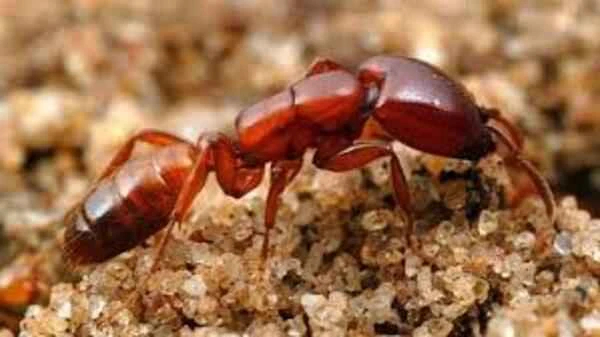
Unveiling the horror of man-eating ants: Can they really devour humans or large animals?
The concept of man-eating ants sounds like a nightmare, but the reality is far more interesting than terrifying. While no known ant species actively hunts and consumes humans or large animals, some ants do exhibit aggressive and potentially dangerous behavior. So, could ants pose a threat to humans or other large creatures? Let's delve into the truth behind these so-called "man-eating ants."
1. Army ants: The species most closely threatened
Army ants, especially *Eciton burchellii* which lives in Central and South America and *Dorylus * (also known as driver ants) in Africa, are often considered the most threatening ants. These ants do not have fixed nests and always move in large swarms, devouring everything from insects to small animals wherever they go.
While army ants can indeed kill small animals through sheer numbers, it's important to understand that they rely on massive colonies, sometimes numbering in the millions, to overwhelm prey through sheer collective power, rather than attacking large creatures like humans individually. For humans or large animals, army ants are more of a nuisance than a deadly threat. However, if they attack paralyzed or weakened animals, they can cause severe pain or injury due to their ability to inflict massive bites.
2. Driving ants and livestock
In rare cases, African driver ants are known to attack incapacitated animals, such as cattle or goats, especially when they are weak, sick, or bound. These ants attack in swarms, sometimes in such large numbers that they can suffocate their prey or tear flesh through bites. There are anecdotal reports that infants or the elderly are particularly vulnerable to these attacks, but this is extremely rare and usually occurs when the victim is unable to escape the swarm.
3. Can ants really devour humans?
Despite their fearsome reputation, no ant species actively hunts and devours a healthy human. Even aggressive species like army ants do not consider humans prey. Most ants are scavengers , consuming dead animals, including large ones, but the idea of ants swallowing humans alive is largely a myth.
However, if they encounter a corpse, ants may begin to decompose it, especially in hot tropical environments. Ants play an important role in cleaning up corpses, but they are usually not the primary cause of death.
4. Ants and Dead Animals
Ants are highly efficient at cleaning up dead animals. Fire ants and army ants , once they find a carcass, quickly devour small creatures such as rodents, birds, or reptiles. Ants can clear away an animal carcass in a short time, eating all the flesh and leaving only bones. However, it's important to note that they only deal with animals that are already dead or about to die; they do not actively attack large living creatures.
5. The real threat: allergic reactions and bites
While ants cannot directly devour humans, some ants, such as fire ants , can pose a real threat due to their painful stings. Fire ant bites can trigger severe allergic reactions, and in extreme cases, can lead to anaphylactic shock, a life-threatening emergency. In some parts of the world, fire ants have become a dangerous invasive species, aggressively attacking swarms of people who disturb their nests.
Should you be worried about man-eating ants?
The idea that ants can devour humans or large animals is mostly urban legend or horror story content. While species like army ants or driver ants are indeed aggressive and can cause harm in large numbers, they don't actively hunt large creatures. The real danger lies primarily in allergic reactions triggered by ant bites and in some ant species using their sheer numbers to overwhelm smaller prey or clear away carcasses.
In summary, ants are amazing survivors and scavengers, efficiently cleaning up the remains of dead creatures, but their image as **"cannibals"** is exaggerated. For most people, ants are more of a minor annoyance than a real threat.
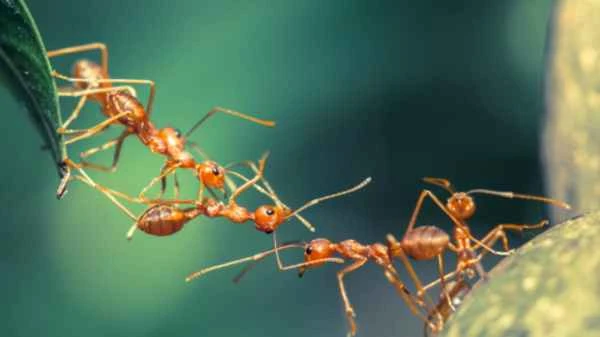
The four most powerful ant species in the world: army ants, carnivorous ants, exploding ants, and bullet ants.
Ants are among the most fascinating creatures on Earth, with some species standing out for their strength, aggressive behavior, and unique defense mechanisms. Let's learn about four of the world's most powerful ant species : the army ant, the so-called "man-eating ant," the exploding ant, and the bullet ant.
1. Army ants: ruthless predators
Army ants are known for their massive nomadic colonies and aggressive hunting techniques. These ants do not build permanent nests, but instead form temporary habitats, migrating in large groups, with colonies reaching millions of individuals.
Species : The most famous species are Eciton burchellii from Central and South America, and Dorylus (driving ant) from Africa.
Strength : Their strength lies in their collective behavior. Army ants rely on their numerical superiority to launch attacks, capable of killing small animals and insects with overwhelming numbers, and even occasionally threatening stationary large animals.
Behavioral highlights : Army ants exhibit a coordinated hunting strategy, with soldiers protecting the colony and worker ants responsible for hunting and processing the prey. Despite their notorious reputation, army ants generally do not pose a direct threat to healthy humans or large animals unless the creatures are trapped or unable to escape.
2. Man-eating ants: Misunderstood predators
The term "man-eating ants" often refers to aggressive ant species, such as driver ants or army ants , particularly in the jungles of Africa and South America. While these ants are indeed dangerous, especially in large colonies, claims that they actively hunt and devour humans are greatly exaggerated.
Species : African driving ants ( Dorylus ) are often called "man-eating ants" because of their fierce nature.
Strength : These ants can attack and kill small or weakened animals, and in rare cases, they will attack immobilized humans. The real threat comes from their sheer numbers and their powerful bites, which can quickly overwhelm their prey.
Behavioral highlights : These ants launch massive foraging raids, devouring anything they encounter along the way, including insects, reptiles, and small mammals. Stories of them eating humans stem from rare incidents where victims (such as children) were unable to escape the ant colony and were attacked.
3. Exploding Ants: Self-Sacrificing Defenders
Exploding ants ( Colobopsis explodens ) are among the most peculiar and powerful defensive ants. These ants live in Southeast Asia and possess a unique defense mechanism—self-destruction.
Species : Colobopsis explodens .
Strength : These ants possess a unique defense mechanism. When threatened, worker ants self-destruct, releasing a toxic and viscous substance that can paralyze or kill their enemies. This extreme self-sacrifice is a highly effective defense mechanism.
Behavioral highlight : Self-destruction is an ant's last resort when facing predators such as large insects. By sacrificing themselves, these ants ensure that the enemy is neutralized, even though they themselves perish in the process.
4. Bullet Ant: The World's Most Painful Bite
Bullet ants ( Paraponera clavata ) are known for having some of the most painful bites in the world. They live in the rainforests of Central and South America, and their bites are said to feel like being hit by a bullet, hence the name "bullet ant".
Species : Paraponera clavata .
Strength : The bullet ant's strength lies in its extremely powerful bite, which injects a neurotoxin called poneratoxin. This toxin causes excruciating pain that can last up to 24 hours. While not fatal, the intense pain is enough to temporarily incapacitate large animals.
Behavioral highlights : Bullet ants are solitary predators. Although they do not attack in swarms like army ants, a single sting is enough to intimidate most predators. In the rites of passage of some indigenous tribes, participants must endure multiple bullet ant stings as a test of courage and endurance.
The most ferocious ant warriors in nature
These four powerful ant species— army ants , carnivorous ants , exploding ants , and bullet ants —demonstrate the diversity and strength of ant species. Whether through numerical superiority, extreme aggression, self-sacrificing defense mechanisms, or excruciatingly painful bites, these ants rank among the most threatening insects in the animal kingdom.
Although these ants do not actively hunt and devour humans, their strength and unique survival strategies make them both awe-inspiring and creatures that should be treated with caution.
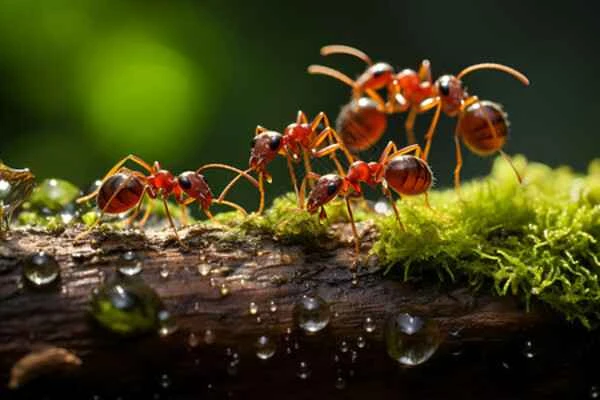
Ant control methods
Ants are among the most persistent pests invading homes, gardens, and businesses. Effective ant control requires a multi-pronged approach, targeting the ant colony, preventing future infestations, and addressing environmental factors. Below is a comprehensive guide to ant control methods.
1. Identifying ant species
The first step in effective ant control is identifying the species of ants you are dealing with. Different ant species require different treatment methods. Common household ant species include:
Carpenter ants : They can damage wooden structures.
Stink ants : They emit a smell of rotting coconut when crushed.
Sidewalk ants : usually found in cracks in the pavement.
Fire ants : Highly aggressive, their bites are painful.
Argentine ants : common intruders in homes, forming large colonies.
Understanding the types helps determine the best treatment method.
2. Eliminate food sources
Ants enter homes in search of food. Eliminating their food source is crucial to preventing them from invading again.
Clean up spills : Wipe up food or liquid spills immediately, especially sugar or oil.
Store food properly : Place food in airtight containers and ensure that pet food is also stored safely.
Clean up trash : Empty trash cans regularly and use tightly sealed lids to prevent attracting ants.
Clean surfaces : Clean countertops, floors, and tables after meals, as food scraps can attract ants.
3. Block the entrance point
Ants can enter through tiny cracks and crevices. Sealing these entry points can prevent ants from entering your home.
Sealing cracks and gaps : Use grout to seal cracks in walls, doors, windows, and foundations.
Install a door sweeper : Install a door sweeper on the outside of the door to prevent ants from entering.
Check vents and ducts : Ensure that vents, ducts and utility lines are sealed to prevent ants from entering through these areas.
4. Use a bait system
Baiting is one of the most effective methods of ant control because it can target the entire colony, including the queen.
Ant bait : Place bait stations where ants forage. The ants will carry the bait back to their nest, eventually killing the colony.
Bait type : Use slow-acting bait (usually containing boric acid or hydrocyanic acid) because the ants will carry it back to the nest, ensuring widespread contact.
Placement : Place bait at the entrance, under the sink, near the wall base, and in areas where ants are active.
5. Natural Therapy
There are several non-toxic natural remedies that can help repel ants without using strong chemicals.
Vinegar solution : Mix equal parts water and white vinegar in a spray bottle and spray the ant trails. The strong odor will interfere with their sense of smell.
Lemon juice : Spray lemon juice at the ant entry point; its acidity will confuse the ants and drive them away.
Diatomaceous earth : Sprinkle food-grade diatomaceous earth at the entry point. This powder dehydrates ants when it comes into contact with them.
Cinnamon and peppermint oil : Sprinkle cinnamon or spray diluted peppermint oil at the entrance to repel ants. These scents are natural insect repellents.
Boric acid and sugar : Mix boric acid with sugar to make a natural bait. Place it where ants appear.
6. Chemical pesticides
For more severe infestations, chemical insecticides may be necessary to control the ants.
Insecticide spray : Use non-repellent insecticide sprays at entry points, baseboards, and areas with heavy ant activity.
Granular insecticides : can be sprinkled around the home or garden to kill ants that enter.
Ant dust : Apply ant dust to wall crevices, cracks, or entry points. As ants walk by, the dust adheres to them and spreads to the ant colony.
Professional-grade insecticides : If commercially available insecticides are ineffective, consult a pest control professional for more powerful professional-grade treatments.
7. Target the ant colony directly.
For some species, such as carpenter ants, it may be necessary to directly deal with their nests.
Locating the nest : Follow the ant tracks to find the nest, which may be located inside a wall, in a wooden structure, or in the soil outdoors.
Direct application : Apply insecticide dust or foam directly to the nest to eliminate the ant colony.
Carpenter ants : Carpenter ants drill small holes to enter wooden structures and apply insecticide dust into their nests to kill the ants inside.
8. Outdoor ant control
If the ants enter from outdoors, managing the outdoor ant colony is crucial.
Eliminate outdoor food sources : Clean up food scraps or pet food in the yard.
Trim vegetation : Keep shrubs, trees, and plants neatly trimmed and away from the exterior walls of your home, as they can provide easy entry points for ants.
Create a barrier : Apply granular or liquid insecticides around your home to form a protective barrier.
Treating outdoor nests : If an outdoor ant nest is found, apply a suitable insecticide directly to the ant mound to eliminate the colony.
9. Monitoring and Follow-up
After applying control methods, it is necessary to monitor the area for any remaining ant activity.
Check the bait : Regularly check the bait station and replenish it as needed.
Observe new tracks : Even after treatment, ants may establish new tracks. Address new activity promptly to prevent recurrence.
Reapplication as necessary : Depending on the product, some pesticides may need to be reapplication every few months to maintain effectiveness.
10. Professional pest control
If a large or persistent ant infestation remains unmanageable, consider hiring a professional pest control service. Experts can use more effective tools and products to target ants and provide long-term solutions.
The benefits of expertise : They can accurately identify ant species, locate hard-to-find nests, and use stronger, more effective treatments.
Maintenance plans : Many pest control services offer ongoing maintenance plans to prevent future infestations.
Effective long-term ant control
Controlling ants requires a combination of preventative measures, natural therapies, baiting, and sometimes chemical treatments. By eliminating food sources, sealing entry points, and targeting the colony, you can achieve lasting results. Regular monitoring and follow-up are crucial to ensuring the ants do not return. If needed, professional pest control services can provide more comprehensive solutions for large or difficult-to-manage infestations.